Alexander Zverev does not make headlines. No viral upsets, no record-breaking streaks splashed across specialist websites, no local fairy tale to set social media alight. And yet the world number three has reached the semifinals of a fourth consecutive Masters 1000 tournament in 2026, a level of consistency that very few players in tour history can claim.
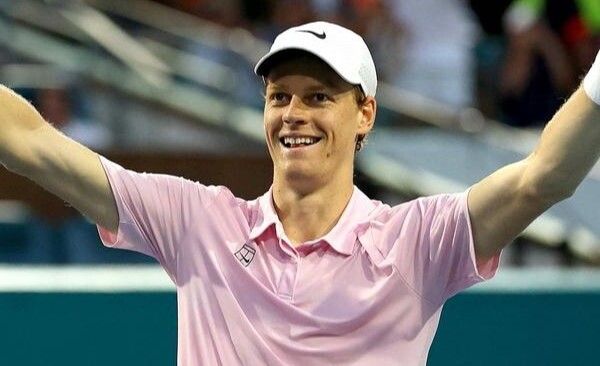
From Paris-Bercy to Indian Wells, from Miami to Monte-Carlo, the 29-year-old German has strung together weeks at the highest level with a regularity that commands respect. While Jannik Sinner captures all the spotlight with his cascade of titles, Zverev systematically occupies the position of principal challenger. Not always rewarded, three consecutive semifinal losses to Sinner, but always there, knocking on the door at the summit.
His Monte-Carlo run is a perfect encapsulation of the man. In the third round, trailing Cristian Garin 2-5, Zverev appeared headed for an early exit. He turned the situation around game by game, saving two match points before prevailing. In the quarterfinals, facing the revelation Joao Fonseca, he again needed three sets (7-5, 6-7(3), 6-3) to advance. Wins without obvious flair, but ones that testify to a quality statistics struggle to capture: the ability to win when the game is not clicking.
It is precisely this resilience that makes Zverev such a feared opponent. His serve, the most powerful in the top five, remains his primary weapon. But it is his mental solidity in tight end-of-set situations that has improved most in recent months. The German no longer collapses in critical moments as was sometimes the case in the past. He grumbles, he fumes, he taps his racquet on the ground, but he finds a way.
The challenge awaiting him on Saturday against Sinner is enormous. Seven consecutive losses to the Italian, including three in Masters 1000 semifinals this season. The numbers are brutal and the balance of power appears settled. Clay does offer slightly more favorable terrain for the German, however, he defeated Sinner at this very venue in Monte-Carlo in 2023.
At 29, Zverev stands at a crossroads in his career. Forever perceived as the player of the "almost" generation, almost a Grand Slam champion after his US Open 2020 and Roland Garros 2024 finals, almost number one, he continues to accumulate results that most players on tour would envy. Four consecutive Masters 1000 semifinals is the kind of consistency that in another era would have been more than enough to dominate the rankings. His misfortune is sharing the stage with two generational phenomena. But his perseverance, match after match, tournament after tournament, deserves recognition.