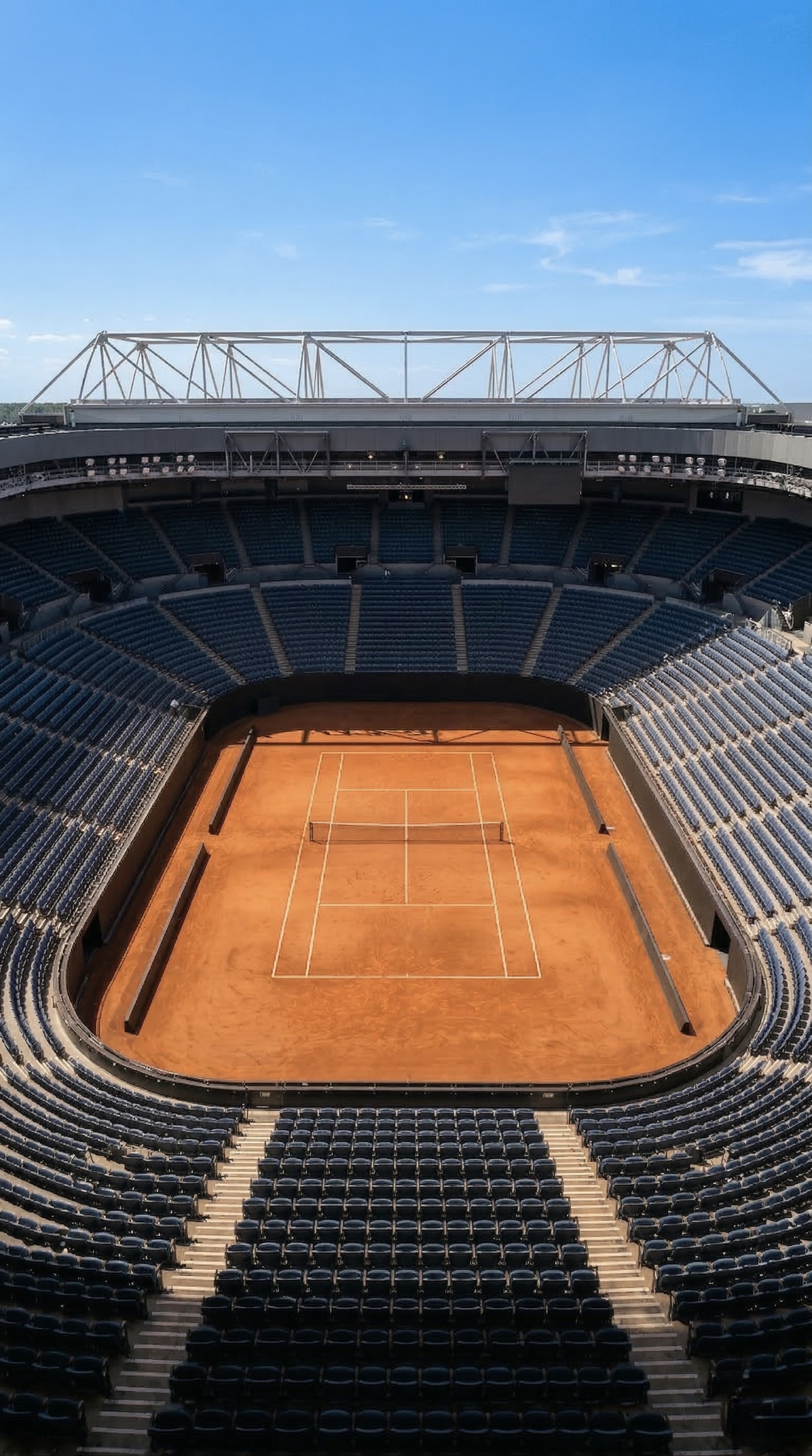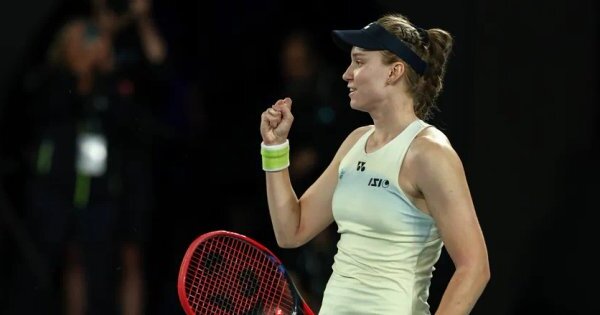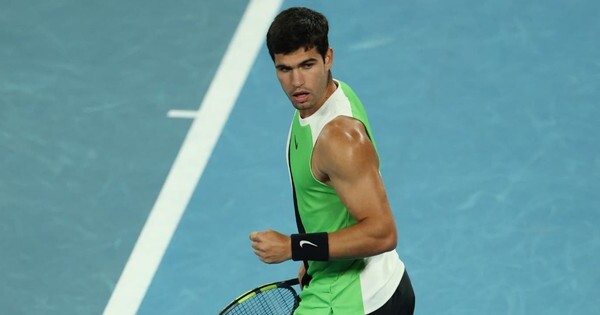
Arthur Ashe Stadium delivered its verdict on Sunday, September 7, 2025, before a roaring crowd and amid unusual security measures tied to the presence of US President Donald Trump, which delayed the start of the final by approximately fifty minutes. When the two best players on the planet were finally able to step on court, Carlos Alcaraz produced a masterclass of power and tactical intelligence to overwhelm Jannik Sinner 6-2, 3-6, 6-1, 6-4 in two hours and forty-two minutes. A sixth Grand Slam title at twenty-two years old, a second coronation at Flushing Meadows, and most critically the recapture of the world No. 1 ranking that the Spaniard had not held since August 2023.
This edition will be remembered for ending the most audacious dream in contemporary tennis. Sinner, winner of the Australian Open, Roland Garros, and Wimbledon in the same season, needed only one more title to complete the first calendar-year Grand Slam since Rod Laver in 1969. That dream shattered on the hard courts of New York, against an Alcaraz who seems to have found at Flushing Meadows the stage for his greatest victories over his Italian rival.
Alcaraz: A Flawless Run to the Title
Alcaraz's path to the championship carried an air of inevitability. In the first round against Reilly Opelka and his devastating serve, the Spaniard imposed his authority in straight sets (6-4, 7-5, 6-4) across more than two hours, winning one hundred and seven of one hundred and eighty-nine points played in genuine rallies. The second round against Italy's Mattia Bellucci turned into a rout: 6-1, 6-0, 6-3, a scoreline that signaled a player in full command of his game and intent on conserving energy for the decisive rounds.
In the third round, Luciano Darderi offered little more resistance (6-2, 6-4, 6-0), and it was in the fourth round against Arthur Rinderknech that the champion was forced to raise his level for the first time in the tournament. The Frenchman, contesting his maiden Grand Slam fourth round, competed fiercely in a tight opening set before folding in the tiebreak: 7-6(3), 6-3, 6-4 in two hours and fourteen minutes. At that stage, Alcaraz became the youngest man in the Open Era to reach thirteen Grand Slam quarterfinals, and he still had not dropped a single set.
The quarterfinal against twentieth seed Jiri Lehecka confirmed the Spaniard's absolute command of his half of the draw. In one hour and fifty-six minutes, Alcaraz dismantled the Czech 6-4, 6-2, 6-4 without facing a single break point, surrendering just seven points on forty-five first serves. The match crystallized the impression that nothing and no one could stand between Alcaraz and another title.
Sinner: The Relentless March of a Calendar Slam Contender
In the top half of the draw, carried the weight of a historic quest. Already a triple Grand Slam champion in 2025 after victories in Melbourne, Paris, and London, the Italian knew that every match brought him closer to an achievement no player had managed in fifty-six years. His opening rounds were devastating. Vit Kopriva in the first round (6-1, 6-1, 6-2), then Alexei Popyrin in the second (6-3, 6-2, 6-2): Sinner conceded just eleven games across two matches, a war machine calibrated for conquest.
The third round nearly derailed everything. Denis Shapovalov, riding the energy of a North American crowd fully behind him, seized the first set 7-5 and pushed Sinner to the brink. At 0-3, 30/40 in the third set, the world No. 1 appeared on the verge of capitulation. He then reeled off nine consecutive games to turn the match around and prevail 5-7, 6-4, 6-3, 6-3, extending his perfect record to eighteen wins without defeat in Grand Slam third rounds. The comeback served as a reminder that great champions are defined as much by their capacity to suffer as by their raw talent.
In the fourth round, Sinner returned to his most devastating form against Alexander Bublik. The 6-1, 6-1, 6-1 scoreline speaks for itself: the mercurial Kazakh never found the slightest answer to the Italian's mechanical consistency. The quarterfinal against compatriot , the tenth seed and Olympic bronze medalist, became a tennis lesson: 6-1, 6-4, 6-2, a score reflecting the merciless hierarchy Sinner imposes on his fellow Italians on tour.
The semifinal against Felix Auger-Aliassime offered a different narrative. The Canadian, seeded twenty-fifth and riding the momentum of a remarkable run capped by an epic quarterfinal victory over Alex de Minaur (4-6, 7-6(7), 7-5, 7-6(4) in four hours and ten minutes), harbored legitimate ambitions of springing an upset. For one set, he succeeded. After conceding the opener 6-1, Auger-Aliassime claimed the second 6-3, proving he possessed the weapons to destabilize the favorite. But Sinner reasserted control with the authority of a player whom pressure only strengthens, winning 6-1, 3-6, 6-3, 6-4 to set up a final meeting with Alcaraz, their third consecutive Grand Slam final of the season following Roland Garros and Wimbledon.
Djokovic: The End of a Reign That Refuses to Fade
moved through this US Open with the determination of a competitor who refuses to relinquish his place among the elite. At thirty-eight, the Serbian reached the semifinals at all four Grand Slams in the same season for the ninth time in his career, surpassing the record he had previously shared with Roger Federer. His New York campaign opened with a convincing victory over young American Learner Tien (6-1, 7-6(3), 6-2), followed by a more laborious second round against Zachary Svajda in which he had to recover from losing the first set in a tiebreak (6-7(5), 6-3, 6-3, 6-1).
The third round against Cameron Norrie was marked by a back scare that briefly raised fears of a retirement. Djokovic dug deep to win 6-4, 6-7(4), 6-2, 6-3, striking fifty-one winners including eighteen aces, a personal best at Flushing Meadows. In the fourth round, Jan-Lennard Struff, despite arriving buoyed by earlier victories over Holger Rune and Frances Tiafoe, lasted just one hour and forty-nine minutes against the Serbian machine (6-3, 6-3, 6-2).
The quarterfinal against Taylor Fritz delivered a more competitive encounter. Fritz, the 2024 finalist riding fervent home support, snatched the third set after dropping the first two. But Djokovic, true to his reputation as an unreadable player in clutch moments, closed out the fourth: 6-3, 7-5, 3-6, 6-4, taking his head-to-head record against the American to an imposing eleven wins without a loss.
The semifinal against Alcaraz marked the final act of Djokovic's campaign. The Spaniard was merciless, dominating the Serbian in straight sets: 6-4, 7-6(4), 6-2. Djokovic had surged to a 3-0 lead in the second set before physically collapsing, unable to sustain the intensity required against a twenty-two-year-old whose energy appears bottomless. The verdict is harsh but clear: at thirty-eight, Djokovic no longer possesses the physical resources to compete with the world's two best players over the course of a best-of-five-sets match. After the loss, the Serbian nonetheless declared he was not giving up his pursuit of major titles, a message of resilience that commands respect even as the odds increasingly stack against him.
The Absences That Reshaped the Draw
This 2025 edition was marked by the premature departures of two players who could have influenced the outcome of the tournament. Jack Draper, the fifth seed and previous year's semifinalist, was forced to withdraw before his second round due to a persistent left arm injury. The Briton, suffering from bone stress and bruising in his left humerus since Wimbledon, had ground out a difficult first-round win over qualifier Federico Agustin Gomez before conceding that the pain had become unbearable. The withdrawal ended his 2025 season prematurely.
Ben Shelton, the sixth seed and recent Toronto Masters 1000 champion, met an even more dramatic fate. Facing Adrian Mannarino in the third round, the American felt a sharp pain in his left shoulder at the start of the fourth set, which he described as the worst of his career. After winning an epic set point to clinch the third set, Shelton attempted to continue before being forced to retire. These two absences significantly opened up the bottom half of the draw, clearing a more favorable path to the quarterfinals for players like Lehecka and Auger-Aliassime.
The Final: Alcaraz Destroys Sinner's Dream
On Sunday, September 7, after the delay imposed by presidential security measures, Arthur Ashe Stadium pulsed with the energy of what was supposed to be the most anticipated final of the year. On one side, Sinner, one victory away from the calendar Grand Slam. On the other, Alcaraz, driven by the determination to prove that the rivalry of the century does not lean only one way.
The first set established the tone. Alcaraz, aggressive and surgical, lost just three points on serve across the entire set, winning 84.5 percent of his first-serve points. Sinner, uncharacteristically nervous, committed nine unforced errors in that opening set alone, an aberrant number for a player whose consistency is his defining trait. The 6-2 opening laid the foundation for a victory built on serving dominance and Alcaraz's ability to dictate the pace of rallies.
Sinner fought back in the second set with the pride of a champion who refuses to capitulate without a fight. By rediscovering his baseline striking and breaking to love in the fifth game, the Italian leveled the final at one set apiece (6-3) and revived hopes of a turnaround. But the resurgence proved fleeting.
The third set was the match's decisive moment. Alcaraz elevated his game spectacularly, leaving only scraps for a Sinner overwhelmed by the Spaniard's power and variety. The 6-1 scoreline reflected total domination, with Sinner broken multiple times after suffering only four breaks across his entire run to the final. Over the first three sets, the Italian was broken eight times, a figure illustrating the progressive disintegration of his service game under Alcaraz's return pressure.
The fourth set saw Sinner attempt one last stand, but Alcaraz maintained his grip on the match. The Spaniard converted five of his eleven break points across the final and sealed victory at 6-4 with his tenth ace of the day, moving his head-to-head record against Sinner to ten wins against five losses.
The Lessons of a Historic US Open
This US Open decisively reshuffled the cards at the summit of world tennis. By claiming the title and the world No. 1 ranking, Alcaraz proved he is capable of reversing the momentum of a season that had appeared destined for Sinner. The Spaniard now holds six Grand Slam titles at twenty-two, a rate of accumulation matched in recent history only by Bjorn Borg. His ability to elevate his level at the sport's biggest occasions, particularly at Flushing Meadows where he has won two of his six major titles, makes him the most dangerous player on tour when the stakes are highest.
For Sinner, the defeat stings all the more because it arrived at the precise moment when sporting immortality beckoned. Three Grand Slam titles in a single season constitutes a monumental achievement, but the absence of the fourth will leave a taste of incompleteness that may haunt the Italian for years. His record remains exceptionally positive, with a win percentage exceeding 90 percent for the season and a world No. 2 ranking that merely reflects the extraordinary density at the top of today's game.
The Sinner-Alcaraz rivalry, which produced three consecutive Grand Slam finals in 2025, has permanently established itself as the defining duel of 2020s tennis. After Sinner's victories at Roland Garros and Wimbledon, and Alcaraz's triumph at the US Open, the two men share the hegemony with an intensity the sport had not witnessed since the greatest days of Federer and Nadal.
Djokovic, for his part, confirmed that he remains an elite competitor capable of reaching the final four at the biggest tournaments, but the gap that opened during his semifinal against Alcaraz suggests his chances of claiming a twenty-fifth major title are diminishing with each passing tournament. His ninth season reaching the semifinals at all four Grand Slams remains a staggering statistical achievement, proof of longevity without parallel in tennis history.
Flushing Meadows has rendered its verdict. The calendar Grand Slam will have to wait, perhaps forever, and it is who now holds the keys to world tennis.