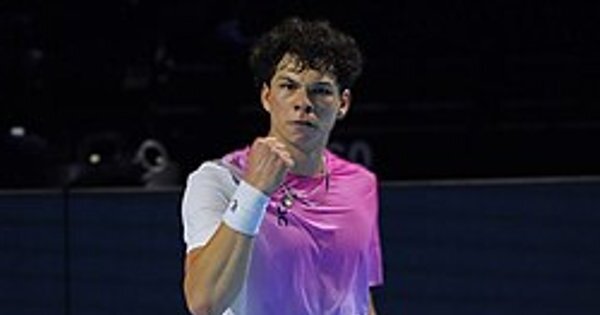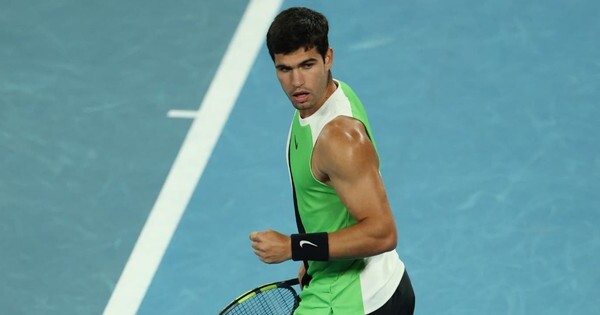
Some rivalries are born from scheduling coincidence, two players meeting too often at inconvenient moments. Others emerge from something closer to historical necessity, as though tennis itself required the confrontation to keep evolving. Jannik Sinner versus Carlos Alcaraz falls squarely into the second category. Since their first meeting at the Paris Masters in November 2021, the Italian and the Spaniard have built a rivalry that does not merely succeed the Big Three era but actively reshapes its boundaries with an intensity and frequency the tour had not seen since the peak years of Federer, Nadal, and Djokovic.
The raw numbers tell a compelling story. Across seventeen professional meetings, Alcaraz leads 11-6. But those figures obscure a far more nuanced reality. Of their last six encounters, all contested in finals during the 2025 season, Alcaraz won four and Sinner two. Yet in total points won across all their matches, the pair finished the 2025 season deadlocked at exactly 1,651 points apiece. Rarely has a rivalry produced such statistical equilibrium beneath an apparently lopsided win-loss ledger.
Their first meeting, in the second round of the 2021 Paris Masters, established the template for a generational collision. Alcaraz, eighteen years old and ranked 35th, upset a twenty-year-old Sinner in straight sets. The Spaniard played with a fearlessness that contrasted sharply with the Italian's methodical precision. Nobody could have foreseen the scale of what was beginning to take shape.
The year 2022 reversed the early dynamic. Sinner won two of their three meetings, including a four-set victory in the Wimbledon fourth round where the Italian demonstrated his ability to manage extended exchanges on grass, and a title-winning performance in the Umag final, 6-7, 6-1, 6-1, his first clay court trophy. But it was their third encounter that truly wrote this rivalry into tennis folklore. In the 2022 US Open quarterfinal, Alcaraz and Sinner produced a five-hour, fifteen-minute epic that concluded at 2:50 a.m., the latest finish in tournament history. Alcaraz saved a match point in the fourth set before prevailing 6-3, 6-7, 6-7, 7-5, 6-3. That humid night at Flushing Meadows, two future world No. 1s discovered exactly what they were dealing with.
The 2023 season saw Sinner edge ahead in the head-to-head. After losing a semifinal at Indian Wells, the Italian reeled off consecutive victories in the Miami semifinal and the Beijing semifinal, both in straight sets. Sinner's game was reaching a new level of maturity, his baseline striking becoming one of the most formidable weapons on tour, his mental consistency transforming every match into a war of attrition that only the most resilient survived.
Then 2024 tilted decisively toward Alcaraz. The Spaniard won all three of their meetings that season, including a spectacular turnaround at Indian Wells where, after being bageled in the opening set, he stormed back to win in three and snap Sinner's nineteen-match winning streak. Their French Open semifinal, won by Alcaraz, confirmed the Spaniard's capacity to dominate on clay in the biggest moments. The China Open delivered a dramatic conclusion in a deciding super tiebreak, Alcaraz overturning a 0-3 deficit to claim the title.
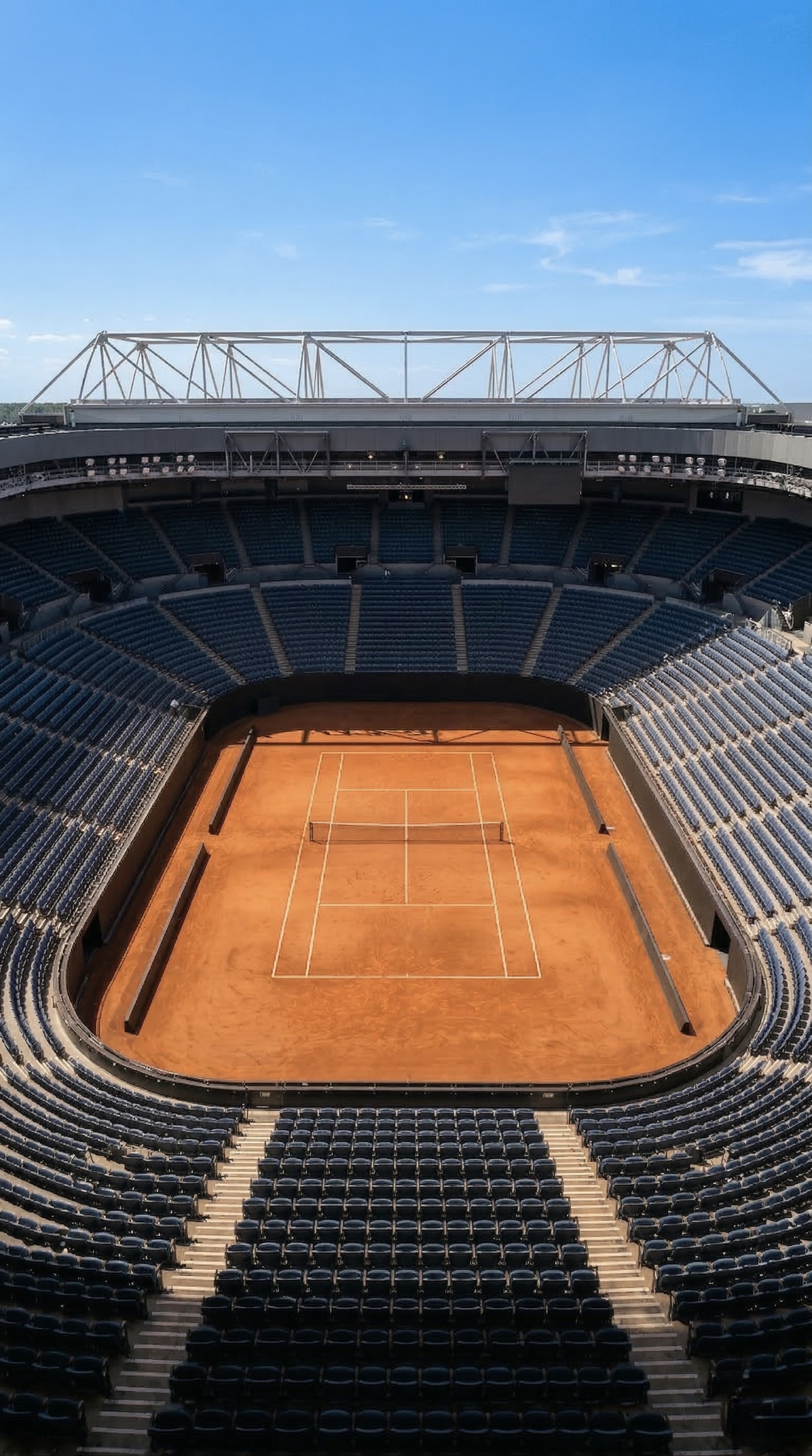
Nothing, however, prepared the tennis world for what 2025 produced. All six of their meetings came in finals, a phenomenon without precedent in the modern game. Roland Garros opened the series with a match for the ages. Alcaraz, down two sets to love, saved three match points, the most consecutive championship points saved in a Grand Slam final in the Open Era, before completing the comeback across five hours and twenty-nine minutes. The final score, 4-6, 6-7, 6-4, 7-6, 7-6(10-2), featuring the first super tiebreak to decide a French Open final, will stand as one of the most extraordinary matches ever played.
Wimbledon brought Sinner's response. The Italian dethroned the two-time defending champion in four sets, 4-6, 6-4, 6-4, 6-4, proving his baseline solidity could translate just as effectively on grass. Cincinnati saw Alcaraz win by Sinner's retirement after just five games, a result that barely registers in any meaningful analysis of their sporting rivalry. The US Open, though, delivered an emphatic verdict. Alcaraz dominated Sinner 6-2, 3-6, 6-1, 6-4, claiming his sixth Grand Slam title and reclaiming the world No. 1 ranking for the first time since August 2023.
The season's closing stretch swung back to Sinner. The Italian triumphed at the Six Kings Slam, an exhibition event that nonetheless revealed his ability to raise his game against Alcaraz in any setting. Then at the ATP Finals in Turin, performing before his home crowd, Sinner closed the season in style with a 7-6(4), 7-5 victory, claiming the year-end championship for the second consecutive year and finishing 2025 with a staggering 58-6 match record.
What makes this rivalry so absorbing extends well beyond the scoreboard. The contrast in styles is what captivates. Sinner represents metronomic precision, a baseline machine whose flat-struck ball travels through the court with a velocity and consistency that grinds opponents down physically and psychologically. His backhand, taken early and driven on a low trajectory, has become one of the most feared shots on tour. His point construction is methodical, each stroke serving a tactical blueprint that reveals itself gradually across the rally.
Alcaraz is the unpredictable force. His technical arsenal appears limitless, switching between scorching forehand accelerations, delicate drop shots, net approaches, and full-sprint passing shots that appear to defy physics. Where Sinner builds, Alcaraz demolishes. Where the Italian imposes rhythm, the Spaniard shatters it. His ability to produce moments of genius under maximum pressure, such as those three match points saved at Roland Garros, reflects a competitive instinct that transcends mere technique.
The surface breakdown adds another dimension. On hard courts, the tour's most neutral terrain, Alcaraz holds a clear advantage. On clay, the Spaniard maintains his edge, his versatility and angle-changing capacity disrupting Sinner's more linear game. On grass, Sinner's Wimbledon 2025 victory demonstrated the Italian can compete on any surface when his confidence peaks.
Beyond the court, this rivalry carries a cultural dimension that resonates well past tennis. Italy versus Spain, two Mediterranean nations steeped in sporting passion, two tennis traditions experiencing simultaneous renaissance. Sinner, the boy from South Tyrol who grew up skiing before choosing tennis, carries the weight of a country that had never produced a world No. 1. Alcaraz, direct heir to the Nadal lineage, represents the continuity of a Spanish clay court school that has reinvented itself to dominate all surfaces.
The question now occupying every tennis observer concerns the duration and evolution of this rivalry. Sinner and Alcaraz are twenty-four and twenty-two respectively. They potentially have a decade or more of confrontations ahead. If the first five years are any guide, men's tennis is witnessing the emergence of a duel that could match the greatest rivalries in the sport's history for longevity and intensity.
Each new chapter enriches the narrative. Each match delivers its own twists, moments of grace, and sporting drama. Roland Garros 2025 will likely endure as the foundational match of this rivalry, the contest where two champions pushed the boundaries of possibility for over five hours. But other peaks await, other finals loom, and the story of Sinner versus Alcaraz is, in truth, only beginning.