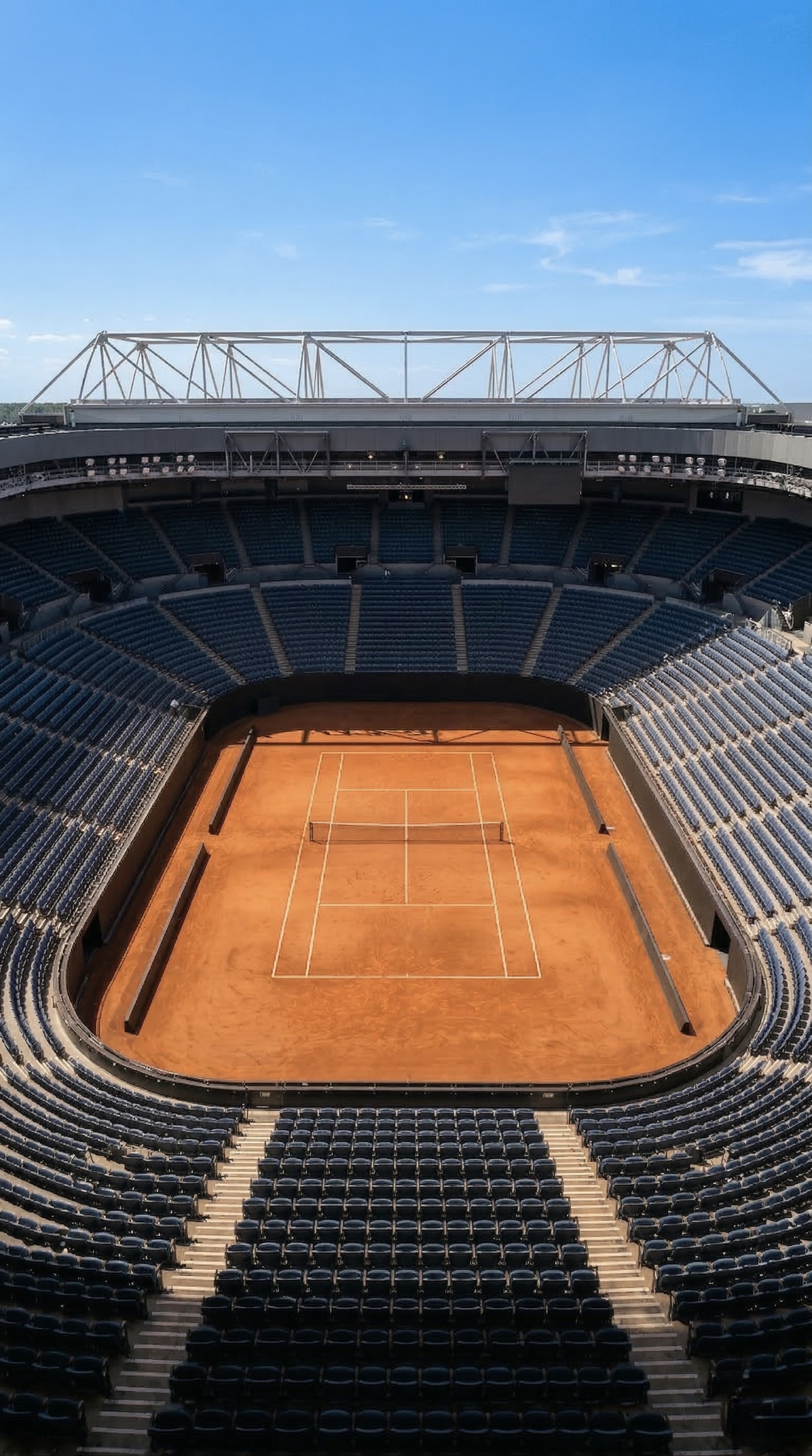
Twenty. That's the number of consecutive Masters 1000 victories Jannik Sinner has now racked up, after his quarter-final qualification in Madrid against Cameron Norrie (6-2, 7-5). A figure that projects him into historic territory, alongside the greatest names in men's tennis.
The streak began in March at Indian Wells, where the Italian claimed the title without dropping a set. It continued in Miami with a fourth consecutive Masters crown, then Monte-Carlo, where Sinner dominated the draw with the same authority. In Madrid, four more victories bring the total to twenty. And this may only be the beginning.
The all-time record belongs to Novak Djokovic, who strung together 31 consecutive Masters 1000 wins in 2011, a season widely considered one of the most dominant in tennis history. Roger Federer holds the second mark with 27 consecutive victories. Rafael Nadal, despite being the king of clay, had reached only 19 before Sinner surpassed him on Sunday in Madrid.
What makes Sinner's streak remarkable is its versatility. Indian Wells and Miami are played on hard courts. Monte-Carlo and Madrid on clay. The Italian dominates on both surfaces with equal ease, a trait he shares with Djokovic but that sets him apart from Nadal, whose Masters streaks were largely built on the red dirt.
Across these 20 matches, Sinner has rarely been pushed to a third set and has almost never been in serious danger. His serving dominance paired with a relentlessly threatening return game creates a vice that few players manage to escape. On clay, his heavy forehand striking and ability to dictate rallies from the baseline make him the opponent nobody wants to face right now.
The question buzzing around the tour: how far can he go? The next milestone is Federer's 27 wins. To reach it, Sinner would need to win Madrid and then reel off three victories in Rome. An ambitious scenario, but far from unrealistic given his current form. Djokovic's ultimate record of 31 would require total domination through Roland-Garros.
The Italian, however, refuses to draw comparisons with the legends. After beating Norrie, he deflected with his typical composure, preferring to focus on his next opponent rather than the statistics. A match-by-match approach that may be precisely the secret behind this extraordinary run.
At 24, Sinner is no longer simply the world number one. He is etching his name alongside those who have redefined the limits of top-level tennis. Madrid is just a stop. The next chapters will be written in Rome and then Paris.