Women's tennis has always drawn its deepest strength from rivalries that transcend mere results. Navratilova versus Evert, Graf versus Seles, Serena versus Venus. These duels structured entire eras and gave the sport narratives that outlast generations. Aryna Sabalenka versus Coco Gauff now belongs in that conversation, carried there by an authenticity and consistency that leave no room for doubt about its place in WTA history.
Across thirteen meetings since their first encounter at Lexington in 2020, the head-to-head record stands at a razor-thin 7-6 in Sabalenka's favor following her Miami Open 2026 triumph. But the scoreboard only partially captures what happens when these two step on the same court. Every match between them carries the promise of a collision between contrasting philosophies, where raw power meets the purest athleticism the women's game has to offer.
Their first meeting, at the Top Seed Open in Lexington in August 2020, pitted a sixteen-year-old Gauff against a twenty-two-year-old Sabalenka already established among the world's best. The young American won 7-6(4), 4-6, 6-4, serving immediate notice that she would not be intimidated by the Belarusian's firepower. That opening chapter already contained every ingredient that would come to define their rivalry: Sabalenka's brutish power against Gauff's resilience and extraordinary court coverage.
Subsequent meetings confirmed the impossibility of predicting their outcomes. Sabalenka claimed revenge at Ostrava in 2020, coming back from a set down to win 1-6, 7-5, 7-6(2) in a match where Gauff had dominated the opener before watching her rival steadily raise her level. Rome 2021 went to Gauff, 7-5, 6-3, on the Foro Italico clay. Toronto 2022 produced another three-set thriller won by the American, 5-7, 6-4, 7-6(4). Each meeting added texture to a narrative building organically, never losing momentum.
The defining turning point arrived at the 2023 US Open final. Gauff, nineteen years old, was contesting her first Grand Slam singles final. Sabalenka, freshly crowned at the Australian Open in January, arrived as the clear favorite and duly took the opening set 6-2 with an authority that seemed to forecast a routine victory. But Gauff produced the kind of reversal that forges great champions. She stormed back to win 2-6, 6-3, 6-2, becoming the youngest US Open champion since Serena Williams in 1999. That match fundamentally altered their dynamic. Gauff was no longer the young outsider disrupting the established order. She had become a peer, a rival capable of capturing the biggest prizes.
The 2024 season introduced new layers. Sabalenka won their Australian Open semifinal 7-6(2), 6-4, asserting her dominance on fast surfaces early in the year. Their Wuhan meeting delivered an improbable script: Gauff raced through the first set 6-1 before Sabalenka mounted a complete reversal, winning 1-6, 6-4, 6-4, demonstrating yet again her capacity to find solutions when cornered. The 2024 WTA Finals in Riyadh saw Gauff secure revenge in the semifinal, 7-6(4), 6-3, displaying a tactical maturity that impressed as much for its depth as its consistency.
The 2025 season elevated their rivalry to unprecedented heights. In Madrid in May, Sabalenka imposed her power game to win 6-3, 7-6(3), a match where her first serve regularly flirted with 120 mph. But Roland Garros delivered the most dramatic chapter yet. In the final, Gauff dropped the opening set in a tiebreak 6-7(5) before producing tennis of remarkable intelligence to turn the match around and prevail 6-7(5), 6-2, 6-4. On the Parisian clay, the American proved she could neutralize Sabalenka's power by extending rallies, varying trajectories, and exploiting a mobility that the Belarusian herself has acknowledged surpasses her own.
The 2025 WTA Finals in Riyadh provided a brutal season-ending coda. Sabalenka eliminated Gauff in the group stage 7-6(5), 6-2, a match where the Belarusian's firepower overwhelmed the American's defenses once the first set tipped in her favor. Then the Miami Open 2026, their thirteenth meeting, saw Sabalenka triumph 6-2, 4-6, 6-3, completing her Sunshine Double and edging ahead in the head-to-head for the first time in months.
What fundamentally distinguishes this rivalry is the philosophical opposition of their playing styles. Sabalenka represents first-strike tennis in its most refined form. Her serve, among the most powerful on the women's tour with regular peaks above 120 mph, transforms every service game into a test of strength for the returner. Her groundstrokes, struck with maximum weight transfer on flat trajectories that compress an opponent's reaction time, are designed to end points inside four shots. When Sabalenka finds her rhythm, she imposes a tempo that very few players on tour can withstand.
Gauff represents the tactical antithesis. Her primary weapon is an athleticism that pushes the boundaries of what women's tennis has seen. Her court coverage, arguably the best on the current tour, converts defense into an offensive weapon. Where most players absorb Sabalenka's power passively, Gauff retrieves shots nobody else would reach, extending rallies beyond the Belarusian's comfort zone. The data tells the story: when rallies exceed nine strokes, Sabalenka's unforced error rate climbs significantly. Gauff knows this perfectly well.
But reducing Gauff to her athleticism would be a mistake. The American has developed one of the tour's most effective returns of serve over successive seasons, capable of neutralizing even the fastest first deliveries. Her ability to vary pace, alternating heavy topspin depth with forehand redirections, has matured considerably since her early days. At twenty-two, Gauff is no longer simply an extraordinary athlete who plays tennis. She has become a tactician whose tennis brain rivals her physical gifts.
The generational dimension of this rivalry deserves emphasis. Sabalenka, born in 1998, and Gauff, born in 2004, belong to two distinct generations that converge at the summit of the world rankings. Sabalenka endured years of turbulence, including recurring double-fault issues and technical overhauls to her serve, before finding the consistency that carried her to the top. Gauff was thrust into the spotlight at fifteen, when she defeated Venus Williams in the first round of Wimbledon 2019, and has had to navigate the immense expectations that such precocity generates.
These divergent paths fuel the rivalry. Sabalenka plays with the certainty of a champion who conquered her position through force, who knows her tennis can overwhelm any opponent when functioning at full capacity. Gauff plays with the intelligence of a competitor who learned early that raw talent is insufficient, that adaptation, evolution, and problem-solving against each opponent are essential. This tension between assertive power and adaptive intelligence is what makes each of their meetings unpredictable and absorbing.
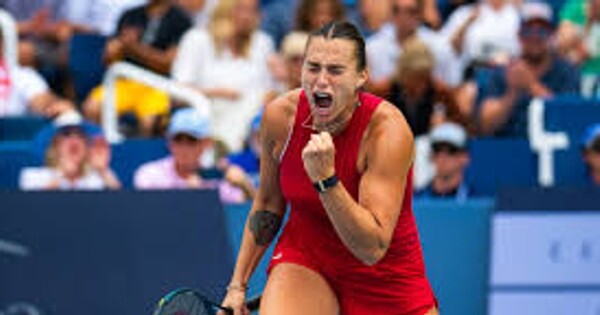
Their rivalry also reflects two personalities who represent different visions of modern women's tennis. Sabalenka, exuberant and demonstrative on court, wields her emotion as an additional weapon. Gauff, more measured in her expression but equally competitive in her approach, represents a maturity beyond her years. Both players share deep mutual respect, evident in their post-match comments, but on court, that courtesy yields to fierce competition where neither concedes anything.
With the head-to-head at 7-6 and an average age of twenty-four, Sabalenka and Gauff have many chapters still to write together. Every surface offers a different battleground, every tournament a fresh set of stakes, and every confrontation the possibility of swinging in either direction. Women's tennis has its defining rivalry of the 2020s, and it is only intensifying.