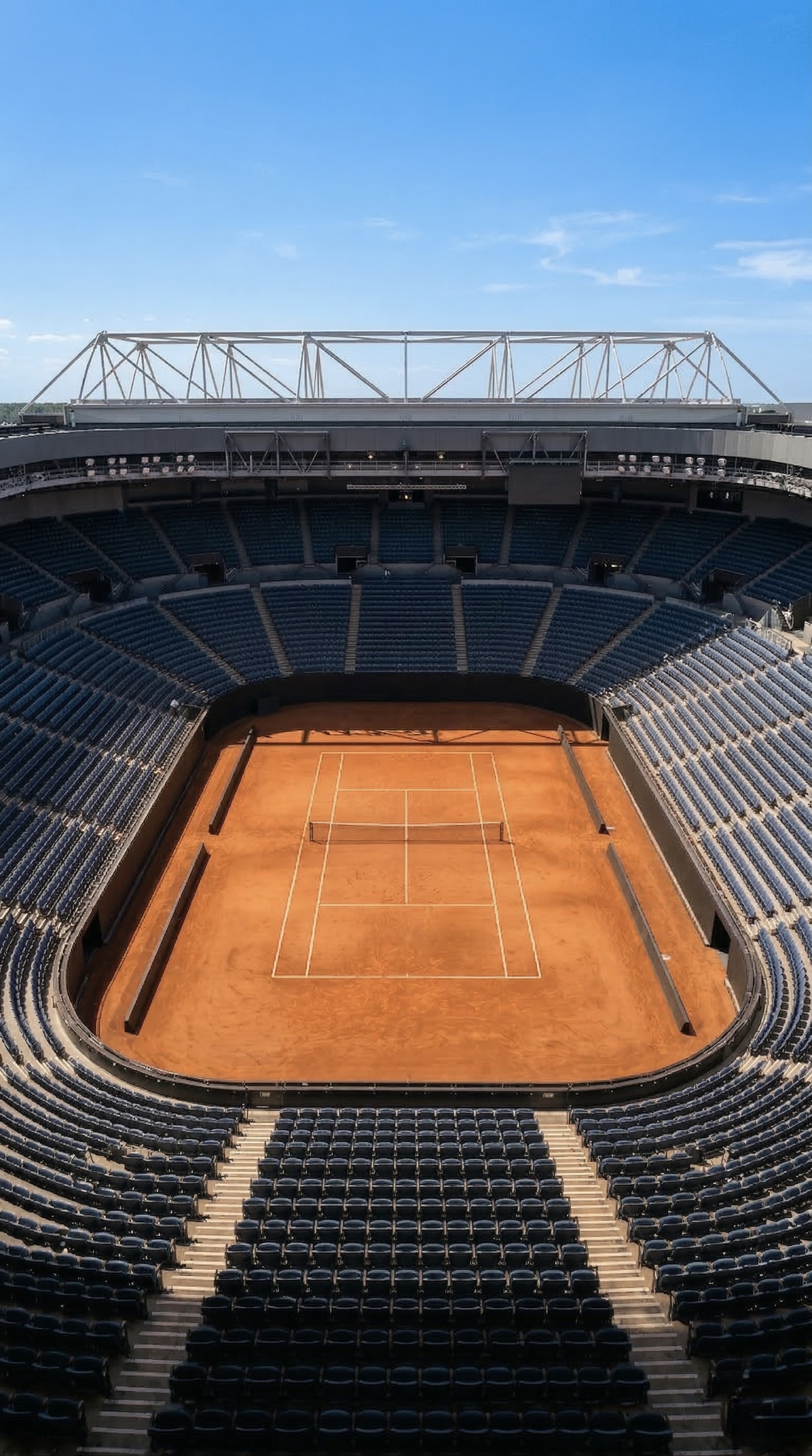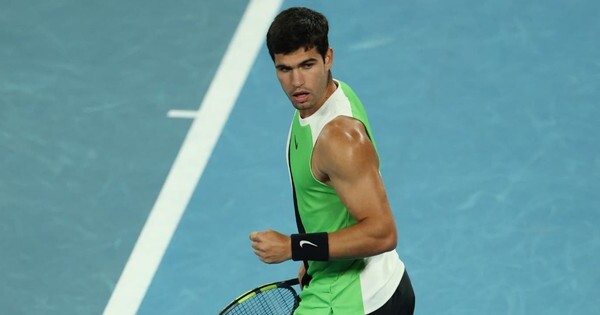
The Foro Italico has witnessed plenty of memorable evenings since Rome became a permanent fixture on the tennis calendar. But the night of May 18, 2025 carved its own distinct place in the sport's collective memory. Carlos Alcaraz, the Spaniard whose backhand cuts through rallies with the same ease as his smile disarms press conferences, claimed his maiden Internazionali BNL d'Italia title by dismantling Jannik Sinner 7-6(5), 6-1 in a final that carried the accumulated tension of a remarkable Roman fortnight. In doing so, he snapped the world No. 1's 26-match winning streak and reminded everyone that certainty is a luxury tennis does not trade in.
The significance of this Roman triumph extends well beyond a trophy count. Alcaraz became only the fifth man in the modern era to win all three clay-court Masters 1000 events, joining Rafael Nadal, Novak Djokovic, Gustavo Kuerten, and Marcelo Rios on a list that reads like a hall of fame shortlist. At twenty-two, the Spaniard is operating in a historical dimension reserved for the sport's greatest figures. This was also his third title of the 2025 season, following Rotterdam and Monte-Carlo, evidence of a dominance that transcends surface preferences.
Sinner's Return: The Emotional Subplot
The other defining narrative of this Roman fortnight belonged to . The Italian was making his competitive return after three months away from the tour, serving a suspension agreed upon with the World Anti-Doping Agency. The case, stemming from trace amounts of clostebol detected in his samples from March 2024, had rocked the tennis world for months. The accepted explanation held that contamination occurred inadvertently during a massage from a member of his support team who had applied a product containing the substance after cutting his finger. A three-month suspension, running from February 9 through May 4, 2025, was the outcome.
Returning to the Foro Italico, in front of his home crowd, under these circumstances was as much an emotional challenge as a sporting one. Sinner himself had told reporters he felt "rested, calm, relieved after a very difficult year." Measured words, but the pressure bearing down was considerable. Every gaze from the Roman galleries carried an unspoken question: would the world No. 1 be the same player after three months away from competitive tennis?
The answer, over the course of the week, was emphatically positive. Sinner won five matches to reach the final, displaying a level of solidity that surprised even the most optimistic forecasts. His opening match against Mariano Navone, wrapped up 6-3, 6-4, dispelled fears of a rusty comeback. A 7-6(2), 6-3 victory over Francisco Cerundolo in the fourth round showed a player capable of managing the tension of decisive moments. The quarterfinal against Casper Ruud produced the most emphatic statement of the week: 6-0, 6-1, a masterclass that left the Norwegian searching for answers that never arrived.
The semifinal against Tommy Paul offered a different script entirely. Sinner dropped the opening set 1-6, plunging the Foro Italico into anxious silence. Then something shifted. The Italian elevated his game dramatically, taking the second set 6-0 before closing out the third 6-3. That ability to respond under duress, after months without competitive tennis, spoke to a mental resilience that separates the genuinely elite from everyone else.
Alcaraz's Path: Building Through the Draw
Alcaraz arrived in Rome carrying legitimate concerns about his physical condition. He had missed the Madrid Masters due to an adductor injury and wore a precautionary knee wrap during his early matches, a visible signal that his body was not yet operating at full capacity. His opening round against Dusan Lajovic, secured 6-3, 6-3, was solid without being spectacular, the Spaniard clearly feeling his way back into rhythm on the Foro Italico clay.
The third round against Laslo Djere marked the first step up. A 7-6, 6-2 victory in an hour and forty-four minutes, with a competitive first set that allowed Alcaraz to rediscover the cadence of extended clay court rallies. It was the fourth round that revealed the real Alcaraz, in a three-set battle against Karen Khachanov. The Russian, dangerous off the ground and physically imposing, pushed the Spaniard deep into the match before falling 6-3, 3-6, 7-5. That contest served as a catalyst. Alcaraz emerged with the knowledge that his body was responding and his level still had room to climb.
The quarterfinal against Jack Draper confirmed the upward trajectory. Alcaraz dispatched the Briton 6-4, 6-4 with an authority that contrasted sharply with the tentative play of the opening rounds. His down-the-line backhand, a weapon of particular devastation on clay, was firing at full capacity. His court coverage, occasionally labored earlier in the week, had recovered the fluidity that makes him the most complete player of his generation.
The semifinal against Lorenzo Musetti presented the most dangerous potential trap in his draw. The Italian, riding the support of his home crowd and fresh off a notable victory over Daniil Medvedev, possessed the touch and tactical variety to unsettle any opponent on this surface. Alcaraz responded with the composure of a proven champion: 6-3, 7-6(4), a controlled performance in which he never allowed Musetti to establish his game of variations. The first set was a display of measured power. The second was an exercise in mental management through the pressure points of the tiebreak.
The Final: When Momentum Shifts, Everything Follows
Alcaraz versus Sinner. The seventh installment of a rivalry that has established itself as the most significant in men's tennis. The Spaniard led their head-to-head 6-4 coming in, but every meeting between these two carries its own distinct narrative.
The first set produced tennis of extraordinary quality. Sinner, true to his identity, sought to impose his rhythm from the baseline, hammering Alcaraz's backhand with metronomic consistency. The Spaniard responded with calculated aggression, mixing crosscourt forehand accelerations with net approaches that disrupted his opponent's point construction. Neither player offered a single break point in the opener, holding the Roman crowd in sustained tension through to the tiebreak.
At 5-5 in the breaker, Alcaraz produced two points that encapsulated his particular brand of genius. A running backhand pass, followed by a serve placed surgically on the T. Seven-five in the tiebreak, and the unmistakable sense that something had fractured in Sinner's resistance.
The second set confirmed it. Alcaraz raised his aggression another notch, breaking Sinner's serve in the second game with disarming ease. The Italian, whose body language betrayed mounting frustration, never found the resources to reverse the momentum. Six-one in forty minutes, a scoreline that overstates the gap between these two players across the full match but accurately reflects Alcaraz's capacity to press his advantage when he senses an opponent wavering.
Alcaraz Enters Clay Court History
This Roman title places Alcaraz in a fascinating historical context. At twenty-two, he has already conquered Roland Garros, Monte-Carlo, Madrid, and Rome, a quadruple that only Nadal and Djokovic had previously completed in the modern era. The comparison with Nadal at the same age is natural: the Majorcan had already claimed four French Open titles and was dominating clay with near-hegemonic authority, but he had not yet developed the cross-surface versatility that allows Alcaraz to thrive equally on hard courts and grass.
His seventh Masters 1000 title, at an age when most players are still learning the rhythms of the tour, confirms that Alcaraz occupies a category of his own. His ability to return from injury and string together victories against the world's best on a demanding surface speaks to a competitive maturity that exceeds his years.
Sinner's Assessment: A Successful Return Despite the Loss
For Sinner, this Roman fortnight demands nuanced analysis. The final defeat, however lopsided the second-set scoreline, cannot obscure the broader success of his competitive return. Reaching a Masters 1000 final after three months away, winning five matches including several of remarkable intensity, represents a performance that many observers would have considered unlikely just weeks earlier.
Sinner himself acknowledged being "closer than expected" to his best level. His baseline game, his striking power, his ability to accelerate in decisive moments — all intact. What he lacked against Alcaraz in the final may have been that fraction of a second of additional reactivity, that capacity to absorb pressure at the critical junctures without flinching, which only returns through sustained high-level match play.
Djokovic's absence — he withdrew before the tournament after early exits in Monte-Carlo and Madrid — deprived the Roman fortnight of one of its customary protagonists. The Serbian, needing results to maintain his world ranking, will need to find other opportunities to accumulate points before Roland Garros.
Musetti: Italy's Pride
Lorenzo Musetti earned a special mention for his Roman week. The Italian delivered moments of sumptuous tennis for his home crowd, combining his single-handed backhand technique with sharp tactical awareness to defeat Medvedev and reach the semifinals. His loss to Alcaraz, while logical given the hierarchy, detracted nothing from a week that confirmed his standing among the best clay court players on tour at twenty-three years of age.
A Week That Reshapes the Season
The 2025 Internazionali d'Italia reshuffled the deck heading into Roland Garros. Alcaraz, climbing back to world No. 2 courtesy of this title, arrives at the Porte d'Auteuil in a position of strength, his confidence restored and his clay court credentials beyond question. Sinner, despite the final loss, demonstrated that he remains world No. 1 for legitimate reasons and that his suspension had not eroded his fundamental capabilities. Their rivalry, now standing at 7-4 in favor of the Spaniard after eleven meetings, promises many more chapters to come.
Rome delivered tennis worthy of its ancient setting. On the ochre clay of the Foro Italico, framed by umbrella pines and classical columns, two champions aged twenty-two and twenty-three wrote the latest chapter of a rivalry that will define the next decade of men's tennis. The Roman sun set on a winner, but the story itself is only getting started.