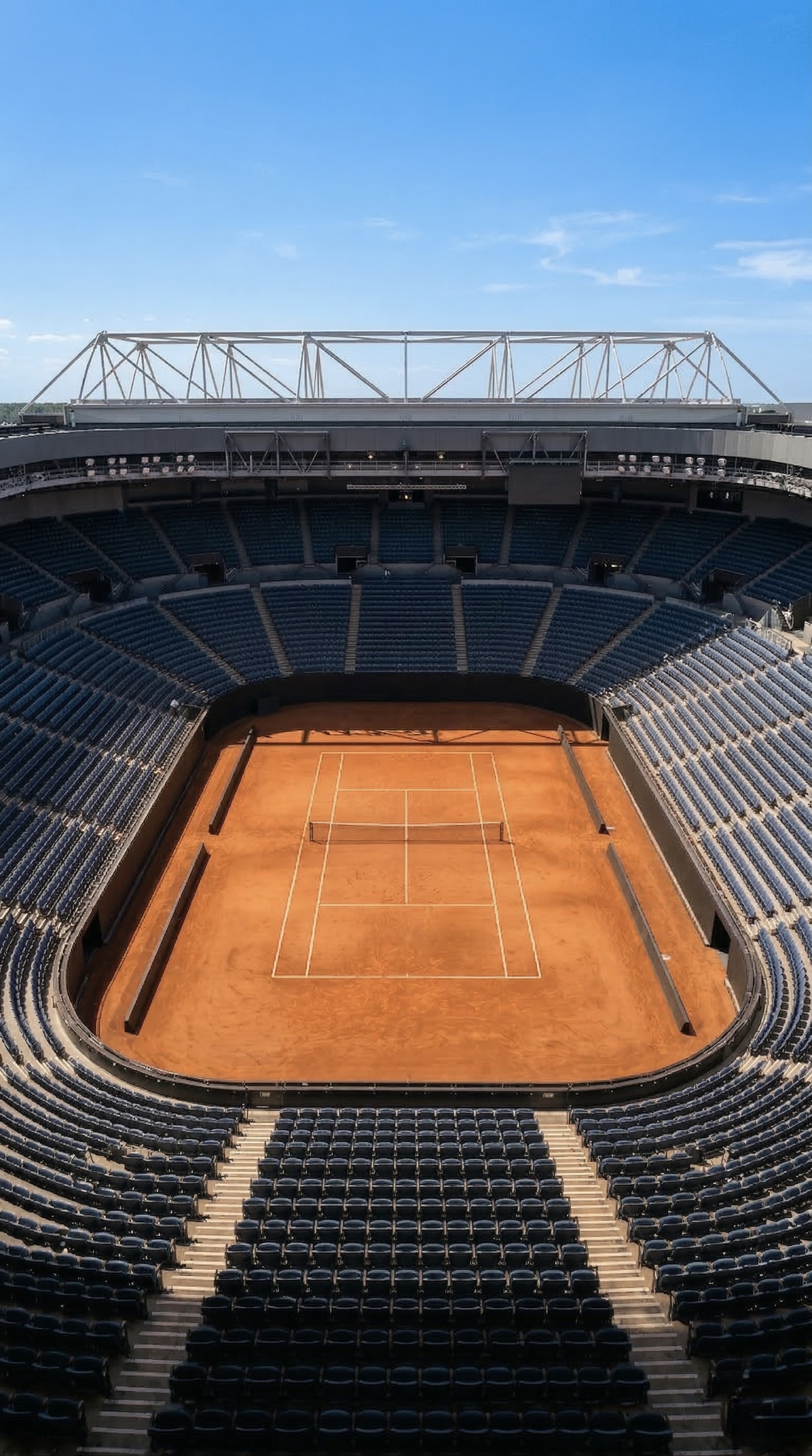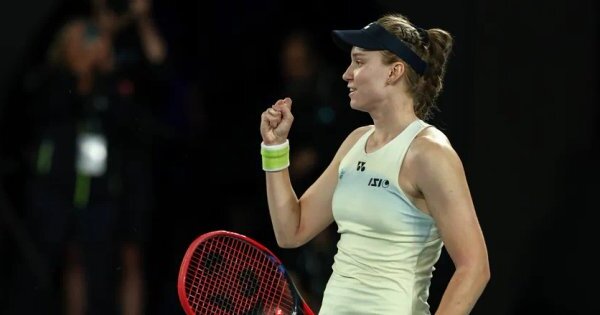
The 129th edition of Roland-Garros is set to be one of the most unpredictable and compelling women's draws in recent memory. For the first time in years, there is genuine uncertainty at the top of the women's game, and the Porte d'Auteuil will serve as the stage for a battle between an undisputed world number one hunting her first French Open title, a defending champion navigating the most difficult stretch of her career, and a young American who may well be at the peak of her powers. The 2025 Roland-Garros women's tournament is not just a tennis event; it is a crossroads moment for an entire generation of players.
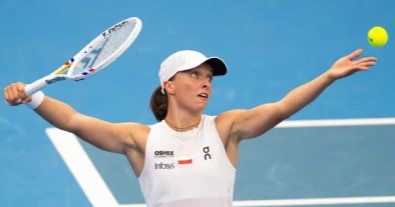
Iga Swiatek arrives in Paris as the fifth seed, a status that would have been unthinkable just twelve months ago. The Polish player who had made Roland-Garros her personal fiefdom, winning the title in 2020, 2022, 2023 and 2024, now enters the tournament without a single title to her name this season, without a final appearance since last June, and without any of the relentless confidence that characterized her dominance from 2022 through 2024. The numbers tell a sobering story: Swiatek is 0-4 against Coco Gauff and Mirra Andreeva combined in 2025, she was eliminated in the third round at Rome by Danielle Collins, and her early exits in Madrid and Rome mark the shakiest clay season she has produced since her breakthrough year.
And yet, writing Swiatek off at Roland-Garros feels like an act of journalistic recklessness. The 23-year-old has lost only three matches at the Porte d'Auteuil since 2019, a record that places her among the most dominant players at a single venue in the Open Era. She arrived in Paris on May 15, a full two weeks before the start of the tournament, having spent time preparing at Rafael Nadal's academy in Manacor, a symbolic choice that speaks to her determination to rediscover the form that made her untouchable on this surface. Her heavy topspin forehand, her remarkable defensive consistency, and her tactical intelligence on clay remain formidable weapons. The question is not whether she has the tools; the question is whether she has the mental composure after a turbulent twelve months that included a positive test for a banned substance last autumn, a temporary suspension, and the psychological weight of a prolonged title drought.
enters Roland-Garros 2025 in the form of her life and with a profile that demands respect. The 27-year-old Belarusian is, by any measure, the best player in the world right now, and she arrives in Paris with the best season record on the WTA Tour: three titles including WTA 1000 victories in Miami and Madrid, six finals reached, a pace not seen since Martina Hingis in 2001, and a dominance over the top of the draw that has been both consistent and convincing. Her 6-3, 7-6 victory over Gauff in the Madrid final was a masterclass in controlled aggression: Sabalenka dictating the pace with her serve and forehand while showing the patience and tactical variation that clay demands.
For Sabalenka, Roland-Garros represents the one major missing from a resume that already includes two Australian Open titles. She has reached the quarterfinals in Paris three consecutive years, each time falling just short of the final, a statistic that reflects both her improvement on clay and the ceiling she has not yet broken through. The draw has placed her and Swiatek in the same half, setting up a potential semifinal blockbuster between the two dominant forces of the women's game. That match, should it materialise, would be among the most anticipated in the recent history of Grand Slam tennis. Sabalenka's only real vulnerability this clay season was her quarterfinal loss in Rome to Zheng Qinwen, a reminder that even the world's best player can be beaten on a slow clay surface when an opponent is firing at peak level.
Coco Gauff makes her case as the player in the best form heading into the fortnight. The 21-year-old American has gone 11-3 on clay this season, reached back-to-back finals in Madrid and Rome, and ranks third in clay court Elo rating heading into Paris. Her only losses on the surface came against Sabalenka and twice against Paolini, defeats that reveal her limitations but do nothing to diminish the picture of a player who has clearly identified clay as her best surface. Gauff's game is built for Paris: the heavy groundstrokes, the willingness to engage in extended rallies, the exceptional movement, and the serve that has improved markedly over the past eighteen months. She reached the semifinals at Roland-Garros in 2024 and the final in 2022, and there is a compelling argument that 2025 could be the year she converts her clay court dominance into a Grand Slam title on the surface that suits her best.
is the wild card that the tournament draw cannot ignore. The Italian fourth seed was the runner-up here last year, losing to Swiatek in the final but showing the entire tennis world that her game translates beautifully to the particular demands of Roland-Garros. In 2025, she has gone further: she won the Italian Open in Rome, defeating Gauff in the final with a straight-sets performance of extraordinary quality, and she had earlier beaten the American in Stuttgart as well. Paolini's tennis is defined by her two-handed backhand, one of the most reliable weapons on clay on the WTA Tour, combined with her remarkable physical endurance and tactical intelligence. At 29, she is playing the best tennis of her career, and a second consecutive Roland-Garros final, or better, is well within her reach.
enters the draw as a legitimate threat, though her clay season has been less dominant than those of the top four contenders. The 25-year-old Kazakh, who recruited former Djokovic coach Goran Ivanisevic at the end of last season, is sixth in the clay court power rankings heading into Paris. Her serve and forehand are weapons that work on any surface, and she has shown in recent seasons that the longer rallies of clay no longer represent the insurmountable obstacle they once seemed. However, her 2025 season has lacked the kind of sustained consistency that would place her in the top tier of favorites, and she will need to produce her best tennis from the very first round if she is to go deep in this tournament.
, the fifth seed and the most underrated player in the draw, brings a formidable combination of mental resilience and technical precision. The American has consistently found herself at the business end of major tournaments without managing to convert semifinal appearances into final berths, and Roland-Garros represents another opportunity to break through that psychological barrier. Among the next generation, Mirra Andreeva's wins over Swiatek in 2025 suggest that the 17-year-old Russian teenager has the game and the nerve to cause disruptions deep in the draw, while the Italian contingent around Paolini and the emerging youth movement represent the broader narrative of a women's tour in genuine transition.
The structural dynamics of the draw are worth noting. Sabalenka and Swiatek are both in the top half, meaning they cannot meet before the semifinals, a circumstance that has both players navigating significant obstacles before any potential showdown. Gauff opens her campaign as the second seed from the bottom half and is projected to face Madison Keys, the Australian Open champion, in the quarterfinals. Keys playing her first Roland-Garros as a Grand Slam champion adds a layer of narrative intrigue that was absent from previous editions. Paolini, as the fourth seed, is in the same quarter as Swiatek, meaning the two potential finalists from 2024 could meet as early as the quarterfinals.
The clay statistics tell a story that defies simple narratives. Swiatek's career record in Paris remains extraordinary: three defeats since 2019, a match win percentage that surpasses every active player on this surface. But statistics are backward-looking by definition, and the Swiatek of 2025 is a different player psychologically from the one who dominated this tournament from 2022 to 2024. Sabalenka has the form, the ranking, the physical tools, and the momentum. Gauff has the clay court record and the age on her side. Paolini has the experience, the local support of a passionate Italian fan base, and the memory of last year's final to fuel her ambitions.
Roland-Garros 2025 will answer several questions that have been building throughout the clay season. Can Swiatek reassert her claim to be the greatest clay court player of her generation, or has the balance of power shifted permanently? Can Sabalenka finally claim the one major title that would make her case for all-time greatness unanswerable? Can Gauff harness a clay season of outstanding quality and deliver it on the grandest stage? The courts of Roland-Garros have a history of producing answers that nobody expected, and the 2025 edition looks set to continue that tradition.