Three weeks before the gates of Roland-Garros swing open for the 2025 edition, the tennis world finds itself in a state of breathless anticipation. The men's draw promises to be one of the most compelling in recent memory, while the women's side presents its own captivating narrative of dominance challenged. As the clay court season unfolds across Europe, the storylines converging on Paris are rich, layered, and impossible to ignore.
Carlos Alcaraz returns to the Porte d'Auteuil as the defending champion, a title he seized in spectacular fashion last year with a five-set victory over Alexander Zverev that will be remembered as one of the great finals of the modern era. At just 22, the Spaniard has already demonstrated a relationship with clay that goes far beyond mere nationality. His 2024 triumph was not built on talent alone but on a willingness to suffer, to engage in the kind of brutal physical exchanges that Roland-Garros demands of its champions. Every point earned on that surface felt like it was wrestled from the red dirt itself.
The 2025 clay court season has offered a complex picture of Alcaraz's form. There have been moments of brilliance, those flashes of improvisation and power that make him the most exciting player on tour. But there have also been wobbles, reminders that defending a Grand Slam title is an entirely different psychological challenge than winning one for the first time. His serve, a devastating weapon on hard courts and grass, becomes slightly less dominant on clay, where the slower bounce gives returners an extra fraction of a second to organize. It is in these margins that matches at Roland-Garros are decided, and Alcaraz knows it.
The man most likely to dethrone him is Jannik Sinner. The world number one has been nothing short of sensational in 2025, building on his Australian Open triumph with a level of consistency that has forced the tennis world to recalibrate its expectations. For years, Sinner was viewed as a hard-court specialist, a player whose flat, penetrating groundstrokes were better suited to the faster surfaces. That narrative has been comprehensively dismantled. The Italian has worked tirelessly on his clay court game, developing a heavier topspin on his forehand, improving his lateral movement, and cultivating the patience required to construct points on a surface that punishes impatience.
What makes the Alcaraz-Sinner rivalry so compelling on clay is the philosophical difference in their approaches. Alcaraz is an artist, a player who paints with drop shots, angled volleys, and changes of pace that seem to bend the laws of physics. Sinner is an architect, building points with methodical precision, maintaining an almost inhuman level of ball-striking consistency that wears opponents down over the course of five sets. When these two contrasting visions of tennis collide on the terre battue, something extraordinary happens.
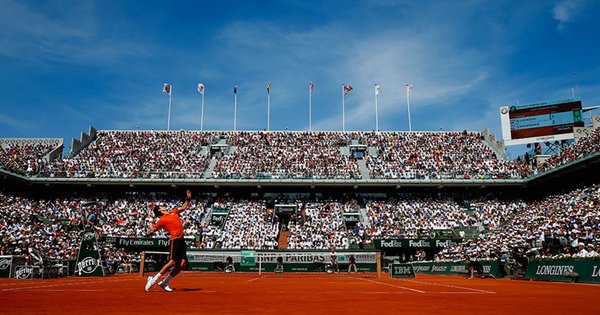
Then there is . At 38, the Serbian legend continues to defy every assumption about aging in professional tennis. A four-time Roland-Garros champion, Djokovic knows the Philippe-Chatrier court the way a conductor knows his orchestra. Every bounce, every shadow, every subtle shift in conditions is catalogued in a mental database built over two decades of competition at the highest level. His 2025 season has been a study in contrasts, with commanding victories sitting alongside defeats that have fueled retirement speculation. But writing off Djokovic at a Grand Slam remains one of the most foolish bets in sport.
What Djokovic possesses that neither Alcaraz nor Sinner can yet claim is the institutional knowledge of Grand Slam warfare. He understands the rhythm of a two-week tournament in his bones, knows when to conserve energy, when to raise his level, and when to dig into reserves of mental strength that have carried him through countless battles. His backhand, arguably the most reliable in the history of tennis, is particularly effective on clay, where the consistent bounce allows him to exploit its surgical precision to devastating effect. The question is not whether Djokovic has the game to win Roland-Garros in 2025, but whether his body will cooperate against opponents who are sometimes fifteen years his junior.
completes the quartet of leading contenders. The 2024 finalist has spent the past twelve months processing the pain of that five-set defeat to Alcaraz and channeling it into a renewed determination. His serve remains one of the biggest weapons in the sport, his baseline power is formidable, and his physical conditioning allows him to compete in the grueling five-set format that Roland-Garros demands. Yet Zverev continues to wrestle with a reputation for faltering in the decisive moments of major tournaments, a narrative he is desperate to rewrite. Paris could be the stage for that redemption.
Beyond the big four, several players lurk as potential disruptors. Casper Ruud, a two-time finalist at Roland-Garros, remains one of the most dangerous clay court players in the world. His heavy topspin and relentless consistency make him a nightmare opponent in the later rounds. Stefanos Tsitsipas, the 2021 finalist, is searching for a return to his best level after inconsistent seasons. And the next generation, led by talents like Holger Rune, could seize the moment to announce themselves on the biggest stage in clay court tennis.
The women's draw revolves around a single, seemingly unanswerable question: who can beat Iga Swiatek on clay? The Polish superstar's dominance at Roland-Garros has reached a level that invites comparison with the greatest clay court dynasties in tennis history. Her four titles at the French Open represent not just victories but a comprehensive mastery of the surface that goes beyond mere results. Her topspin forehand, heavy and relentless, turns every rally into a physical ordeal for her opponents. Her court coverage borders on the supernatural. Her mental fortitude on clay is absolute.
Aryna Sabalenka, the world number one, represents the most credible threat to Swiatek's Parisian empire. The Belarusian has conquered hard courts with an authority that few can match, her Australian Open titles cementing her status as one of the dominant forces in women's tennis. But Roland-Garros has remained stubbornly beyond her reach, the one Grand Slam where her raw power has not been enough to overcome the tactical demands of clay. Yet there are signs of evolution in Sabalenka's game. She has added variety, developed patience, and learned to embrace the longer rallies that clay necessitates. If she can marry her extraordinary power with the strategic discipline that Roland-Garros requires, she could finally break through.
Coco Gauff rounds out the leading women's contenders. The young American, a US Open champion at 19, has continued to mature into one of the most complete players on the WTA Tour. Her backhand has become one of the most reliable shots in women's tennis, and her return of serve puts constant pressure on opponents. At 21, she has both the time and the talent to build a legacy at Roland-Garros, and this edition could mark the beginning of that story.
The narratives surrounding Roland-Garros 2025 are irresistible. Alcaraz's title defense evokes memories of the great champions who have successfully retained their crown on the Parisian clay, a feat that demands not just talent but a particular kind of mental resilience. Sinner's quest to prove his supremacy extends to every surface adds stakes to every match he plays. Djokovic's potentially final chapter at a tournament he has conquered four times carries an emotional weight that transcends competition. And Swiatek's continued reign on clay challenges her rivals to find solutions to a puzzle that has so far proved unsolvable.
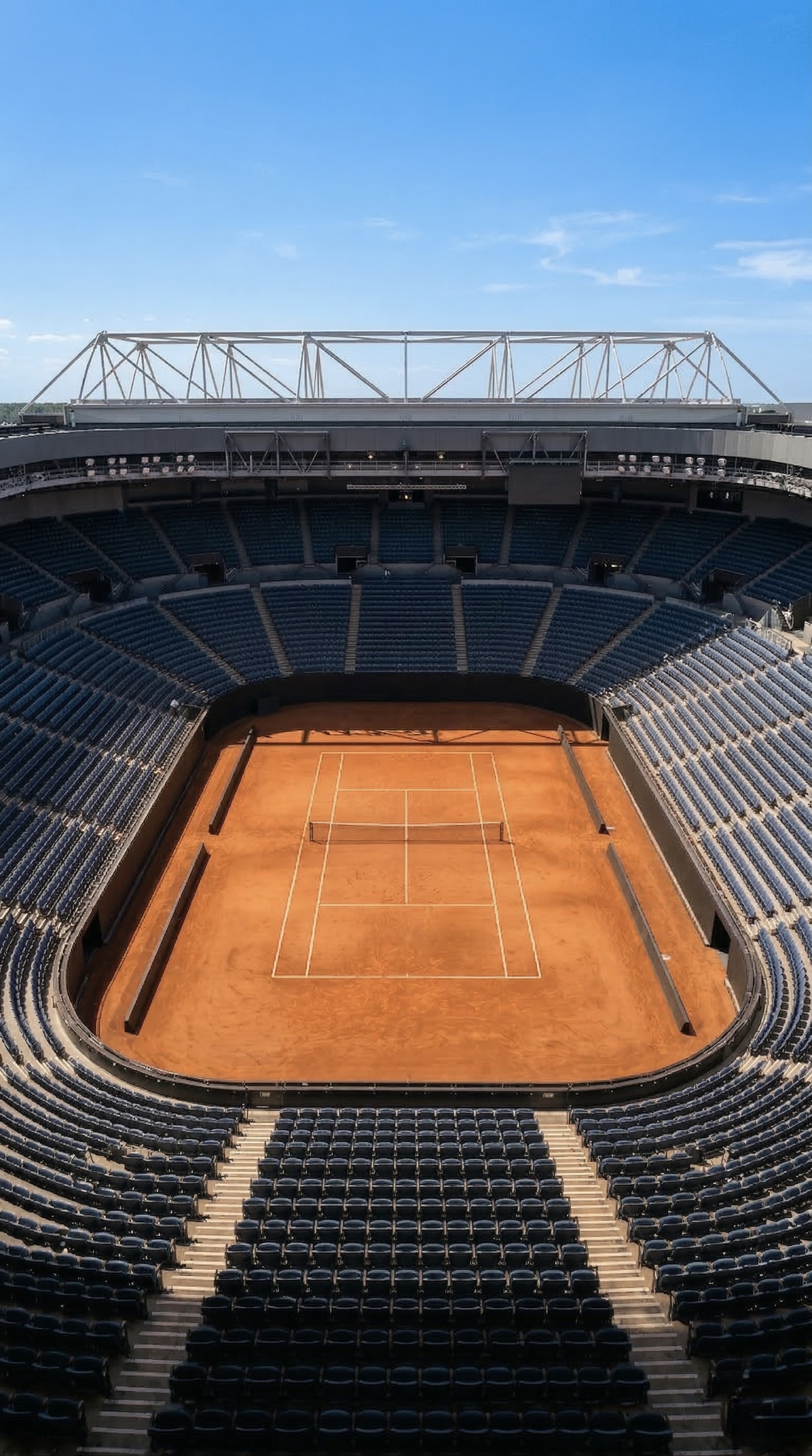
The draw ceremony, scheduled for a few days before the tournament begins, will shape the fortunes of every player in the field. The placement of seeds across the different quarters could create dream semifinals or force premature collisions between favorites. Weather conditions in Paris during late May and early June will also play their part. Cool, damp conditions slow the courts and favor defensive players, while heat speeds up the surface and rewards aggressive ball-strikers. The retractable roof on Court Philippe-Chatrier, installed in 2020, adds another variable, potentially transforming an outdoor clay court match into something resembling an indoor encounter.
Roland-Garros 2025 has all the ingredients for a tournament that will be discussed for years to come. The convergence of generational talent, living legends, and emerging forces creates a sporting spectacle that only the Grand Slams can deliver. From May 25 to June 8, the red clay of Paris will bear witness to triumphs and heartbreaks, to moments of genius and displays of courage that remind us why tennis, at its best, is among the most compelling dramas in all of sport.