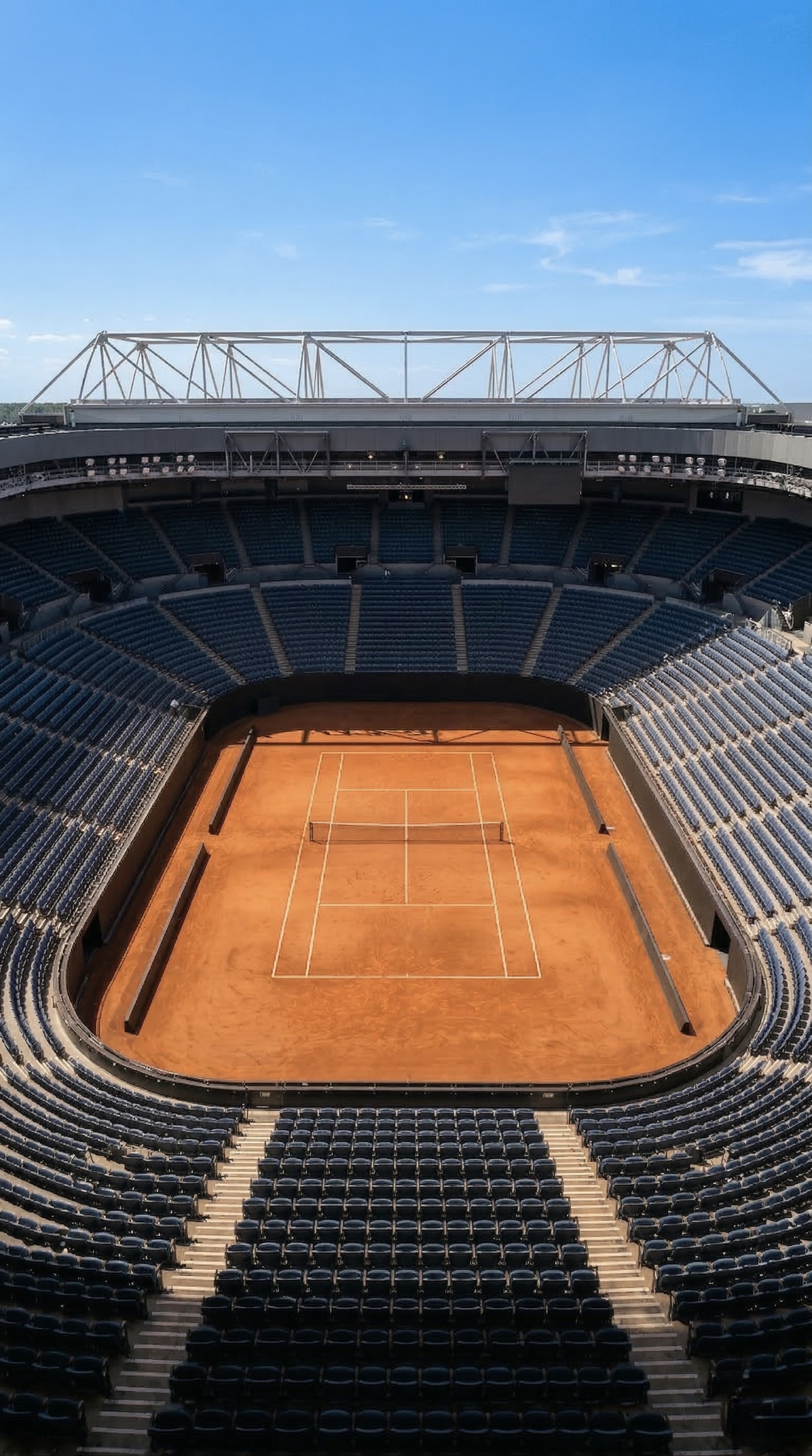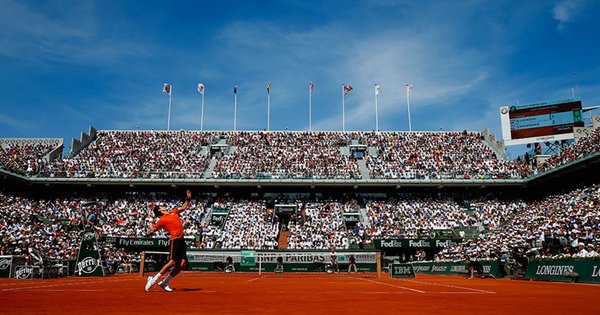
The ochre dust of Roland-Garros has settled on seven days of competition, and as the second week beckons with its promise of quarterfinal fire, the 2025 French Open has already etched its early chapters into the tournament's storied history. What began on May 26 with 128 players in each draw has been distilled into a concentrated field of survivors, and the narratives emerging from the Porte d'Auteuil paint a fascinating picture of tennis in transition.
Carlos Alcaraz arrived in Paris carrying the weight of expectation that comes with defending a Grand Slam title, and he has worn it with the lightness of a player utterly at home on clay. The Spaniard's passage through the first four rounds has been marked not by the explosive brilliance that first brought him to global attention, but by something arguably more impressive: a quiet, methodical dominance that speaks to the deepening of his game.
At twenty-two, Alcaraz has added layers to his clay-court arsenal that make him a fundamentally different proposition from the raw talent who burst onto the scene three years ago. His third-round victory, a straight-sets dismissal of a dangerous opponent, showcased a tactical patience that would have been unthinkable in his earlier incarnations. He constructed points with the deliberation of a chess grandmaster, using drop shots with a delicacy that drew gasps from the Philippe-Chatrier crowd, before unleashing the thunderous forehand that remains the most feared weapon in men's tennis.
What sets this version of Alcaraz apart is the efficiency of his serving. Long considered a work in progress, his delivery has matured into a reliable platform that allows him to hold serve without the energy-sapping extended rallies that clay court tennis so often demands. Through four matches, his first-serve percentage has hovered around seventy percent, and his ability to find the corners under pressure has been remarkable. The question facing the rest of the draw is not whether Alcaraz can win a second consecutive Roland-Garros, but whether anyone can find the combination to unlock his seemingly impenetrable game.
The most likely candidate for that task may be . The world number one has spent the better part of two years dismantling the narrative that he is primarily a hard-court player, and his first week in Paris has been another powerful argument in his case. Sinner dropped just one set through his opening four matches, and that solitary blemish came only after he had established a commanding two-set lead, a momentary lapse that he corrected with ruthless efficiency in the fourth.
Sinner's fourth-round victory was a masterclass in controlled aggression. Against a clay-court specialist ranked inside the top twenty, the Italian imposed his rhythm from the opening game, striking the ball early and flat, robbing his opponent of the time and space that clay-court players depend upon. His ability to dictate rallies from the baseline on the slowest surface in tennis is proof of the sheer pace he generates, and his movement, once considered his limitation on clay, has improved to the point where he can defend and counter-attack with equal facility.
The potential semifinal between Alcaraz and Sinner has been the tournament's most anticipated match since the draw was made, and nothing in the first week has diminished its appeal. If anything, both men have only strengthened the argument that their rivalry will define the next decade of men's tennis.
occupies the other half of the draw with intentions that need no explanation. The German, who came within touching distance of the title last year before falling in the final, has returned to Paris with a game that appears to have gained an extra layer of resilience. His opening rounds were not uniformly smooth. A dropped second set in the second round hinted at the concentration lapses that have occasionally plagued his Grand Slam campaigns, but his response to that wobble was emphatic, and he closed out the match with a level of tennis that suggested the setback had sharpened rather than rattled him.
Zverev's serve remains perhaps the single most potent weapon in the men's draw. His ability to generate free points and hold serve with minimal exertion gives him a significant advantage in the physical war of attrition that the second week of Roland-Garros inevitably becomes. If he can maintain the mental fortitude that has sometimes eluded him in the latter stages of majors, he has the game to reach the final once more.
The presence of in the second week adds a layer of intrigue that transcends the purely sporting. At thirty-eight, the Serbian legend continues to compete at the highest level of the game, but his first week at Roland-Garros 2025 has offered a candid glimpse at the reality of aging in elite sport. Djokovic required four sets to navigate his third-round match, and while his competitive instinct and tactical genius remain undiminished, the physical indicators tell a more nuanced story.
His movement, still remarkably fluid for a man of his age, showed moments of hesitation that sharper opponents will look to exploit. His recovery time between points was fractionally longer, his ability to sustain the highest intensity across extended rallies fractionally diminished. None of this diminishes his capacity to produce moments of spectacular tennis, but it raises legitimate questions about whether his body can sustain the demands of three more best-of-five-set matches against increasingly formidable opponents.
The women's draw has unfolded with a degree of predictability at the top that only underscores 's extraordinary dominance on Parisian clay. The Pole, seeking a fifth Roland-Garros title, has moved through the first week with an authority that borders on the imperial. Four matches played, zero sets dropped, an average of three games conceded per set. The numbers are almost absurd in their completeness.
Swiatek's game on clay has reached a level of refinement that makes her the most dominant force on a single surface since the peak years of Rafael Nadal at this very tournament. Her forehand, struck with vicious topspin that kicks up above shoulder height on the slow Parisian clay, is essentially unreturnable when she finds her range. Her backhand provides both defensive solidity and attacking variety. Her movement allows her to transform defense into offense in a single stride. And her mental game, forged through years of experience at the highest level, means she rarely offers opponents the psychological opening they need.
represents the most credible threat to Swiatek's coronation, and her first week has been a study in the kind of determined, powerful tennis that makes her so dangerous. The Belarusian's path has not been entirely serene. She was pushed hard in the second round and had to save set points in the opening set of her third-round match. But what defines Sabalenka is her ability to find another gear when the situation demands it, and on each occasion she has responded with the kind of aggressive, frontfoot tennis that has made her a multiple Grand Slam champion.
The stylistic contrast between Swiatek and Sabalenka is what makes their potential semifinal so tantalizing. Sabalenka's raw power against Swiatek's tactical sophistication and relentless consistency is a matchup that promises high drama, and both players' first-week performances suggest they will arrive at that encounter in peak form.
Coco Gauff's Roland-Garros campaign deserves particular attention. The American, still only twenty-one, has shown a maturity on clay that suggests her development on the surface has taken a significant step forward. Her progression through the first week has been characterised by a gradual intensification of performance, each match sharper and more assured than the last. The occasional one-handed backhand she has incorporated into her repertoire this season has proven an effective variation, disrupting opponents' rhythms and adding an element of unpredictability to her game.
Gauff reached the fourth round with the composure of a player who is beginning to feel genuinely comfortable on clay, and her trajectory suggests that Roland-Garros may soon become a tournament where she is considered a genuine contender rather than an outside threat.
Beyond the marquee names, the first week produced its customary share of upsets and revelations. Several seeds in the top fifteen fell victim to the deep pool of clay-court talent that populates the lower reaches of the rankings, players whose games are perfectly calibrated for the demands of the surface and who find in the Paris fortnight their annual opportunity to shine. The qualifying rounds and early rounds on the outer courts provided the kind of drama that makes Roland-Garros the most atmospheric Grand Slam, with unknown players producing performances that will live long in their memories and in the hearts of the spectators who witnessed them.
The weather, that eternal variable in the Parisian equation, played its part in shaping the opening week. Cool, slightly damp conditions in the early days slowed the courts and favored the patient baseliners, while the arrival of warmer weather toward the weekend accelerated the surface and rewarded more aggressive approaches. This meteorological shift added another layer of complexity to an already demanding tournament, forcing players to adjust their tactics and their expectations from one day to the next.
As the second week begins, the quarterfinal picture is coming into sharp focus, and the matches it promises are worthy of the grandest stage in clay-court tennis. The men's draw offers the tantalizing prospect of an Alcaraz-Sinner semifinal that could rank among the greatest matches in tournament history. The women's draw presents a potential Swiatek-Sabalenka collision that would pit irresistible force against immovable object.
Roland-Garros 2025, at its midpoint, has delivered on its promise. The greatest clay-court tournament in the world has once again proven itself the ultimate test of tennis completeness, rewarding those who combine physical endurance with tactical intelligence, mental resilience with technical excellence. The first week's lessons are clear: the established champions remain formidable, the challengers are closing the gap, and the next generation is knocking on the door with increasing urgency. What follows promises to be extraordinary.