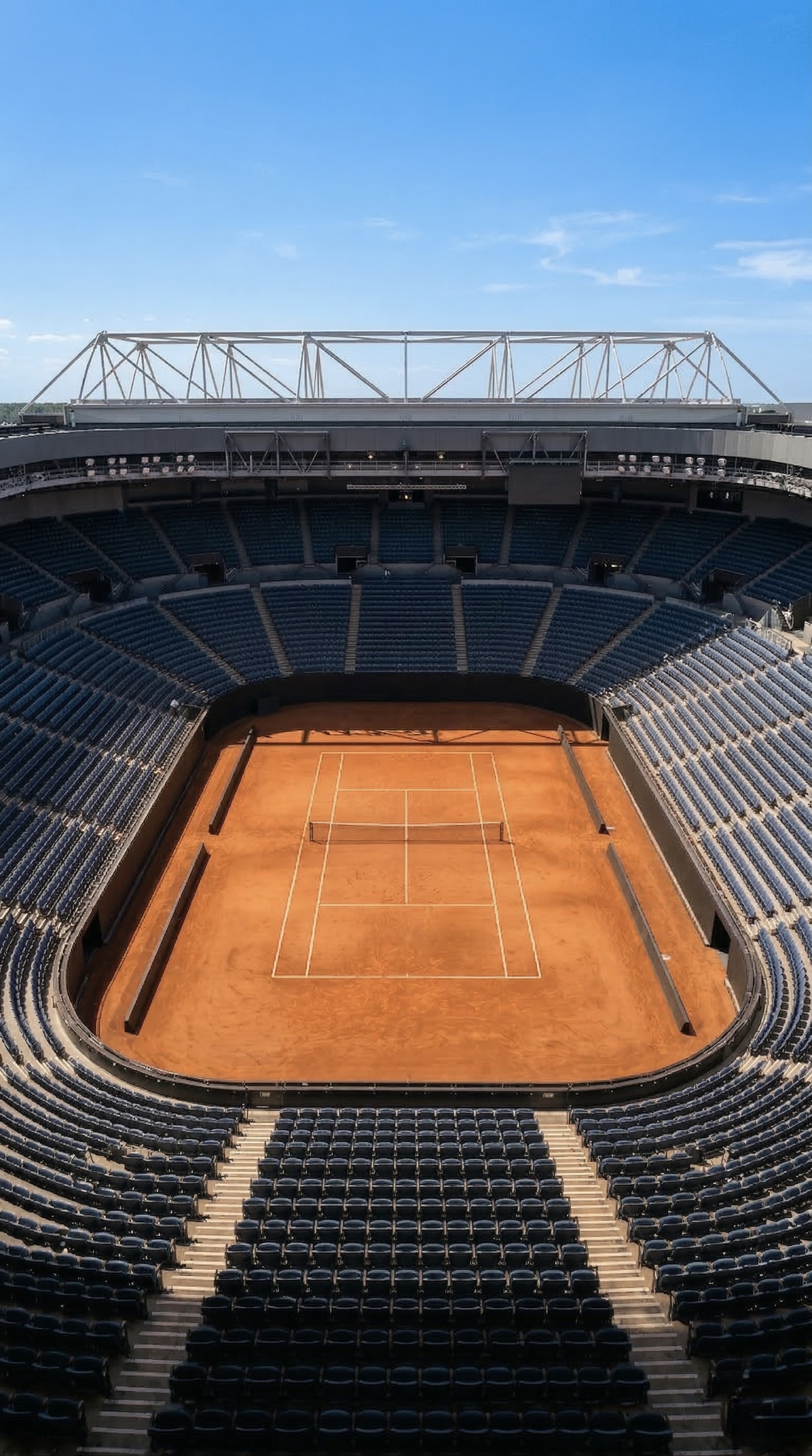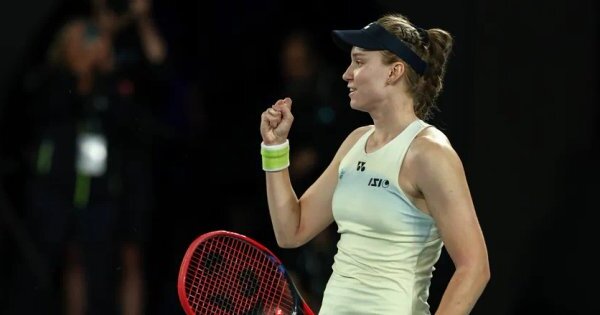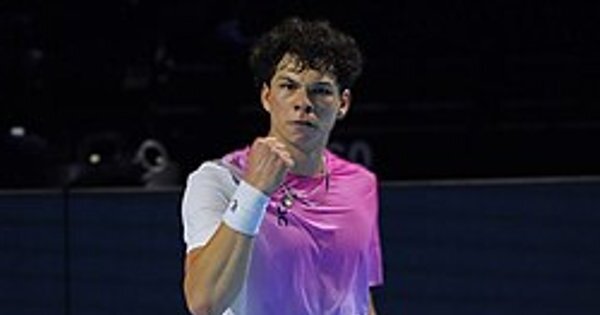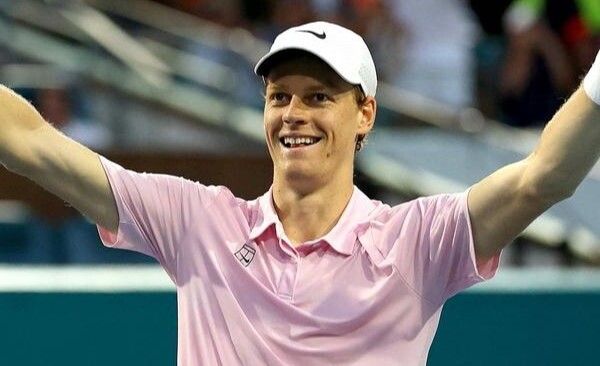
Indian Wells delivered. The 2026 BNP Paribas Open will go down as one of the most electric editions the California desert has ever staged. Jannik Sinner authored a flawless run through the draw without dropping a single set. Aryna Sabalenka clawed back from a championship point down to lift her first Indian Wells trophy. And Daniil Medvedev, written off by plenty of observers entering the fortnight, reminded the tennis world he remains a force capable of dismantling anyone on a hard court.
Sinner's final against Medvedev was a masterclass in controlled aggression. The scoreline read 7-6(6), 7-6(4), two tiebreaks that could have tilted either way but ultimately bent toward the Italian's iron composure. Medvedev made him work for every inch of court space, constructing long rallies from the baseline and varying his shot selection with the kind of tactical intelligence that makes him so difficult to solve. For large stretches, the Russian looked like he had the answers. He didn't.
The defining sequence came in the second set tiebreak. Medvedev jumped out to a 4-0 lead, and the match appeared to be heading toward a decider. What followed was spectacular. Sinner won seven consecutive points to close out the match, a burst of precision tennis that left the Stadium 1 crowd on its feet. Forehands that kissed the lines. Returns that took time away from Medvedev. A level of execution under maximum pressure that very few players in history have been able to sustain.
With the victory, Sinner became only the third man to complete the full collection of all six Masters 1000 titles played on hard courts, joining Novak Djokovic and Roger Federer in an exclusive club. His 12th major title at this tier cements a career trajectory that has moved past promising and into genuinely historic territory. Even more striking: Sinner became the first player ever to win a Masters 1000 event without losing a set since the category was formally created in 1990. Not Djokovic. Not Federer. Not Nadal. Sinner did it first.
His semifinal against was clinical. A 6-2, 6-4 dismantling of the world number three that never truly felt competitive. Zverev, who had dispatched in the quarterfinals, simply had no answer for the pace and depth Sinner generated off both wings. The German remains one of the most consistent players on tour, but on that particular afternoon, consistent wasn't enough.
Medvedev's run to the final was arguably the tournament's best storyline on the men's side. The world number ten arrived in carrying momentum from his title in Dubai and a streak of 18 consecutive sets won. But the real statement came in the semifinals, where he dismantled 6-3, 7-6(3).
Let that result sink in. Alcaraz entered the match unbeaten in 2026, carrying a 16-0 record that included the Australian Open title and the Qatar championship. He looked untouchable. Medvedev touched him. The Russian's flat, deep ball-striking neutralized Alcaraz's athleticism, and his serve fired with a consistency it sometimes lacks. Alcaraz himself admitted afterward that he had "never seen Daniil play like that." Coming from the Spaniard, that's not casual praise. Medvedev hadn't beaten Alcaraz since the 2023 US Open semifinals, a drought spanning four consecutive losses. The manner in which he ended that losing streak suggested something has shifted in his game and, perhaps more importantly, in his belief.
On the women's side, Sabalenka's triumph was the kind of victory that defines careers. Not because of its cleanliness, but because of the chaos she survived to earn it.
took the first set 6-3 and looked every bit the player capable of denying Sabalenka yet again at this venue. The Belarusian had lost finals in both 2023 and 2025, and for a set, it seemed like the desert was cursed ground for her. The second set brought a different player. Sabalenka raised her intensity, began taking the ball earlier, and broke Rybakina's rhythm with sheer power from the baseline. She leveled the match 6-3.
The third set was pure tension. Rybakina earned a championship point at 6-5 in the tiebreak, on her own serve. What Sabalenka produced in that moment was extraordinary: a cross-court backhand struck at full extension, angled so sharply that Rybakina could only watch it land. From there, Sabalenka won the tiebreak 8-6, capturing her 23rd WTA title in the most dramatic fashion imaginable.
Rybakina's tournament, despite the final loss, confirmed her status as the most dangerous challenger to Sabalenka's throne. Her quarterfinal win over Jessica Pegula and semifinal victory against extended her streak to 12 consecutive wins over top-10 opponents, a run that speaks to genuine elite-level consistency rather than isolated flashes of brilliance.
The women's draw produced its share of surprises elsewhere. , still searching for her best form early in the season, fell to Svitolina in the quarterfinals 2-6, 6-4, 4-6, a match that saw the Pole take a dominant first set before unraveling. , just 21 years old and ranked 14th, reached the semifinals for the first time in her career before running into Sabalenka. The Czech's composed ball-striking through the earlier rounds hinted at a player ready to establish herself among the sport's top tier.
The 2026 hard-court picture is taking shape. Sinner and Alcaraz remain the two poles around which men's tennis orbits, but Medvedev has inserted himself firmly into the conversation as the disruptor no one can afford to overlook. Zverev continues to stack deep runs without quite breaking through against the very best. Among the women, Sabalenka holds the number one ranking with a grip that feels increasingly secure, while Rybakina narrows the gap tournament by tournament.
Miami awaits. The next chapter writes itself.