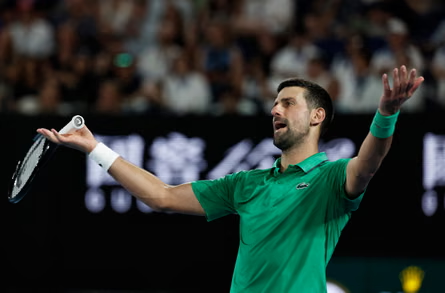
At thirty-seven years old, Novak Djokovic remains the most compelling figure in professional tennis. Not because he is unbeatable, not because his body has somehow defied the aging process, but because his refusal to accept the end of an era continues to produce moments of astonishing drama. In March 2025, the Serbian champion sits at a crossroads that would have forced lesser athletes into retirement years ago. Instead, Djokovic presses on, chasing records that may or may not come, driven by an internal fire that neither injury nor defeat has managed to extinguish.
The numbers alone tell a staggering story. Twenty-four Grand Slam singles titles, more than any man in history. A record 428 weeks at number one in the ATP rankings. Ninety-nine career titles, one short of a century. A positive head-to-head record against both Roger Federer and Rafael Nadal, the two men who shared the stage with him during the greatest era the sport has ever known. Seven Australian Open titles, seven Wimbledon titles, four French Open titles, four US Open titles. He is the only player to have won each of the four major tournaments at least three times, and the only one to have held all four simultaneously.
These are not merely impressive statistics. They represent a body of work that, by any objective measure, places Djokovic at the summit of men's tennis history. And yet, the 2024 season exposed something that even the most devoted Djokovic supporters had been reluctant to acknowledge: the machine is showing signs of wear.
For the first time since 2017, Djokovic failed to win a single Grand Slam title in a calendar year. At the Australian Open, he fell to Jannik Sinner in the semifinals. At Roland-Garros, a knee injury forced him to withdraw in the third round, an indignity that led to surgery and weeks of rehabilitation. At Wimbledon, he reached the final only to lose to Carlos Alcaraz for the second consecutive year, watching the young Spaniard celebrate on the grass that Djokovic has called home for so long. At the US Open, the earliest exit of all: a third-round loss to Alexei Popyrin that barely registered in the news cycle.
By the standards of any other player in history, reaching a Grand Slam final and two semifinals in a single season at age thirty-six would be remarkable. By Djokovic's standards, it was a crisis. The man who had won three of the four majors in 2023 suddenly looked mortal, and the tennis world began to wonder whether the end was near.
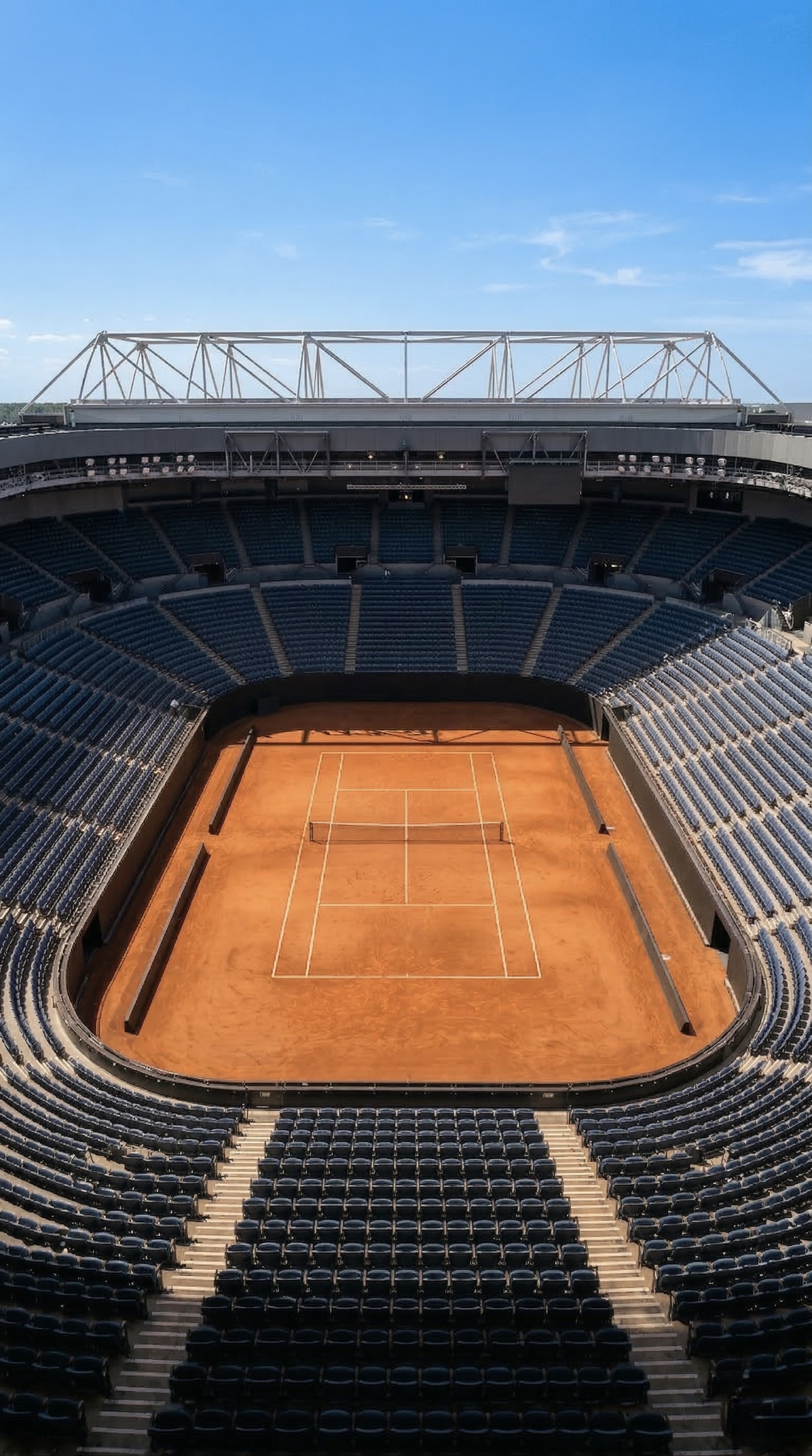
Then came Paris. Not the clay courts of Roland-Garros in May, but the same venue transformed for the Olympic Games in August. Djokovic arrived at the 2024 Olympics carrying the weight of his only significant unfulfilled ambition. He had won everything the sport had to offer except Olympic gold in singles, a gap in his resume that had haunted him through three previous Games. In Beijing 2008, a bronze medal. In London 2012, a gut-wrenching semifinal loss to Andy Murray. In Tokyo 2021, a semifinal defeat to Alexander Zverev followed by a loss in the bronze medal match.
Paris was supposed to be different, and it was. Djokovic stormed through the draw with a focus and intensity that recalled his very best tennis. In the final, he faced Alcaraz, the same player who had beaten him at Wimbledon weeks earlier. This time, Djokovic prevailed, winning in straight sets to claim the gold medal and complete the Career Golden Slam. The image of the Serbian champion weeping on Court Philippe-Chatrier, draped in his country's flag, became one of the defining sporting moments of 2024.
That victory in Paris revealed something fundamental about Djokovic's psychology. At an age when most tennis players have long since retired, motivation can become a fragile commodity. Grand Slams alone were no longer enough to summon the extraordinary effort required to compete at the highest level. The Olympic gold represented something different, something deeper: validation of an entire career, proof that he had conquered every mountain the sport had placed before him.
The question that lingered through the autumn months and into 2025 was whether that validation would drain Djokovic of his competitive fire or replenish it. The answer, as it turned out, was complicated.
The 2025 Australian Open provided the first substantive evidence. Djokovic arrived in Melbourne chasing two milestones: a twenty-fifth Grand Slam title, which would extend his own record, and a hundredth career ATP title, a mark reached by only one man in the Open era, Jimmy Connors with 109. The early rounds offered glimpses of vintage Djokovic, his movement crisp, his returns punishing, his tactical awareness as sharp as ever.
The quarterfinal against Carlos Alcaraz was the match everyone had been waiting for. Two generations colliding, the established king against the heir apparent. Djokovic competed with ferocious determination, but the physical toll was evident. Alcaraz's speed, his ability to hit winners from impossible positions, his youth and energy, all of it proved too much over four grueling sets. Djokovic lost, but the manner of the defeat suggested he was not yet finished.
What followed in the semifinal against Alexander Zverev was far more troubling. Djokovic took the court with a visible leg injury, the consequence of the brutal quarterfinal. He struggled through the first set, his movement restricted, his ability to push off his back leg severely compromised. When he made the decision to retire from the match, a portion of the Melbourne crowd responded with boos, an ugly episode that sparked fierce debate about sportsmanship and the treatment of aging champions.
The retirement at the Australian Open crystallized the central tension of Djokovic's 2025 season. His talent remains extraordinary. His tennis IQ is, if anything, sharper than it has ever been. But his body is betraying him with increasing frequency. The right knee, surgically repaired after Roland-Garros 2024, continues to be a source of concern. Recovery between matches takes longer. The minor physical setbacks that a younger Djokovic would have shrugged off now linger for days, sometimes weeks.
This is not a new phenomenon in tennis. Federer spent his final years managing a deteriorating knee, carefully selecting tournaments, accepting that he could no longer compete in every event. Nadal's foot problems turned his late career into a constant battle between ambition and physical reality. Djokovic is now walking a similar path, though he appears unwilling to make the concessions that his predecessors eventually accepted.
The pursuit of the hundredth title has taken on an almost mythic quality. Djokovic has been stuck on ninety-nine since winning the Shanghai Masters in October 2024, and each tournament he enters carries the same unspoken question: will this be the one? The number is symbolic, a round figure that would cement his place among the most prolific champions in tennis history. But symbols matter, particularly to a player who has spent his entire career fighting for recognition he feels has been unfairly withheld.
Because that is the other thread running through Djokovic's story, the one that has shaped his character as much as any victory or defeat. Despite his record-breaking achievements, he has never enjoyed the popular affection lavished on Federer or Nadal. The Swiss maestro was beloved for his elegance and grace, the Spanish warrior for his humility and fighting spirit. Djokovic arrived as the interloper, the man who disrupted the beautiful rivalry that fans had invested in emotionally. He was always the villain, or at best, the unwanted third party.
This dynamic has fueled Djokovic for over two decades. Every title he won was an act of defiance, a statement that greatness cannot be denied simply because it arrives in an unfamiliar package. His sometimes controversial on-court behavior, the chest-thumping celebrations, the confrontations with crowds, the infamous US Open default in 2020, all of it stemmed from the same fierce pride that made him a champion in the first place.
As March 2025 unfolds, the tennis calendar stretches ahead with Roland-Garros, Wimbledon, and the US Open still to come. Each of these tournaments represents an opportunity for Djokovic to add to his legacy, and each carries the risk of further injury and disappointment. The clay of Paris has never been his most natural surface, though four titles there prove he can master it. The grass of Wimbledon has been his kingdom, but Alcaraz now rules those lawns. The hard courts of Flushing Meadows offer perhaps his best remaining chance at a twenty-fifth major, though the late-summer scheduling tests aging bodies more than any other point in the season.
The emergence of Sinner and Alcaraz as the dominant forces in men's tennis makes Djokovic's task exponentially harder. Sinner, the Italian who claimed the world number one ranking in June 2024, brings a relentless baseline game that suffocates opponents. Alcaraz, at just twenty-one, already possesses four Grand Slam titles and the kind of explosive athleticism that Djokovic can no longer match point for point. These two players represent the future, and they are not waiting politely for Djokovic to finish his farewell tour.
Yet dismissing Djokovic would be foolish. This is a man who grew up practicing tennis in an empty swimming pool in Belgrade while NATO bombs fell on his city in 1999. He has overcome obstacles that would have broken most people before they ever picked up a racket. His mental fortitude is perhaps the single greatest competitive advantage any tennis player has ever possessed, and it does not diminish with age the way speed and endurance do.
The story of in 2025 is not a story of decline, though decline is part of it. It is a story of a champion wrestling with the only opponent he cannot ultimately defeat: time itself. Every match he plays now carries a significance that transcends the result. Every victory is a small miracle of willpower and preparation. Every defeat raises the question that hangs over every great athlete's final chapter: when is enough enough?
For Djokovic, the answer appears to be not yet. The hundredth title beckons. A twenty-fifth Grand Slam remains theoretically within reach. And somewhere deep inside the most accomplished tennis player who ever lived, the fire still burns. It may flicker, it may dim, but it has not gone out. And until it does, will keep walking onto tennis courts around the world, racket in hand, ready to fight one more time.