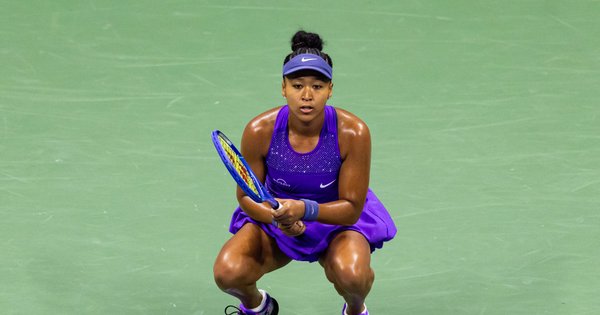
Some athletes transcend their sport so completely that their story becomes bigger than any scoreboard. Naomi Osaka is one of them. Four Grand Slam titles before her twenty-fourth birthday. A public reckoning with mental health that forced professional sports to confront an uncomfortable truth. A child born in the middle of what should have been her prime competitive years. And then a comeback in 2025 that silenced every critic who said she was finished. Osaka does not fit neatly into any category, and that is exactly the point.
She was born on October 16, 1997, in the Japanese city that gave her the family name, to Leonard François, a Haitian man, and Tamaki Osaka, a Japanese woman. The family moved to the United States when Naomi was three, settling first on Long Island and later in Florida, where year-round training was possible. Her father, inspired by Richard Williams and the blueprint he created for Venus and Serena, took charge of his daughters' tennis education despite having no background in the sport himself. It was an audacious bet on raw talent and relentless work, and it produced one of the most gifted ball-strikers the women's game has ever seen.
Osaka's breakthrough arrived at the 2018 US Open in circumstances that no screenwriter would have dared invent. In the final, the twenty-year-old defeated Serena Williams 6-2, 6-4, but the match was consumed by a confrontation between Williams and chair umpire Carlos Ramos that dominated every headline the following morning. The crowd booed. Osaka cried during the trophy ceremony and apologized for winning. It was an extraordinary introduction to the global stage, a young woman of rare sensitivity thrust into the most hostile spotlight imaginable. She handled it with a grace that belied her age, even if the scars from that evening would take years to fully process.
The 2019 Australian Open eliminated any suggestion that the US Open had been a one-off. Osaka powered through the draw and defeated Petra Kvitova 7-6, 5-7, 6-4 in a gripping final to claim her second consecutive major title. She became the new world number one. Two slams in a row, at twenty-one years old, with a game built on a serve that regularly exceeded 120 mph and a forehand struck with a ferocity that left opponents stranded. The tennis world recognized it was watching something special.
What followed was more complicated. Coaching changes, inconsistent results, and the first visible cracks in a mental framework that had carried her to the top. Osaka cycled through 2019 and part of 2020 alternating between brilliance and puzzling early exits, searching for equilibrium between the colossal expectations placed on her shoulders and her own emotional fragility. The COVID-19 pandemic, paradoxically, gave her breathing room. The global shutdown allowed an introvert to reset away from the constant demands of the tour.
The 2020 US Open, played in the eerie silence of an empty Flushing Meadows, saw Osaka at her resilient best. She defeated Victoria Azarenka 1-6, 6-3, 6-3 in the final after dropping the first set, demonstrating a capacity for mid-match reinvention that would become her signature in pressure moments. Each round, she walked onto court wearing a mask bearing the name of a Black American killed by police violence. Breonna Taylor. Elijah McClain. Ahmaud Arbery. George Floyd. Trayvon Martin. Philando Castile. Tamir Rice. Seven matches, seven names. The statement landed with enormous force and cemented Osaka's status as an athlete willing to use her platform for causes far beyond sport.
The 2021 Australian Open brought Grand Slam number four. Osaka dispatched Jennifer Brady 6-4, 6-3 in the final, adding a second Melbourne trophy to her collection. Four majors in under three years, all won in finals. Her record of four titles from four Grand Slam finals was a statistical perfection that underlined her ability to perform when the stakes were highest.
Then came the rupture. Before the 2021 French Open, Osaka announced she would not attend press conferences, citing their damaging effect on her mental health. When organizers threatened fines and expulsion, she withdrew from the tournament after her first-round match and publicly disclosed that she had been dealing with depression since her first US Open title in 2018. The announcement sent shockwaves through professional sports. For the first time, an athlete of her stature had put words to a suffering that many endured in silence. Reactions split between overwhelming support and bewilderment, but the taboo was broken.
The months that followed brought extended absences, a brief return at the 2021 Olympics in Tokyo where she lit the cauldron at the opening ceremony, a third-round exit at the 2021 US Open, and then a near-complete withdrawal from competition. Osaka played sporadically through 2022, appearing at scattered events without rediscovering the competitive fire that had made her the most dominant player in the world. In January 2023, she announced her pregnancy, officially putting her career on hold.
Her daughter Shai was born in July 2023, and the experience reshaped everything. Osaka described it with characteristic directness. Motherhood had redefined her priorities without diminishing her competitive ambition. "Some people say she ended my career, but for me, it feels like she started my career," Osaka said about Shai. This fresh perspective on competition, freed from the weight of external expectations and fueled by the desire to show her daughter what perseverance looks like, would redefine the next phase of her career.
The return began in January 2024 at the Brisbane International, fifteen months after her last competitive match. The 2024 season was a rebuilding year in every sense. Frustrating losses, encouraging wins, a ranking stuck far from where it once was, and a game still searching for its rhythm. She worked with Wim Fissette and then Patrick Mouratoglou, exploring different coaching approaches to find her way back.
The 2025 season was where the comeback truly materialized. It started with a promising run to the Auckland final, her first since returning from maternity leave, though an abdominal injury forced her to retire against Clara Tauson after winning the opening set. The Australian Open followed with convincing wins over Caroline Garcia and Karolina Muchova before that same injury ended her run in the third round. The signals were unmistakable. The level was there. The power was intact. The desire burned hotter than ever.
Clay, long considered the surface least suited to her power game, became the stage for an unexpected transformation. At the WTA 125 event in Saint-Malo, Osaka won her first title since the 2021 Australian Open, beating Kaja Juvan 6-1, 7-5 in the final. It was her first career trophy on clay, her first tournament win in four years, and a victory that carried symbolic weight far beyond its ranking points. At the Rome Masters, she strung together consecutive three-set wins before falling in a tight final-set tiebreak, ending a career-best eight-match winning streak on the red dirt.
The coaching change in July 2025 proved to be the final catalyst. The split with Mouratoglou after ten months of mixed results opened the door to a partnership with Tomasz Wiktorowski, the Polish coach who had guided Iga Swiatek to four Grand Slam titles. The connection was immediate. "He is very direct and to the point," Osaka explained. "For someone like me, whose thoughts scatter around often, it is very helpful." Results followed at startling speed. A run to the Montreal final at WTA 1000 level, her first at that tier since 2022, beating Samsonova, Ostapenko, Svitolina, and Tauson back to back.
The 2025 US Open was the crowning achievement of the comeback. Back at Flushing Meadows, where her story had begun seven years earlier, Osaka delivered a tournament run that reminded the world just how good she is. The fourth-round demolition of Coco Gauff, the third-ranked player and defending champion, was the headline result. Osaka won 6-3, 6-2 in sixty-four minutes, playing with the surgical precision of her peak years. In the semifinals, she took the first set against Amanda Anisimova before falling 6-7(4), 7-6(3), 6-3 in a match that lasted nearly three hours. "I can't be mad," Osaka said afterward, reflecting on the distance traveled rather than the match lost.
That run pushed her back to world number fourteen, her highest ranking since January 2022. Eleven wins from her last thirteen matches, a level of play that once again troubled the best players on tour, and a calmness on court that stood in stark contrast to the turmoil of previous years.
Osaka's game, when it is firing on all cylinders, remains one of the most formidable in women's tennis. The serve is the foundation. Regularly touching 125 mph on the first delivery, it generates free points and puts immediate pressure on the returner. The forehand, hit flat with controlled violence, produces ball speeds among the highest on the women's tour. The combination of these two weapons allows her to seize control of rallies from the first strike, imposing a tempo that few opponents can withstand. Her backhand, once perceived as the weaker link, has improved markedly over the years and now functions as a reliable offensive weapon that complements a game built entirely around aggression.
But reducing Osaka to her tennis strokes misses the larger picture entirely. Her cultural impact extends far beyond any court. Japanese and Haitian, raised in America, she represents a multicultural identity that resonates in an interconnected world. Lighting the Olympic cauldron at the Tokyo 2021 Games was a moment of immense symbolic significance. For millions of people of mixed heritage around the globe, Osaka is living proof that you do not have to fit into a single box to reach the top.
Her activism on racial justice, her advocacy for mental health, her investments in startups and philanthropic causes have made her far more than an athlete. She is a cultural figure whose influence reaches into fashion, media, business, and social advocacy. Her willingness to speak openly about her own psychological struggles opened the door for other athletes to do the same, contributing to a fundamental shift in how elite sport addresses mental health.
At twenty-eight, with a daughter waiting for her after every practice session and every match, Osaka approaches the next chapter of her career with a clarity of purpose she may never have possessed before. "I just feel like I don't have time to waste," she has said, describing the relationship with time that motherhood has transformed. Her 2025 season, cut short by a left thigh injury at the Japan Open in October, laid the foundation for a competitive future that looks genuinely exciting. The return to the top twenty, the wins over top-ten opponents, the semifinal at Flushing Meadows. All of it points to a player who did not come back to go through the motions.
Naomi Osaka's story is that of an athlete who refused to be defined by anyone else's expectations. Prodigious champion, courageous advocate, devoted mother, fierce competitor. Each chapter adds a new dimension to a career that is still being written. Women's tennis is richer for her presence, and the world of sport owes her a conversation about mental health that might never have happened without her courage.