
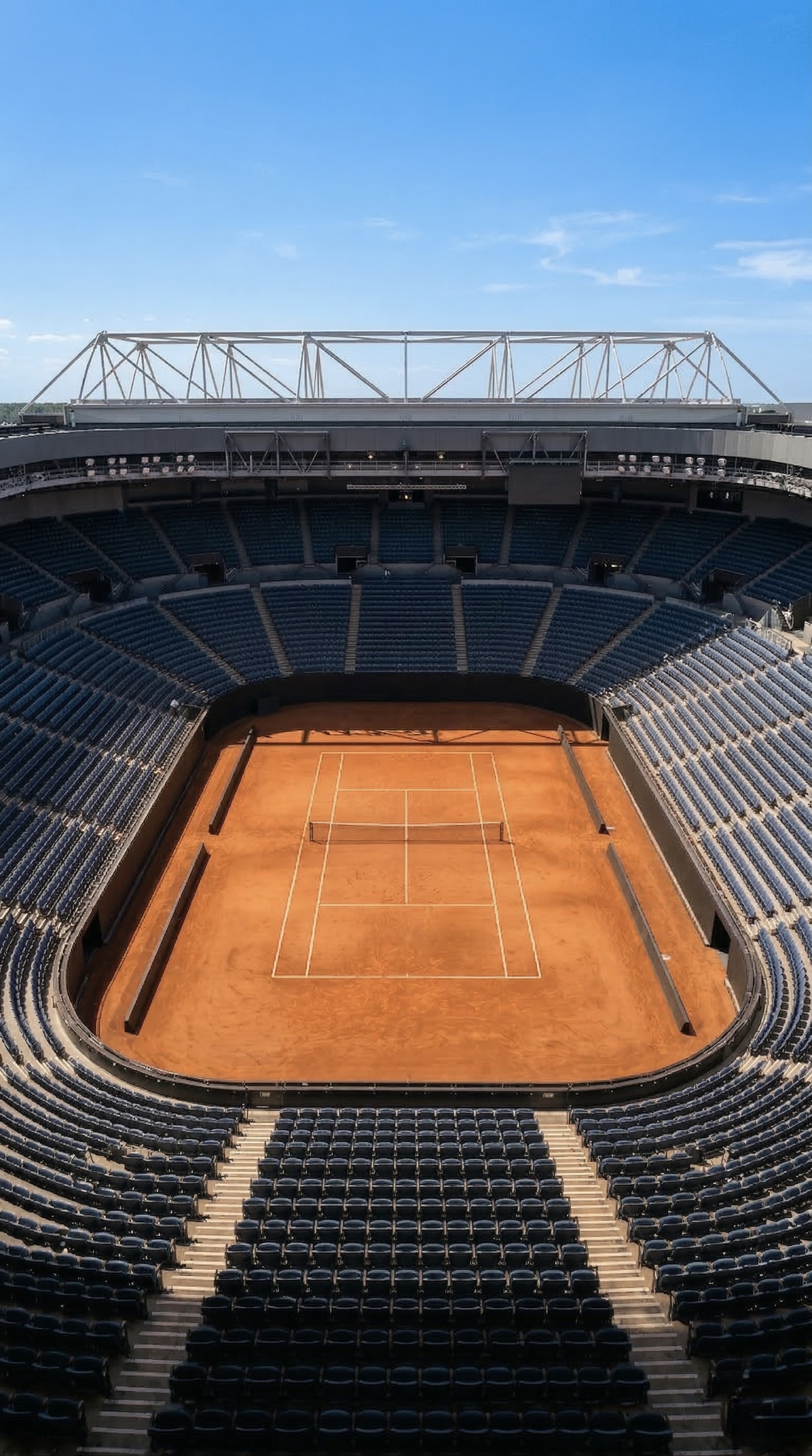
The 2026 Mutua Madrid Open women's draw will be remembered as the most unpredictable tournament of the decade. For the first time in the event's history, none of the top eight seeds have reached the semifinals. A collective collapse that reshapes the tour's hierarchy five weeks before Roland-Garros.
The carnage began in the third round. Iga Swiatek, the fourth seed, was forced to retire against Ann Li, struck down by a virus that left her in tears on court. Score at the time of withdrawal: 7-6(4), 2-6, 0-3. The Pole, physically diminished, could not compete in the third set. A retirement that robbed the draw of one of its natural clay-court favourites.
Then Aryna Sabalenka, the top seed and defending champion, fell to Hailey Baptiste. The American produced the match of her life to eject the world No. 1. A result nobody had seen coming, even in the boldest forecasts.
Elena Rybakina, the second seed, did not survive Anastasia Potapova. The Kazakh had been leading in both sets, serving for the first at 5-4 and leading 4-2 in the second. But the Russian lucky loser turned the situation around with bewildering composure, 7-6(8), 6-4. Thirty-three unforced errors from Rybakina, an unusually high tally for a player of her calibre.
Coco Gauff, the third seed, suffered the same fate against Linda Noskova. The American had been leading 4-1 in the third set and 4-2 in the deciding tiebreak. The Czech turned the match around with surgical precision, 6-4, 1-6, 7-6(5). A comeback that will stand as one of the defining moments of this edition.
The full picture of the women's draw is staggering. All eight top seeds eliminated before the semifinals. A phenomenon that raises questions about the growing depth of the WTA tour. Players ranked between 20th and 60th in the world no longer fear the big names. They arrive with physical and tactical levels that narrow the gaps.
The semifinals will therefore feature Potapova, the lucky loser ranked 56th, against the winner of the Kostyuk-Noskova quarterfinal, while Mirra Andreeva, the lone survivor from the top 16, will face an opponent who would not have appeared in any projection at the tournament's start.
This Madrid 2026 raises a simple question: is the women's tennis hierarchy fragmenting for good, or is this a statistical anomaly tied to the playing conditions at the Caja Mágica? Madrid's altitude, which alters ball trajectories and favours aggressive hitters, may have levelled the talent differences. But the sheer scale of the phenomenon — all eight top seeds, not just one or two — suggests something deeper. The women's tour is entering an era where density makes every match dangerous, including for the very best.