When Jasmine Paolini walked onto the Philippe-Chatrier court for the 2024 Roland-Garros final, she stood five foot four in a sport that increasingly rewards height. She was twenty-eight in a game that mints its stars before they can legally drink. She had been ranked outside the top 50 barely sixteen months earlier. None of it made sense, and that was precisely the point.
Paolini was born on January 4, 1996, in Castelnuovo di Garfagnana, a small Tuscan town wedged into the mountains north of Lucca. Her father Ugo is Italian. Her mother Jacqueline has Ghanaian and Polish roots. That mixed heritage produced a player with a personality as warm as a Mediterranean afternoon and a competitive streak that belies her size. She picked up a racket at five, introduced to the game by her father and uncle at the Mirafiume Tennis Club in Bagni di Lucca, a modest facility that would never feature in a glossy sponsorship video. At fifteen, she left home for the Italian federation's training center in Tirrenia, a teenager betting on a future that offered no guarantees.
The early years on tour were unremarkable by any measure. While the players who now populate the top ten were collecting titles and headlines, Paolini was grinding through ITF events and qualifying draws, her ranking hovering around the three hundreds. When she was Coco Gauff's current age, she was barely inside the top 300. When she was Iga Swiatek's current age, she had just cracked the top 150. These are not the numbers that talent scouts circle in red ink. Her first WTA title came in Portoroz in 2021, a result that briefly pushed her inside the top 50 before she settled back into a competitive middle ground between fiftieth and one hundredth in the rankings. Nothing about this trajectory suggested what was coming.
The 2024 season arrived like a detonation. In February, Paolini won the Dubai Duty Free Championships, her first WTA 1000 title, beating Anna Kalinskaya 4-6, 7-5, 7-5 in a final where she trailed in both the second and third sets. The comeback victory carried a signature that would define her year: she simply refused to lose. The mental toughness that had been quietly building through years of anonymous grinding suddenly had a stage worthy of its intensity.
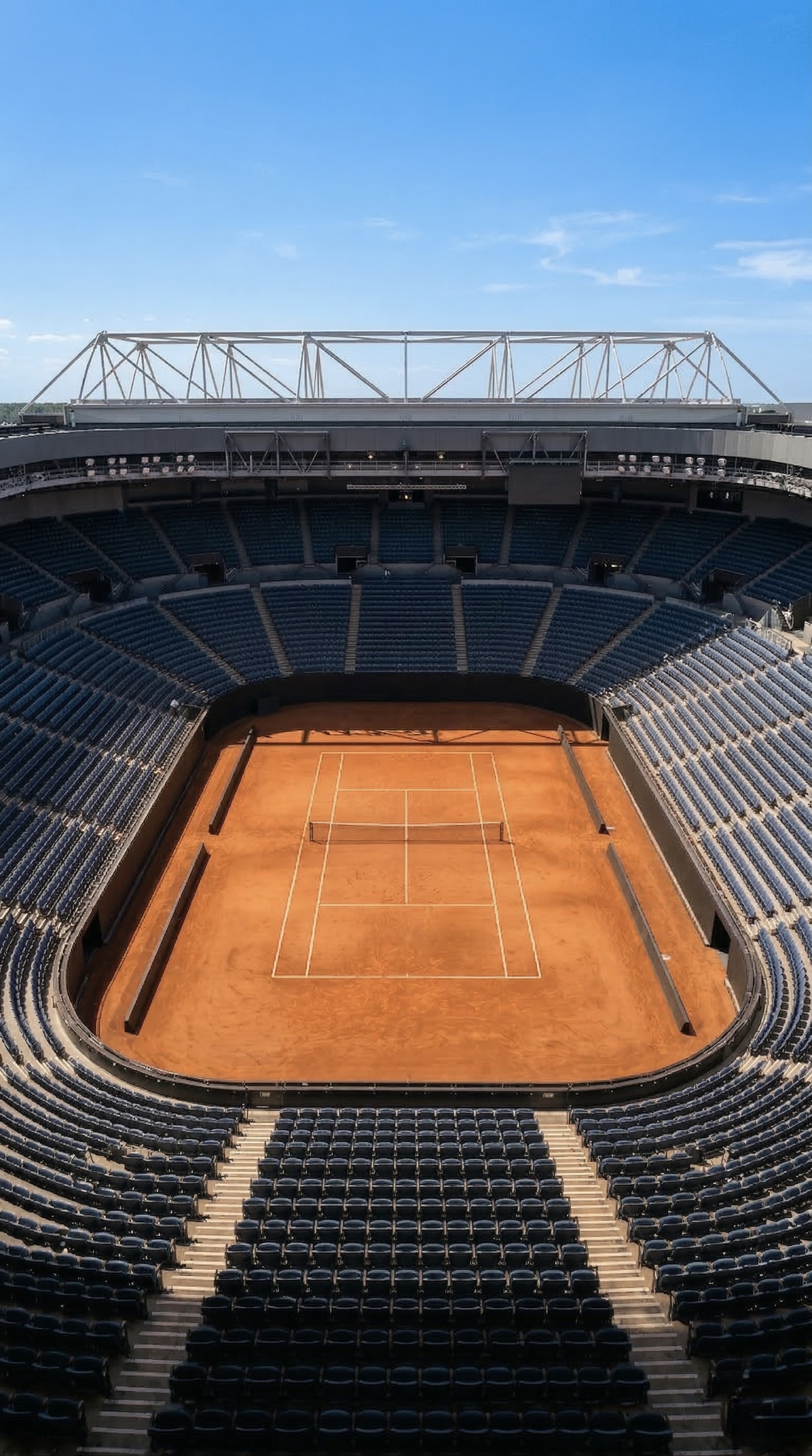
Then came Roland-Garros. Round after round, Paolini dismantled opponents who were taller, stronger, and more heavily favored. The semifinal victory over confirmed that something extraordinary was unfolding. In the final, Iga Swiatek administered a 6-2, 6-1 lesson that illustrated the gap between the world number one and everyone else. But reducing Paolini's tournament to that final scoreline misses the entire story. Reaching the final of a Grand Slam on clay, a surface that rewards the kind of sustained baseline power she does not naturally possess, was an achievement that rewrote assumptions about what her game could accomplish.
Four weeks later, she did it again. At Wimbledon, on grass that was supposed to be even less suited to her skill set, Paolini fought through the draw to reach a second consecutive Grand Slam final. She lost to Barbora Krejcikova in three hard-fought sets. Two major finals in a row. She became the first woman since Serena Williams in 2016 to contest both the Roland-Garros and Wimbledon finals in the same year. For a player who had been ranked outside the world's top 50 just over a year before, the achievement bordered on the absurd.
The summer of 2024 had one more act. At the Paris Olympics, playing doubles with Sara Errani on the same Roland-Garros clay where she had reached the singles final weeks earlier, Paolini won gold. The Italian pair defeated and Diana Shnaider in a gripping final, losing the first set 2-6 before storming back to take the second 6-1 and winning the deciding super tiebreak 10-7. It was the first Olympic tennis gold medal in Italian history. For Errani, then thirty-seven, the victory completed a career Golden Slam in doubles, an honor held by only seven players. For Paolini, it confirmed that her breakthrough was not confined to singles. The partnership with Errani, eleven years her senior, had become something genuinely special.
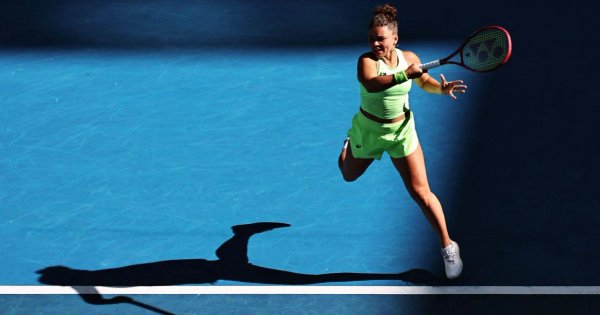
Paolini's playing style deserves close examination because it breaks nearly every convention about what a top-ten player should look like. At 163 centimeters, she concedes a significant height advantage to almost every opponent she faces. Her serve will never be a dominant weapon. She cannot overpower baseliners from the back of the court through sheer ball speed. What she does instead is move faster than almost anyone on tour, read the game with an anticipation that borders on clairvoyance, and place the ball with a precision that turns defensive positions into offensive opportunities.
Her forehand, hit with heavy topspin and metronomic consistency, is her primary weapon. Her two-handed backhand is reliable and rarely breaks down under pressure. But the real magic lies in her ability to absorb pace and redirect it. She uses her opponents' power against them, borrowing their ball speed to create angles that should not be geometrically possible from where she is standing. It is a style built on intelligence, timing, and an understanding of court space that cannot be coached into existence. She plays tennis the way a chess grandmaster plays speed chess, making decisions three shots ahead of the current exchange.
The 2025 season proved that 2024 was no anomaly. While her Grand Slam singles results did not reach the same heights, with no runs beyond the fourth round, the overall body of work was that of a confirmed top-ten player. She reached the semifinals in Miami, the final in Cincinnati, the semifinals in Wuhan. These are not the results of a player living off past glories. These are the results of someone who belongs.
The crown jewel of her 2025 came in Rome. At the Internazionali BNL d'Italia, playing in front of a home crowd that treated every point like a national event, Paolini defeated Coco Gauff 6-4, 6-2 in a final that lasted just ninety minutes. She became the first Italian woman to win the Rome title in forty years. The significance was enormous. With Errani, she also claimed the doubles title at the same tournament, becoming the first player to sweep the singles and doubles in Rome since Monica Seles in 1990. Weeks later, still partnering Errani, she won the Roland-Garros doubles title, her first Grand Slam championship in any discipline.
The Paolini-Errani doubles partnership has grown into one of the most compelling stories in the sport. Errani brings two decades of elite doubles experience, a tactical brain sharpened by thousands of matches, and the calm authority of a former world number one. Paolini contributes boundless energy, wheels that cover every inch of the court, and a competitive fire that refuses to dim. Together they have assembled a trophy collection that includes Olympic gold, the Rome double, and a Roland-Garros title across just two seasons.
Paolini's rise cannot be separated from the broader Italian tennis renaissance. The country is living through an unprecedented golden age. Jannik Sinner, the men's world number one, has won four Grand Slam titles, back-to-back ATP Finals, and led Italy to consecutive Davis Cup triumphs in 2023 and 2024. Lorenzo Musetti, Flavio Cobolli, and Matteo Berrettini provide depth on the men's side. Elisabetta Cocciaretto is emerging among the women. Paolini herself has pushed back against the narrative that Italian tennis is simply her and Sinner, insisting the talent pool runs much deeper. She is right. But she and Sinner remain the twin pillars of a movement that has transformed Italy from a country with occasional tennis success into a permanent powerhouse.
What makes Paolini's story resonate beyond the statistics is the way she has refused to accept the limitations that the sport tried to impose on her. Tennis rewards height, power, and early development. Paolini is short, relies on speed and craft over raw strength, and did not break through until her late twenties. Every assumption about what kind of player can succeed at the highest level, she has challenged and disproven. Her permanent smile on court, that visible joy in competition, has made her one of the most popular players on tour, a reminder that the game can be played with ferocity and fun simultaneously.
At thirty, Paolini occupies a unique position. The two Grand Slam finals of 2024 set a standard that she has not yet matched in terms of singular results, but her consistency and her expanding doubles resume suggest a player still building rather than declining. The first Grand Slam singles title remains the prize that would elevate an already remarkable career into the realm of the historic. Whether she reaches that summit or not, Jasmine Paolini has already accomplished something that no ranking or trophy can fully capture. She has proven that in a sport increasingly dominated by physical specimens, there is still room for a five-foot-four woman from a Tuscan mountain town who moves like lightning, thinks three shots ahead, and never stops smiling.