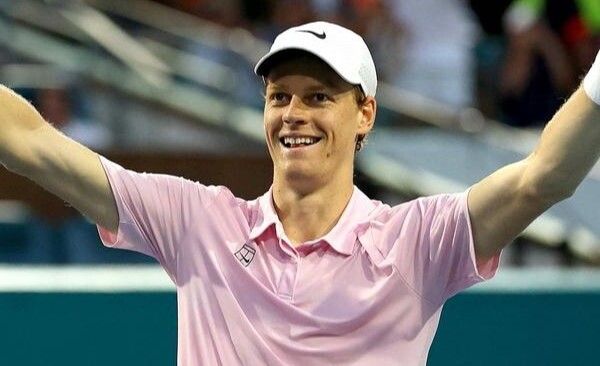
There are certain sporting stories that defy the neat narratives we love to construct. The tale of Jannik Sinner is not one of inevitability, nor one of sudden, shocking emergence. It is something rarer and more compelling: the story of a boy from the Italian mountains who methodically, relentlessly, and with an almost unsettling calm, built himself into the most dominant force in men's tennis.
Born on August 16, 2001, in San Candido, a small town nestled in the Dolomites of South Tyrol, Sinner grew up in a region where skiing is not merely a sport but a way of life. His parents, Johann and Siglinde, ran a mountain lodge, and young Jannik threw himself into alpine skiing with the kind of intensity that would later define his tennis career. By the age of eight, he was a provincial champion on the slopes. The trajectory seemed clear. And then, as these stories sometimes go, everything changed.
Tennis arrived almost by accident, through casual sessions at a local club. But something about the sport seized the young boy's imagination in a way that skiing never quite had. The one-on-one nature of it, perhaps, or the infinite tactical possibilities contained within the geometry of a court. By thirteen, Sinner had made the decision that would alter the course of his life. He left his family, his mountains, and everything familiar, and moved to Bordighera on the Ligurian coast to train at Riccardo Piatti's well-known academy. It was a sacrifice of staggering proportions for a teenager, and it spoke volumes about the steel that already ran through his character.
The early years on the professional circuit, beginning in 2018, offered glimpses of raw, unpolished brilliance. Sinner possessed natural power that players spend entire careers trying to develop. His ball-striking was clean and forceful, his movement surprisingly fluid for a player of his height. But the rough edges were there too. The tactical awareness was still developing, the serve was inconsistent, and the understanding of how to manage a five-set match against hardened professionals remained a work in progress.
The 2019 Next Gen ATP Finals in Milan provided the first genuine statement of intent. Sinner, just eighteen years old, swept through the tournament with a maturity that belied his age. Critics pointed to the modified format and the absence of the sport's biggest names. But those who watched closely saw something unmistakable in the way the young Italian competed: a preternatural composure, an ability to find clarity in moments of chaos, and a competitive instinct that bordered on the ruthless.
Roland-Garros 2020 announced Sinner to the broader tennis world. Reaching the quarter-finals at eighteen made him the youngest man to do so since Novak Djokovic in 2006. The comparison with the Serbian champion was not lost on observers. Like Djokovic, Sinner seemed to possess an internal thermostat that regulated his emotions with mechanical precision. Where other young players crumbled under the weight of Grand Slam pressure, Sinner appeared almost liberated by it.
His playing style, even in those formative years, carried the hallmarks of what would become one of the most effective games in modern tennis. Stationed on the baseline, Sinner takes the ball early and hits it with a flat, penetrating trajectory that rushes opponents and robs them of time. His forehand is the centrepiece of his arsenal, a shot of devastating power that he can redirect with remarkable ease. Hit crosscourt, it pins opponents deep behind the baseline. Redirected down the line, it is frequently a clean winner. The velocity he generates, combined with the consistency of his ball-striking, creates a relentless pressure that even the most resilient defenders struggle to withstand.
The backhand, once identified as a potential vulnerability, underwent a transformation that speaks to Sinner's obsessive work ethic. Through countless hours of refinement, it evolved from a solid but occasionally passive stroke into a genuine weapon. The two-handed backhand he now possesses can match his forehand for depth and power, and his ability to change direction off both wings gives opponents no respite and no obvious pattern to exploit.
Perhaps the most significant technical evolution, however, has been the serve. In his early professional years, Sinner's service games could be precarious affairs, with double faults appearing at inopportune moments and first-serve percentages dipping under pressure. The work he put into restructuring the biomechanics of his service motion between 2021 and 2024 produced remarkable results. His average first-serve speed increased significantly, and more importantly, the consistency and placement improved to the point where his service games became a foundation of strength rather than a source of anxiety. On fast courts, his serve became virtually unbreakable on his best days.
The 2023 season represented the bridge between promise and dominance. Titles at the Masters 1000 events in Toronto and Beijing demonstrated his ability to sustain excellence across an entire tournament at the highest level below the Grand Slams. A Wimbledon semi-final, where he pushed Djokovic to five gripping sets before falling, showed he could compete with the very best on any surface. That defeat, rather than deflating him, appeared to ignite something. Those who knew Sinner well reported a shift in his demeanor afterward, a quiet but unmistakable intensification of purpose.
What followed in 2024 was nothing short of extraordinary. At the Australian Open in January, Sinner found himself two sets down against Daniil Medvedev in the final. What happened next will be studied and admired for decades. With a composure that bordered on the supernatural, the Italian dismantled one of the tour's most awkward and intelligent competitors, winning three consecutive sets to claim his first Grand Chelem title. He became the first Italian man in history to win a Grand Slam singles title. The tears that followed the final point revealed the depth of emotion that his on-court stoicism so carefully conceals.
The momentum proved unstoppable. In June 2024, Sinner ascended to the world number one ranking, dethroning Novak Djokovic. He did not merely hold the position; he owned it. The US Open followed in September, where he dispatched Taylor Fritz in the final with an authority that left little room for debate about who the best player in the world was. Then came the ATP Finals in Turin, where he triumphed before an ecstatic home crowd, capping a season of three major titles and establishing himself as the undisputed king of men's tennis.
The Australian Open 2025 provided emphatic confirmation that Sinner's reign was no fleeting phenomenon. He defended his Melbourne title with sovereign command, claiming his third Grand Slam trophy and his second consecutive at the tournament. At twenty-three, he had already amassed a collection of achievements that most players never approach in an entire career. His ability to peak at Grand Slams, to elevate his level through the rounds, and to produce his finest tennis when the stakes are highest, points to a competitive intelligence that sets him apart from his contemporaries.
What makes Sinner truly exceptional, beyond the technical brilliance and the physical gifts, is the psychological architecture that underpins everything. On court, he projects an almost eerie tranquility. There are no racquet smashes, no theatrical outbursts, no pleading glances toward his coaching box. Each point is approached with identical focus, whether it is the first of the match or the last. This emotional equilibrium is not the absence of passion but rather its most disciplined expression. The fire burns as hot in Sinner as in any champion, but it is channeled entirely into the task at hand.
Off the court, Sinner maintains a privacy that feels almost anachronistic in the age of social media saturation. He speaks thoughtfully and sparingly, avoids controversy with practiced ease, and lets his results do his talking. This restraint has not diminished his appeal; if anything, it has enhanced it, creating an aura of mystery around a player whose game is an open book but whose inner world remains largely his own.
The coaching team surrounding Sinner deserves significant credit for his development. The addition of Darren Cahill, one of the most respected coaches in the sport's history, brought tactical sophistication and the invaluable experience of having guided multiple players to the summit of the rankings. Working alongside Simone Vagnozzi, who has been with Sinner since 2022, Cahill helped create a stable, demanding environment that brought out the best in an already exceptional talent.
The broader impact of Sinner's success on Italian tennis cannot be overstated. Italy has never before produced a player of this magnitude, one capable of winning Grand Slams on multiple surfaces, holding the number one ranking, and serving as the standard-bearer for a new generation. Lorenzo Musetti, Matteo Berrettini, and a host of other Italian talents have benefited from the trail Sinner has blazed, but none yet threatens to match his extraordinary level.
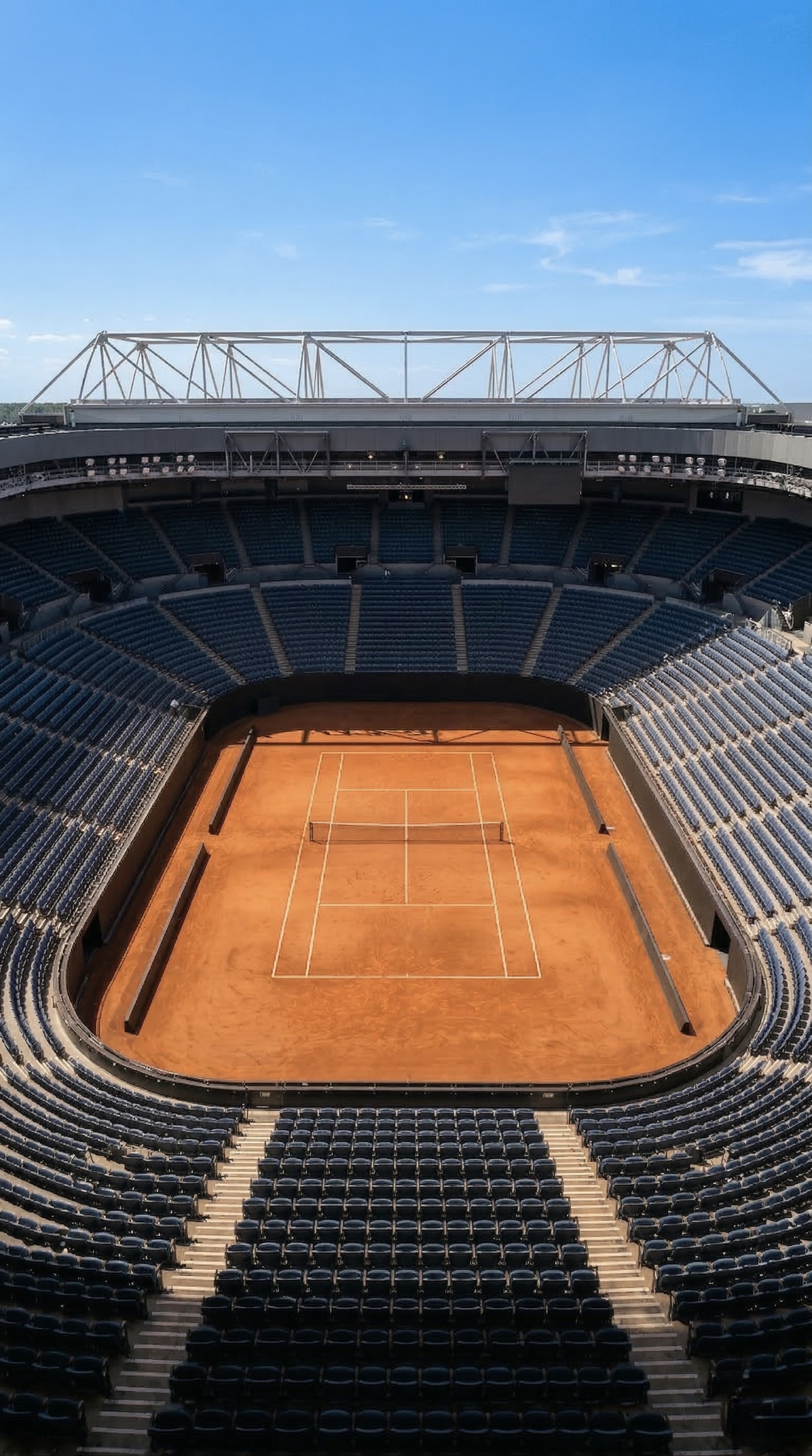
At twenty-three, with three Grand Slam titles and the world number one ranking firmly in his grasp, has already written one of the most compelling chapters in modern tennis history. The clay-court season of 2025 looms as the next frontier, Roland-Garros being the one Grand Slam surface where he has yet to lift the trophy. The competition, led by Carlos Alcaraz and a resurgent Alexander Zverev, will not relent. But if the first years of Sinner's career have taught us anything, it is that underestimating the quiet man from San Candido is a mistake that opponents keep making and keep regretting. The boy who chose tennis over skiing has become the most formidable player on the planet. And everything about his trajectory suggests that the summit he has reached is merely a base camp for what lies ahead.