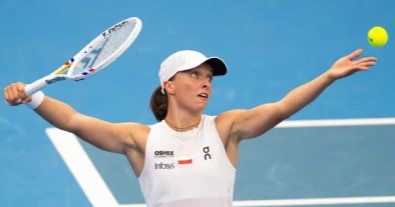
Eighteen months ago, Iga Swiatek was the most dominant force in women's tennis. Four Roland-Garros titles, a stranglehold on the WTA number one ranking, and the kind of aura that made opponents look beaten before they'd even walked onto court. Fast forward to late March 2026, and the picture could hardly be more different. The Polish star is searching for answers, stacking up early exits, and has just parted ways with her coach after a humiliating defeat. At 24, with six Grand Slam titles to her name, Swiatek isn't finished. But the cracks are spreading, and the questions are getting louder.
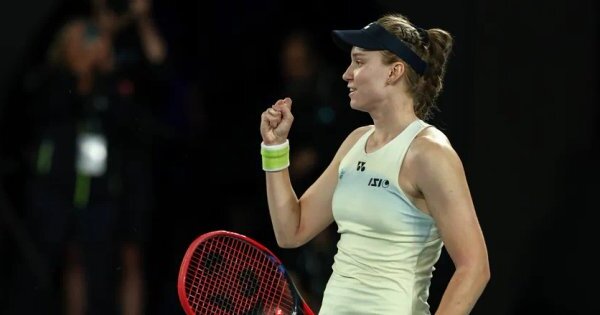
The Australian Open set the tone for a difficult year. Swiatek reached the quarterfinals in Melbourne, but that's where the road ended, and it ended badly. Elena Rybakina dismantled her in straight sets, a clinical display that exposed what everyone already suspected: Swiatek's game remains vulnerable on fast surfaces. The power, the athleticism, the relentless topspin that suffocates opponents on clay, none of it translated against Rybakina's flat, aggressive ball-striking. It was a familiar storyline, one Swiatek has struggled to rewrite throughout her career, and the defeat left a bitter aftertaste heading into the Middle East swing.
Things didn't improve in Doha. The Qatar Open brought another quarterfinal exit, this time at the hands of Maria Sakkari, a player Swiatek has historically handled with relative comfort. Then came a withdrawal from Dubai, officially for undisclosed reasons, fueling speculation about physical or mental fatigue. The rhythm was off. The confidence that once radiated from every forehand was flickering.
Indian Wells offered a brief glimmer. Swiatek strung together three solid wins, beating Kayla Day, exacting revenge on Sakkari, and then delivering a masterclass against Karolina Muchova, 6-2, 6-0, in a performance that reminded everyone of her ceiling. For a moment, it felt like the old Swiatek was resurfacing. The movement was sharp, the forehand was detonating, and the scoreline against Muchova bordered on humiliation. But the quarterfinals brought reality crashing back. Elina Svitolina, the veteran Ukrainian who knows how to grind, won 2-6, 6-4, 4-6 in a match that turned on Swiatek's inability to close it out. She had Svitolina on the ropes after taking the first set and then simply let it slip away, a pattern that's becoming disturbingly common.
Then came Miami, and the result that shook everything loose. Swiatek lost her opening match to Magda Linette, her own compatriot, ranked around 50th in the world. The scoreline, 1-6, 7-5, 6-3, tells a strange story. Swiatek dominated the first set so thoroughly it looked like routine business. Then something broke. Linette found her range, Swiatek's level dropped, and what followed was a slow-motion collapse that ended one of the most remarkable streaks in recent WTA history: 73 consecutive opening-match victories, a run stretching all the way back to the 2021 WTA Finals. That's over four years without losing a first-round or opening match at any tournament. Gone, in the Florida humidity, against a player she should beat nine times out of ten.
The fallout was immediate. Within days, Swiatek announced her split from coach Wim Fissette. The Belgian had joined her team in October 2024, replacing Tomasz Wiktorowski, and the partnership had produced genuine results. Under Fissette's guidance, Swiatek won Wimbledon in 2025, a breakthrough on grass that many doubted she could achieve. She also claimed titles in Cincinnati and at the Korea Open. On paper, it was a productive collaboration. But the early months of 2026 told a different story, and the Miami loss to Linette was apparently the breaking point.
Kim Clijsters, the four-time Grand Slam champion turned analyst, didn't mince words when commenting on the split. She pointed to warning signs that had been visible for weeks in the dynamic between player and coach, suggesting the relationship had run its course. Clijsters also highlighted the role of Daria Abramowicz, Swiatek's sports psychologist, who has been a constant and sometimes controversial presence in the player's entourage. The implication was clear: the power structure around Swiatek may have made it difficult for any coach to impose the kind of tactical changes her game needs right now.
The numbers paint a stark picture. In 2026, Swiatek's record stands at 12 wins and 5 losses. She hasn't reached a single semifinal across four tournaments. Her ranking has slid from second to fourth, overtaken by both Rybakina and Coco Gauff, while Aryna Sabalenka sits comfortably at the top, looking more untouchable with each passing week. For a player who spent the better part of two years as the undisputed number one, dropping to fourth represents a genuine crisis of standing, even if the raw talent remains undeniable.
There's another layer to the story that can't be ignored. In 2024, Swiatek tested positive for trimetazidine, a heart medication that appeared in a contaminated batch of melatonin she'd been taking for jet lag. She received a one-month suspension, and while WADA declined to appeal the decision in early 2025, the episode left marks. The scrutiny, the whispers, the months of uncertainty before the case was resolved, all of it took a toll that's difficult to quantify but impossible to dismiss. Players who go through anti-doping proceedings often describe the psychological weight as crushing, regardless of the outcome.
So where does Swiatek go from here? The reconstruction is underway. Her core team remains intact, with Abramowicz and fitness trainer Maciej Ryszczuk staying on. She's been training at the Rafa Nadal Academy in Mallorca, a choice that feels symbolically loaded, given Nadal's own history of reinventing himself after setbacks. The coaching search is the priority. Names circulating in the tennis world include Michael Joyce, the American who worked with Maria Sharapova during some of her best years, Goran Ivanisevic, who guided Novak Djokovic to multiple Slams before their split, and Francisco Roig, another Nadal Academy connection with deep experience on clay.
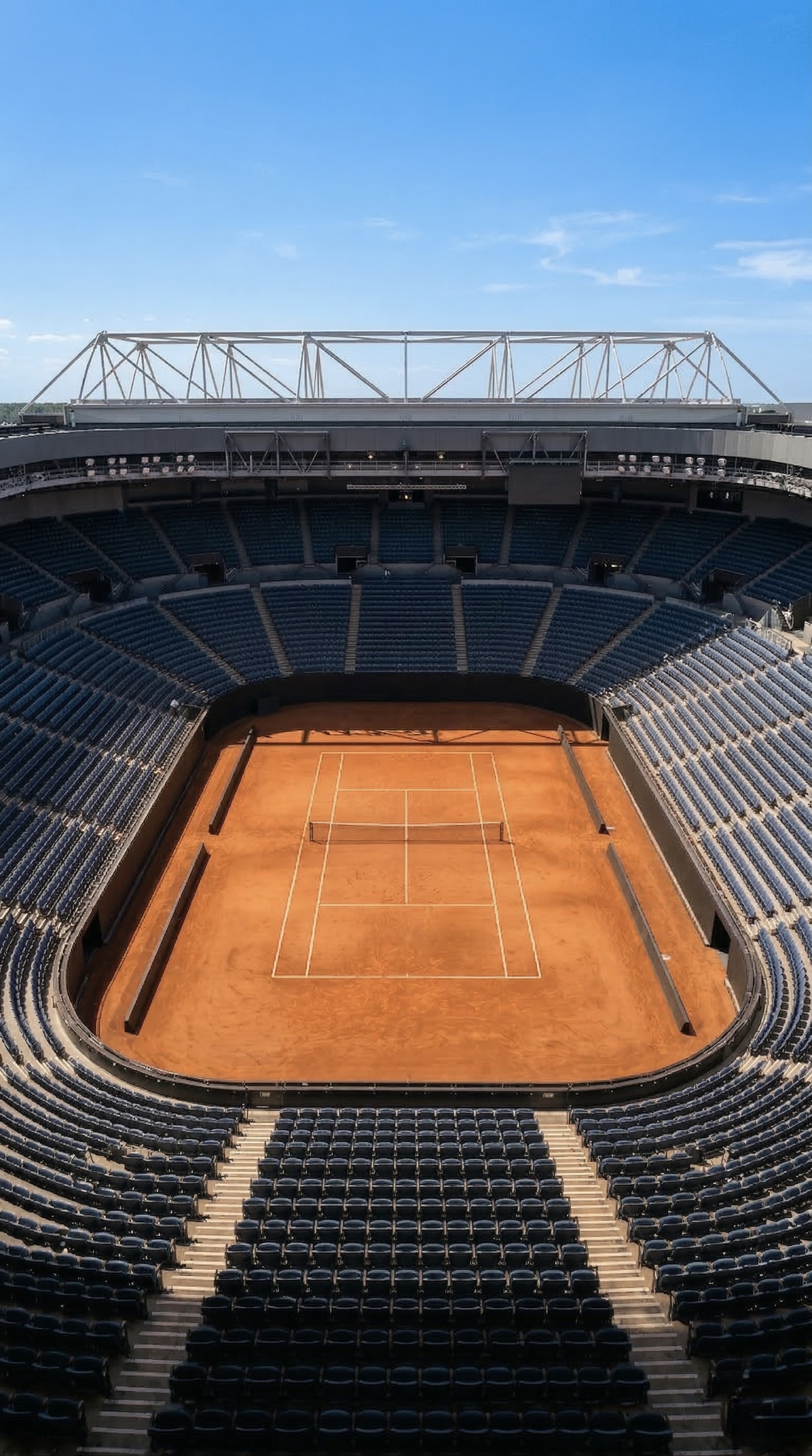
The target is Stuttgart in mid-April, the traditional start of the European clay season. If there's one surface where Swiatek can reset and rebuild her confidence, it's red dirt. Four Roland-Garros titles between 2020 and 2024 weren't won by accident. Her game was built for clay, and the Stuttgart-Madrid-Rome-Paris sequence gives her the runway she needs to find form before the year's biggest stage. Clay forgives her occasional lapses on serve. Clay rewards the ferocious topspin and the physical intensity that define her best tennis. Clay is home.
But the sport won't wait for her. Sabalenka is playing the best tennis of her life. Gauff is maturing rapidly. Rybakina, when healthy, hits the ball harder than almost anyone on tour. The window for Swiatek to reassert herself at the top isn't closing yet, but it won't stay open forever. She won Wimbledon less than a year ago. She's 24, with six major titles already in the cabinet. The talent and the pedigree are beyond question. What's uncertain is whether she can rebuild the machine around her quickly enough, find the right coaching voice, and rediscover the mental steel that once made her so formidable. The clay season will tell us a great deal. If Swiatek arrives in Paris without a deep run in Stuttgart, Madrid, or Rome, the conversation will shift from temporary slump to something more concerning. For now, the silence from her camp is louder than any press conference could be.