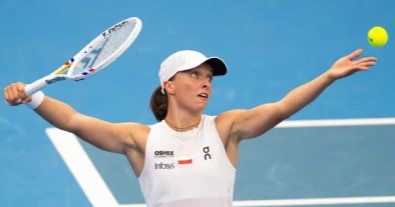
There are players who define their era, and there are players who reshape it entirely. Iga Swiatek belongs to the second category. At twenty-four, the Polish world number one commands women's tennis with an authority that only the greatest champions in the sport's history have matched. Six Grand Slam titles, including four at Roland Garros and one at Wimbledon, a clay court dominance that invites comparisons to Rafael Nadal, and now the irrefutable proof that she can win anywhere, on any surface. Swiatek is no longer simply the best player of her generation. She is building a record that places her among the legends of the game.
The story begins in Warsaw on May 31, 2001. Iga Swiatek was born into a family where sport was a way of life. Her father, Tomasz, a former Olympic rower who represented Poland at the 1988 Seoul Games, instilled in his two daughters the discipline and competitive drive that forge elite athletes. Her older sister, Agata, also played tennis at a competitive level before pursuing other paths. It was in this household that the character of a player who would never back down from a challenge was forged.
Poland was not a tennis country. Before Swiatek, no Polish player had ever won a Grand Slam singles title. The country has limited indoor court facilities, long winters that complicate training, and a sporting culture oriented more toward football, athletics, and volleyball. Swiatek grew up in this environment, often training in conditions that were rudimentary compared to those enjoyed by young talents at Spanish or American academies. That adversity built a resilience that shows up in every match she plays.
The tennis world discovered Iga Swiatek in October 2020, at a Roland Garros pushed back to autumn by the pandemic. Nineteen years old and ranked 54th in the world, she tore through the draw like an apparition. Seven matches, seven wins, not a single set dropped. The final against Sofia Kenin, the world number four and reigning Australian Open champion, turned into a statement: 6-4, 6-1, in eighty-four minutes. Women's tennis had found its next star, but no one yet grasped the scale of what was coming.
What strikes you immediately about Swiatek is the forehand. Hit with devastating topspin, it produces trajectories that push opponents well behind the baseline. On clay, the ball kicks above shoulder height, making offensive replies virtually impossible. Her two-handed backhand, less flashy but remarkably consistent, completes a baseline game that gradually suffocates even the most resilient opponents. Swiatek does not simply hit hard. She hits with a tactical intelligence that allows her to construct each point as a logical sequence, every shot setting up the next until the opening presents itself.
Her court coverage is another major weapon. Despite a physique that does not conform to the athletic mold of modern women's tennis, Swiatek covers the court with striking efficiency. Her ability to slide on clay and then unload a powerful open-stance forehand recalls the best specialists on that surface. On hard courts, her footwork allows her to absorb the opponent's pace and return shots that other players would merely push back into play.
But it may be the mental dimension that most separates Swiatek from her contemporaries. Accompanied by sports psychologist Daria Abramowicz since the beginning of her professional career, the Pole has made psychological preparation a pillar of her game. In a sport where mental lapses often decide matches, this approach gives her a considerable edge. Swiatek manages pressure with a maturity that belies her age, capable of raising her level at decisive moments when others crumble.
After her breakthrough triumph at Roland Garros 2020, Swiatek went through a period of adjustment. The 2021 season saw her oscillate between encouraging performances and disappointing Grand Slam results, losing in the fourth round at Roland Garros and the third round at Wimbledon. But this learning phase proved essential. Under the guidance of coach Tomasz Wiktorowski, who replaced Piotr Sierzputowski at the end of 2021, Swiatek began a transformation that would upend the hierarchy of women's tennis.
Early 2022 marked the start of a sequence that went straight into the record books. Beginning at the Doha tournament in February, Swiatek reeled off thirty-seven consecutive victories, the longest winning streak of the twenty-first century in women's tennis. Indian Wells, Miami, Stuttgart, Rome, Roland Garros: six titles in succession, a run of dominance that recalled the peak years of Serena Williams. Her second Roland Garros crown, earned by defeating Coco Gauff 6-1, 6-3 in the final, cemented her status as the undisputed queen of clay.
That streak propelled her to the world number one ranking on April 4, 2022, succeeding Ashleigh Barty, who had just retired. Swiatek did not merely inherit the throne. She seized it with unchallengeable authority, accumulating a total of 134 weeks at the summit of the WTA rankings. Her dominance reached a new peak at Roland Garros 2023, where she claimed a third title by beating Karolina Muchova 6-2, 5-7, 6-4 in the final, overcoming a wobble in the second set that could have derailed the match.
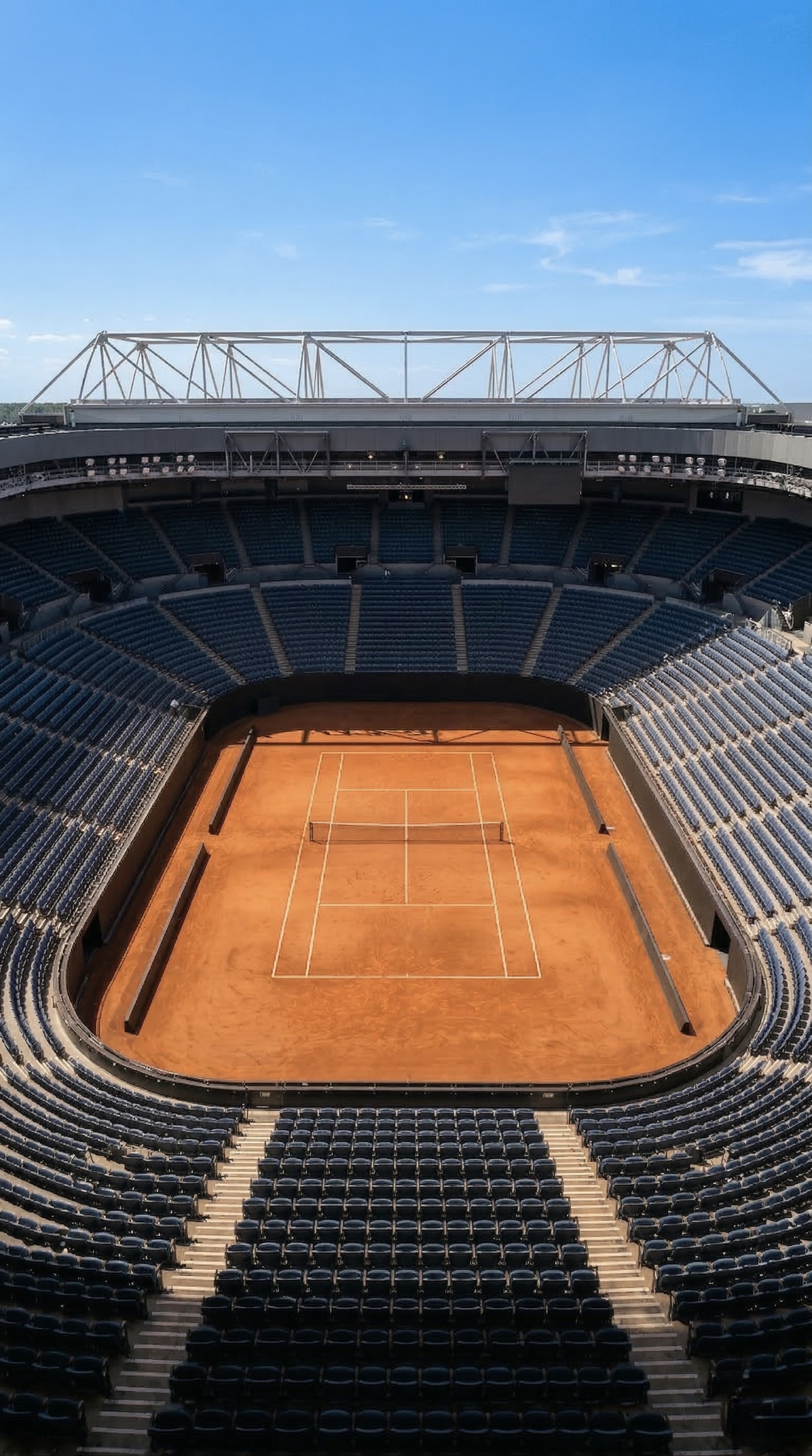
Roland Garros became Swiatek's territory in the same way that Wimbledon belonged to Federer or the Porte d'Auteuil to Nadal. Four titles in five appearances between 2020 and 2024, a record of 35 wins against just 2 losses on Parisian clay, statistics that defy comprehension. Her fourth crown in 2024, secured by dismantling Jasmine Paolini 6-2, 6-1 in the final, completed a stranglehold on the tournament not seen since the Justine Henin years.
But to reduce Swiatek to her clay court dominance would be to make an error that too many observers committed for too long. The Pole has always expressed the desire to prove her versatility, and her hard court record, highlighted by her US Open 2022 title, demonstrates an adaptability that was often underestimated. In New York, she defeated Ons Jabeur 6-2, 7-6(5) in the final, adding a fast-surface crown to her collection.
The rivalry with Aryna Sabalenka has become one of the most compelling threads in contemporary women's tennis. The two players contest the world number one ranking with an intensity that electrifies the tour. Sabalenka, with her raw power and attacking instincts, represents the perfect counterpoint to Swiatek's more constructed game. Their encounters consistently produce tennis of the highest quality, and the balance of their rivalry has raised the overall standard of the WTA tour. While Swiatek long held the upper hand in the head-to-head, Sabalenka managed to flip the script in several crucial late-2024 meetings, maintaining constant pressure on the Pole.
The autumn of 2024 represented the most difficult period of Swiatek's career. In November, the World Anti-Doping Agency revealed that the player had tested positive for trimetazidine, a prohibited substance, in an out-of-competition test conducted in August. Swiatek immediately denied any intentional use, attributing the contamination to a melatonin supplement manufactured in Poland. The International Tennis Integrity Agency, after investigation, accepted this explanation and imposed a one-month suspension, recognizing the absence of significant fault on the player's part.
The episode nonetheless shook the tennis world. Comparisons with the Sinner case, himself caught up in a positive test in 2024, fueled a broader debate about the fairness of the anti-doping system in professional sport. Swiatek navigated the storm with dignity, speaking publicly to defend her innocence while accepting the sanction imposed. The fact that she immediately returned to peak form when she resumed competition in early 2025 speaks as much to her mental fortitude as to her quality as a player.
Swiatek's 2025 season is one of the most accomplished of her career. Returning from suspension with renewed determination, the Pole strung together elite-level performances on every surface. The Australian Open saw her reach the semifinals, stopped only by a Sabalenka who was imperial on her preferred hard courts. The clay season confirmed her unchallenged status as queen of the dirt, with victories in Rome and a fifth Roland Garros title that felt preordained, her superiority on Parisian clay having transcended mere talent to enter the realm of myth.
But it was Wimbledon 2025 that saw Swiatek clear the final barrier that stood between her and the definitive establishment of her legacy. The All England Club represented the ultimate challenge, the surface that had longest resisted her dominance. Grass, with its low bounces and fast conditions, did not seem tailored to the heavy topspin and rotational power that fuel her game on clay. Skeptics pointed to her early exits in previous editions, arguing that her style simply could not adapt to the demands of the lawn.
Swiatek answered them in the most spectacular fashion possible. Her path through the draw was remarkably smooth, the Pole adapting her game with a tactical intelligence that caught every observer off guard. She flattened her strokes, took the ball earlier, developed her net game, and used her forehand on a flatter trajectory to dictate rallies. The final against Amanda Anisimova will go down as one of the most dominant Grand Slam final performances in history: 6-0, 6-0, in fifty-seven minutes. A double bagel in a Wimbledon final, a feat of such rarity that it left the tennis world speechless.
With that sixth major title, Swiatek became the first Polish player to lift the Venus Rosewater Dish. She permanently buried the narrative that she could shine only on clay, proving that her dominance transcends surfaces and playing conditions. Wimbledon 2025 marks a turning point in how her career is perceived: Swiatek is no longer the Roland Garros specialist who occasionally wins elsewhere. She is a universal champion, capable of prevailing on any court.
Swiatek's impact extends well beyond the baseline. In Poland, she has become a national icon, a symbol of achievement and perseverance in a country searching for sporting figures of international stature. Her popularity has helped democratize tennis in a nation where the sport long remained the preserve of a privileged few. Club registrations across Poland surged after her first Roland Garros title, and a new generation of young Polish players is beginning to emerge in her wake.
Her advocacy for mental health in sport, embodied by her public collaboration with psychologist Daria Abramowicz, has also opened a vital dialogue in a professional environment where psychological pressure remains taboo. Swiatek speaks openly about her doubts, her moments of vulnerability, and the importance of psychological support for performing at the highest level. That transparency has inspired numerous athletes and helped normalize the use of mental health support in elite sport.
At twenty-four, Swiatek has a potential decade at the top of women's tennis ahead of her. Her game continues to evolve, her versatility to strengthen, and her ability to overcome obstacles, whether sporting or otherwise, keeps proving itself. The question is no longer whether she will join the circle of the greatest champions in history. She is already there. The question now is how far she will go, how many titles she will accumulate, and what imprint she will leave on a sport she has already profoundly transformed.
Women's tennis is living through a golden age, driven by the Swiatek-Sabalenka rivalry and the emergence of talents like Coco Gauff, Jasmine Paolini, and Mirra Andreeva. But at the summit of that pyramid, one player stands apart through the consistency of her dominance and the breadth of her range. , born in Warsaw twenty-four years ago, daughter of an Olympic rower and product of a country with no tennis tradition, has rewritten the rules of what is possible. And the most remarkable thing is that she appears to have barely started.