Grass court tennis occupies a peculiar position in the sport's calendar. Compressed into barely five weeks between the end of Roland-Garros and the start of the North American hard court swing, the grass season demands rapid adaptation and rewards those who can shift gears from the slow red clay to the fastest surface in the game. The 2025 edition delivered everything fans could have hoped for: upsets, historic milestones, and a Wimbledon final that may have tilted the balance of power at the top of the men's game.
The surface itself dictates a specific brand of tennis. The ball skids low and fast off the turf, making big serves near-unreturnable and flat groundstrokes more effective than heavy topspin. Net approaches that would be suicidal on clay become winning plays on grass. The best grass court players share certain traits: a reliable serve, clean ball-striking, quick footwork on an unpredictable surface, and the tactical intelligence to shorten points when the opportunity arises.
The season opened in Stuttgart at the BOSS Open, where Taylor Fritz delivered a masterclass in grass court efficiency. The American dismantled Alexander Zverev 6-3, 7-6(0) in the final without dropping a single service game all week. That statistic alone tells you everything about Fritz on grass. This was his fourth title on the surface and ninth overall, and he became the first player to win a tour-level event without losing serve since Giovanni Mpetshi Perricard achieved the feat in Basel the previous October.
Down the road in Nottingham, Marin Cilic rolled back the years at the Challenger level. The 36-year-old Croat defeated Shintaro Mochizuki 6-2, 6-3 in the final to become the oldest grass court Challenger champion in history, surpassing Andy Murray's record. For a player who reached the 2017 Wimbledon final and won the 2014 US Open, it was a poignant reminder that grass court craft ages better than raw athleticism.
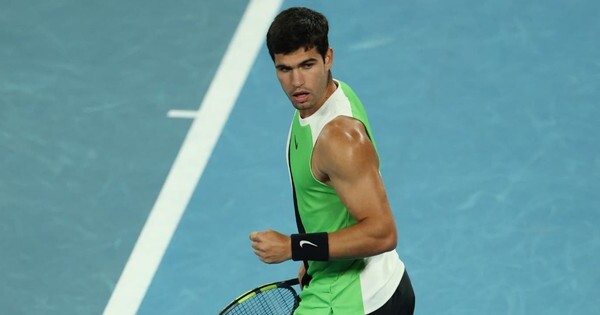
The following week brought the twin pillars of Wimbledon preparation: Queen's Club in London and the Halle Open in Germany. At Queen's, claimed his second title at the historic venue, beating Jiri Lehecka 7-5, 6-7(5), 6-2 in a high-quality final. The Spaniard's path included a compelling encounter with Jack Draper, who pushed Alcaraz hard before falling. Draper then battled through to the semifinals, where Lehecka ended his run. The British number one's performances were enough to lock down a top-four Wimbledon seeding, cementing his status as the leading light of British tennis in the post-Murray era.
In Halle, Alexander Bublik recaptured the title he first won in 2023, defeating 6-3, 7-6(4) in the final. The Kazakh's second-round demolition of defending champion , powered by 36 winners, announced his intentions early. Bublik is the kind of player grass was made for: unorthodox, creative, willing to serve-and-volley, hit drop shots from the baseline, and attempt shots that would make a coaching manual weep. His game might not translate to every surface, but on grass his unpredictability becomes a genuine weapon.
The WTA grass season produced its own compelling narratives. Marketa Vondrousova, the 2023 Wimbledon finalist, captured the Berlin WTA 500 with a 7-6(10), 4-6, 6-2 victory over Wang Xinyu. In Eastbourne, 19-year-old Australian Maya Joint claimed her second WTA title in a dramatic final against Alexandra Eala, winning 6-4, 1-6, 7-6(10). McCartney Kessler took her first grass court title in Nottingham, and Greet Minnen broke through in Birmingham.
Then came Wimbledon, and the narrative of the entire 2025 season shifted on Centre Court.
defeated 4-6, 6-4, 6-4, 6-4 in the men's final to win his first Wimbledon title and fourth Grand Slam crown. The Italian became the first man from his country to lift the Challenge Cup, adding to his two Australian Opens and US Open. His run through the draw was almost flawless. He did not drop serve in the entire tournament, winning all 37 service games while saving all eight break points he faced. He equalled the Open Era record for fewest games dropped through the fourth round, conceding just 17.
The final itself was a tactical chess match. Alcaraz seized the first set with aggressive serve-and-volley tactics and early ball-striking that seemed to catch Sinner off guard. But the world number one recalibrated. His serve became a fortress, his returns grew sharper, and his baseline game wore down the defending champion over the next three sets. Sinner now holds a perfect 2-0 record against Alcaraz on grass, a striking statistic given that Alcaraz entered the final with a career grass court winning percentage of 92.1 percent, the highest in the Open Era among players with 20 or more victories on the surface.
, at 38, reached the Wimbledon semifinals for a record 14th time. Along the way, he recorded his 100th match victory at the Championships, joining Roger Federer and Martina Navratilova as the only players in history to reach that milestone. His record of 100-12 at SW19 remains staggering. A fall in the quarterfinals hampered his movement, and Sinner dispatched him 6-3, 6-3, 6-4 in the last four, but Djokovic's pursuit of an eighth title to match Federer's record will continue to drive him.
On the women's side, Iga Swiatek obliterated the notion that she is merely a clay court specialist. The Pole demolished Amanda Anisimova 6-0, 6-0 in the final, a double bagel achieved in 57 minutes that ranks among the most dominant Grand Slam final performances in history. It was her first Wimbledon title and sixth major overall, making her the first Polish player to win the Championships.
What the 2025 grass season revealed most clearly is that the old archetype of the grass court specialist has evolved. The serve-and-volley purists of previous generations have given way to complete players who can adapt their baseline games to exploit low bounces and fast conditions. Sinner is the prime example: fundamentally a baseline player who has developed his serve and net game to the point where he is now the best player in the world on grass. Fritz channels the old-school power game through a modern lens. Bublik brings flair and creativity. Draper blends left-handed serving angles with athletic court coverage.
Alcaraz, despite the Wimbledon final loss, remains an extraordinary grass court player. His 35-4 career record on the surface and his ability to vary his game with serve-and-volley, dropshots, and aggressive returns make him a permanent threat every time the tour shifts to grass. The rivalry between him and Sinner on this surface, now with two finals and a clear pattern of Sinner finding answers to Alcaraz's aggression, could define grass court tennis for the next decade.
The compressed grass season forces players to adapt quickly or go home early. In 2025, the players who thrived were those who combined power with intelligence, aggression with patience, and tradition with innovation. The lawns of London, Halle, Stuttgart, and beyond crowned their champions, and the grass court game has never looked more dynamic.