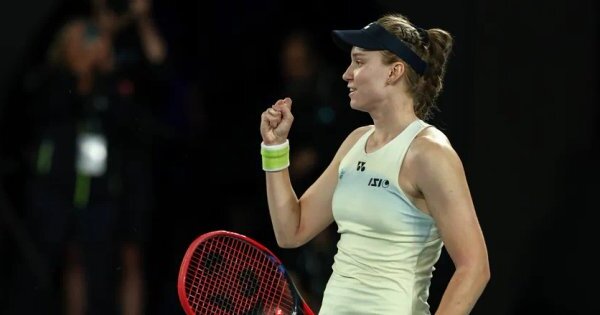
Elena Rybakina occupies a peculiar space in women's tennis. Born in Moscow on June 17, 1999, trained through the Russian development system before switching allegiance to Kazakhstan in 2018, she carries a biography that invites questions she has never seemed particularly interested in answering. What she lets do the talking is her game, and specifically her serve, a weapon that registers regularly above 120 mph and is the single most destructive shot in the women's game today. Her flat groundstrokes, her ability to compress rallies into three or four devastating blows, and her physical presence on court mark her as a player built differently from the baseline grinders who populate most of the WTA draw.
Her Wimbledon title in 2022 remains the defining moment of her career so far. She arrived at SW19 as a dark horse at best, ranked 23rd in the world and carrying none of the expectation that weighed on the established favorites. What followed was a fortnight of escalating authority. She dismissed Ajla Tomljanovic in the quarterfinals, overpowered Simona Halep in the semifinals, and then came from a set down to beat Ons Jabeur 3-6, 6-2, 6-2 in the final. The context made the triumph even more striking. Russian and Belarusian players had been banned from competing at Wimbledon that year following the invasion of Ukraine, yet the champion was a Moscow-born player representing Kazakhstan, a country she had moved to as a teenager in pursuit of better funding and development opportunities. The geopolitical irony was impossible to ignore.
That title validated a game built around vertical power. Rybakina's serve is not merely fast. It is disguised, varied in placement, and delivered with a fluid motion that gives opponents minimal time to read direction. On faster surfaces, it borders on unreturnable. Season after season, she ranks among the WTA's leaders in aces, first-serve points won, and service games held. When her first serve lands, the point is effectively over before it has begun.
Her forehand complements the serve as her second-biggest weapon. Where most WTA players default to heavy topspin and margin, Rybakina drives through the ball flat, seeking pace and depth over spin and safety. When her timing is locked in, the forehand produces winners from positions where other players would settle for neutral balls. The tradeoff is inconsistency. On days when the timing drifts even slightly, the errors accumulate and the forehand becomes a liability rather than an asset. Her backhand is more conventional, used primarily to set up the forehand or to create angles for net approaches, a dimension of her game she has been developing in recent years.
The coaching situation has been one of the defining storylines around Rybakina since 2024. Her long-time coach Stefano Vukov, who had guided her career since her early days in Kazakhstan, was provisionally suspended by the WTA following allegations of abusive behavior. The case exposed uncomfortable truths about player-coach dynamics on the professional tour, where the line between demanding coaching and harmful behavior remains poorly defined and inconsistently enforced. Rybakina, characteristically private, declined to publicly discuss the details of the separation. She continued with other members of her team, but the disruption to her preparation and competitive rhythm was evident to anyone watching closely.
The 2024 season had been a study in contradictions. She reached the Australian Open semifinals, the Indian Wells final, and climbed to a career-high ranking of world number four in March. The tennis was there. The results were there. Then the body started breaking down. Chronic back problems forced her to withdraw from Roland-Garros, cut short her grass court season, and eventually shut down much of her second half of the year. What should have been a breakthrough season became an exercise in damage limitation.
The 2025 season was supposed to mark the comeback. The early returns were mixed at best. Rybakina returned to the tour cautiously, managing her schedule and accepting that some tournaments would have to be sacrificed to protect her body. At the Australian Open, she showed flashes of her peak level before falling in the fourth round, still lacking the match fitness and sustained intensity required to compete deep in a Grand Slam. The North American hard court swing confirmed the impression of a player in transition: capable of dominating anyone for a set, vulnerable when matches stretched and legs grew heavy.
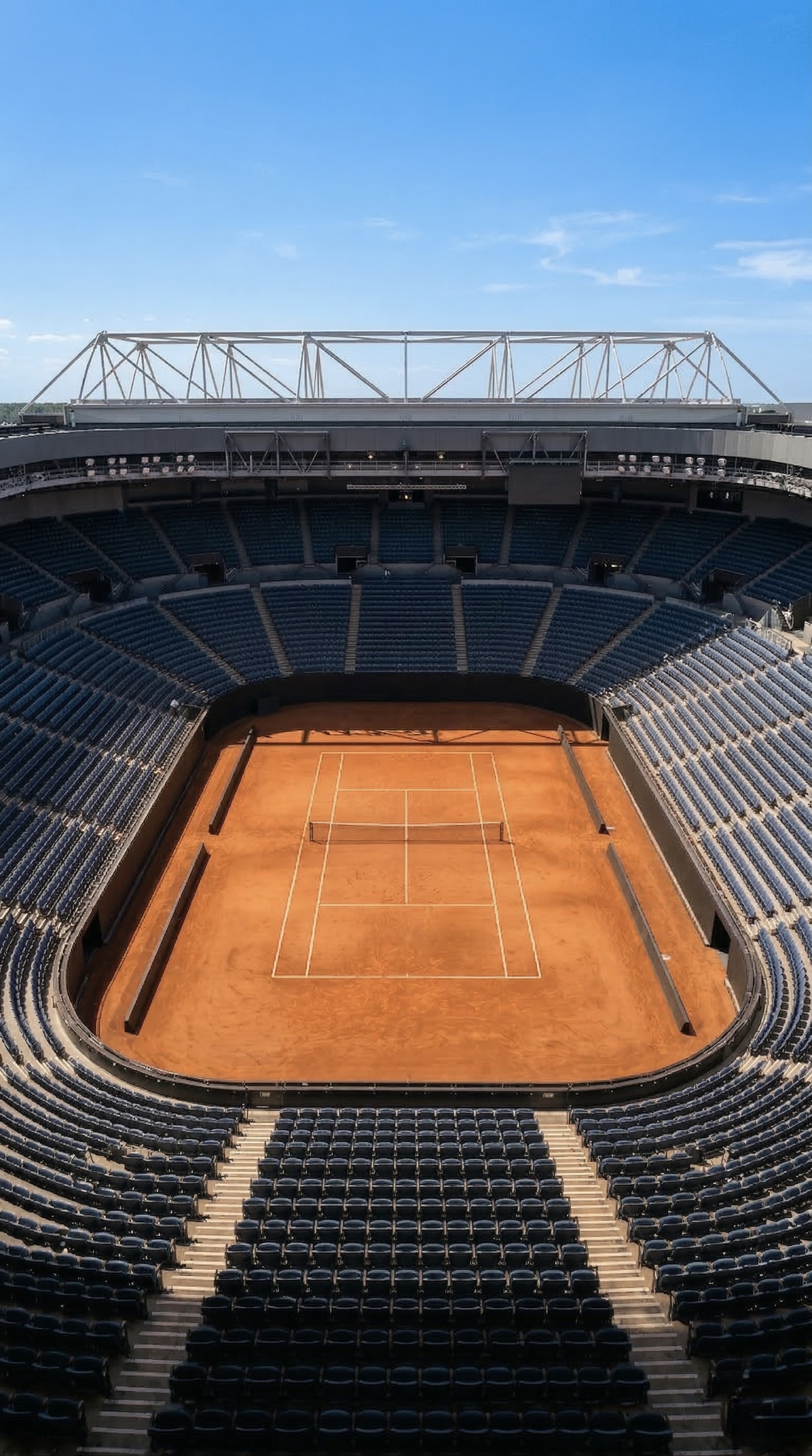
The clay court season, never her strongest period, produced uneven results. Rybakina's flat ball-striking earns fewer rewards on a surface that slows the ball and neutralizes raw power. She showed a willingness to adapt, extending rallies and improving her lateral movement, areas her coaching team had identified as priorities. But clay demands patience that runs counter to her instincts, and the results reflected that tension.
The coaching carousel has remained a central factor in her 2025 narrative. Following the split with Vukov, Rybakina has worked with multiple coaches without finding the stable partnership that defined her best years. High-level tennis requires a deep understanding between player and coach, a mutual language built over months and years of shared experience. Frequent coaching changes, however justified on personal grounds, inevitably disrupt tactical habits and mental preparation.
Her WTA ranking, which had climbed into the top five, has suffered the consequences of injuries and inconsistent results. By September 2025, Rybakina sits around the fifteenth spot in the world rankings, a position that reflects the turbulence of the past eighteen months rather than the level of tennis she is capable of producing. The rolling 52-week ranking system punishes absences harshly, and Rybakina has had more than her share.
Yet nobody who follows women's tennis closely has written her off. The serve alone can carry her through the first week of any Grand Slam, and when the forehand is firing, there are perhaps three or four players in the world who can stay with her in an exchange of heavy hitting. Iga Swiatek, Aryna Sabalenka, Coco Gauff, and Jessica Pegula currently dominate the upper reaches of the rankings, but none of them relish drawing Rybakina in a tournament bracket. She possesses the kind of disruptive power that makes seedings irrelevant on any given day.
Her situation also raises broader questions about career management in modern women's tennis. The WTA calendar is dense and unforgiving, with mandatory commitments and ranking penalties that incentivize playing through pain. Chronic back injuries like Rybakina's are often the product of cumulative strain on bodies that have been competing since early adolescence. Calendar reform has been discussed for years without meaningful implementation, and players like Rybakina bear the cost of that inaction.
At 26, Rybakina should be entering the prime years of her career. Women's players typically peak between 25 and 29, combining tactical maturity, Grand Slam experience, and physical capacity into their most productive seasons. Everything depends on her ability to stabilize her fitness and rebuild a coherent coaching structure. The talent has not gone anywhere. The serve has lost none of its velocity. The forehand remains devastating when the timing clicks. What has been missing is continuity, the ability to string together consecutive weeks of high-level competition without the body intervening.
The final stretch of the 2025 season represents a key window. The autumn hard court swing, a surface where she thrives naturally, gives Rybakina the opportunity to rebuild her ranking and her confidence. A strong US Open, a deep run in Beijing or the WTA Finals in Riyadh could shift the momentum heading into 2026. When her game is operating at full capacity, Rybakina produces tennis that belongs in a category very few women can access. The most devastating serve in the women's game has not finished making its point.