Certain tennis rivalries tell a story of shared dominance between contemporaries. The one between Novak Djokovic and Carlos Alcaraz tells a fundamentally different story: the passing of a torch from the most decorated player in history to the man who appears destined to rewrite the record books. Across ten meetings since their first encounter at the Madrid Masters in 2022, the pair are now locked at five wins apiece, a ledger that crystallizes the tension between absolute experience and raw talent in its most devastating form.
Djokovic was thirty-five when he first faced Alcaraz, in a Madrid electrified by the young Spaniard's meteoric rise. That evening, May 7, 2022, Alcaraz prevailed 6-7(5), 7-5, 7-6(5) across two hours and forty-seven minutes in a match immediately identified as the beginning of something new. The Serbian, already holder of twenty Grand Slam titles at that point, discovered in this nineteen-year-old an opponent unlike anything he had encountered. Alcaraz's striking power, combined with movement speed and tactical variety reminiscent of peak Federer, Nadal, and Djokovic himself, signaled the emergence of a potential successor to the triple crown.
It took until Roland Garros 2023 for their second meeting, and this time Djokovic reminded the world why he holds the record for weeks spent atop the rankings. In the semifinal, the Serbian won 6-3, 5-7, 6-1, 6-1, delivering Alcaraz a masterclass in tactical management. After dropping the second set, Djokovic recalibrated his return placement and ball depth with surgical precision, systematically reducing Alcaraz's options until the Spaniard had no creative space left. That match demonstrated that talent and power, however exceptional, are insufficient against the most accomplished tennis intelligence in history.
But Wimbledon 2023 overturned the hierarchy. In the final, on the sacred grass of Centre Court, Alcaraz defeated Djokovic 1-6, 7-6(6), 6-1, 3-6, 6-4 in a match that will endure as one of the defining moments of modern tennis. The first set had seemed to confirm Djokovic's supremacy, a brisk 6-1 suggesting the Paris lesson would be repeated. But Alcaraz found, in the depths of that contest, the resources that separate very good players from truly exceptional champions. The second-set tiebreak, saved from 4-6 down, was the turning point. From that moment forward, the Spaniard played with a freedom and audacity that progressively eroded Djokovic's defensive wall. At twenty, Alcaraz became the youngest Wimbledon champion since Boris Becker in 1985.
The remainder of 2023 saw Djokovic reassert himself. The Cincinnati final, won by the Serbian, followed by a dominant 6-3, 6-2 victory in the ATP Finals semifinal, showed the old lion was not ready to yield his throne. Djokovic led 3-2 in the head-to-head, and many observers believed his experience would always provide a decisive edge at the biggest moments.
Wimbledon 2024 demolished that theory. Alcaraz swept Djokovic 6-2, 6-2, 7-6(4) in the final, a victory of almost disturbing brutality against the greatest player ever. For two sets, Djokovic found no answer to Alcaraz's power and precision. His returns, normally the best on tour, were short-circuited by serving and shot-making velocity beyond anything he had faced. The third set offered resistance more befitting the Serbian, but the tiebreak confirmed the Spaniard's superiority. That day on Centre Court, a generation had officially seized power.
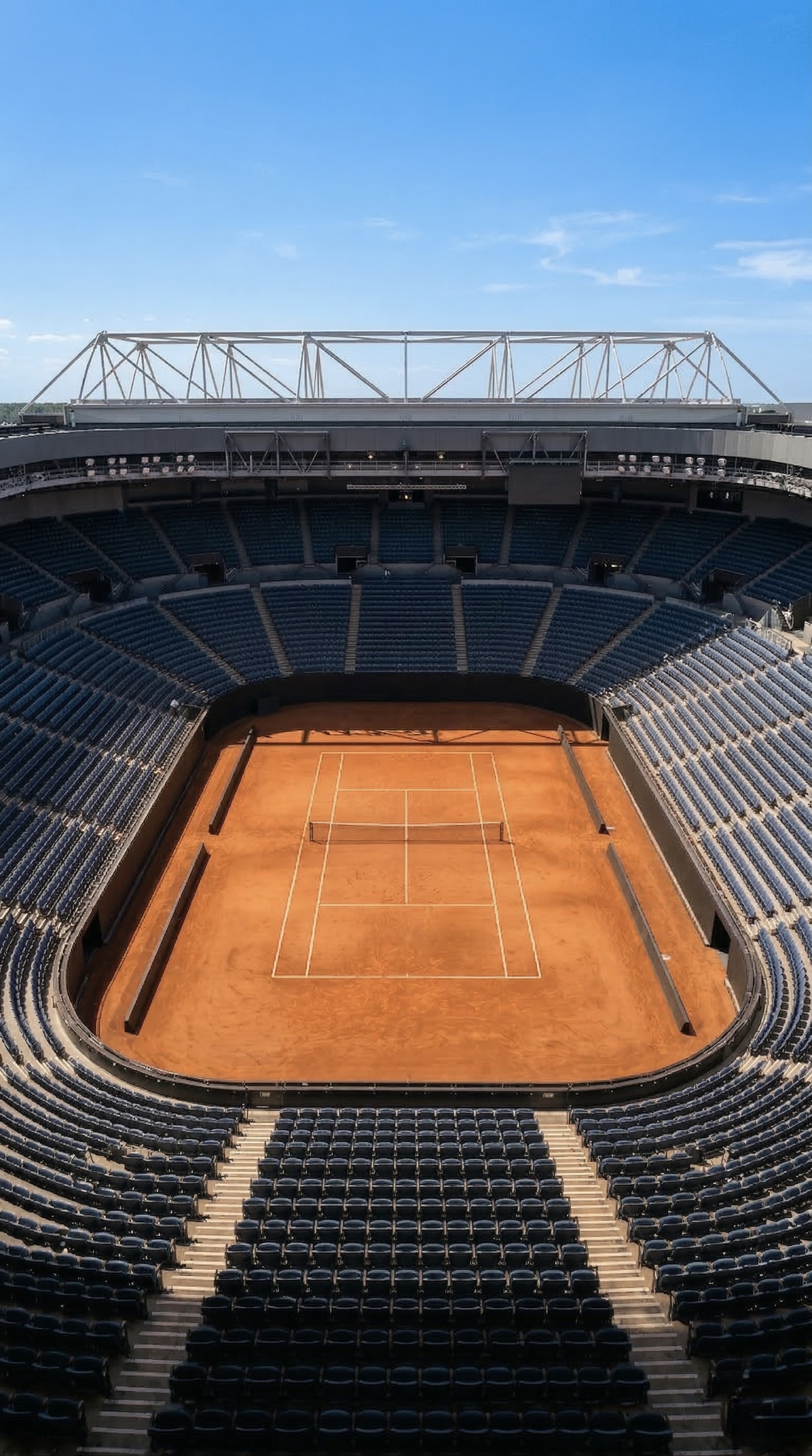
Yet Djokovic was never greater than in defeat. Three weeks after the Wimbledon humiliation, at the Paris 2024 Olympics, the Serbian faced Alcaraz in the gold medal final. On the Roland Garros clay, transformed into an Olympic arena, Djokovic won 7-6(3), 7-6(2) in a match of incomparable emotional intensity. Every point in the second set carried the weight of history: Djokovic, thirty-seven, was playing for the only major title missing from his monstrous trophy cabinet. By winning gold, he became the third man after Agassi and Nadal to complete the career Golden Slam, and the only player in history to have won every major title in singles. The Serbian's tears at match point delivered one of the most moving moments sport has ever produced.
The 2025 season added two more chapters. In the Australian Open quarterfinal, Djokovic prevailed in four sets, 6-4, 4-6, 6-3, 6-4, leveraging Melbourne's heat and his encyclopedic knowledge of the tournament to suffocate Alcaraz's game. But in the US Open semifinal, Alcaraz took resounding revenge, 6-4, 7-6(4), 6-2, dominating the Serbian with a tactical maturity that revealed how much the Spaniard had progressed in reading Djokovic's game.
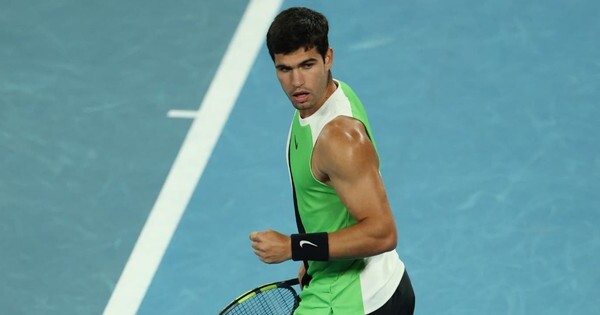
Then came January 2026 and the Australian Open final, the tenth chapter of their rivalry and perhaps the most symbolic. Alcaraz defeated Djokovic 2-6, 6-2, 6-3, 7-5 to claim his seventh Grand Slam title and become, at twenty-two, the youngest man in history to complete the career Grand Slam, surpassing the record held by Nadal. Once again, Djokovic had dominated the opening set, demonstrating his capacity to elevate for the big occasions. But Alcaraz adjusted his approach with remarkable intelligence, tightening his angles, increasing his depth, and exploiting every physical hesitation from the Serbian as the match wore on.
Six of their ten meetings have occurred at Grand Slams, an extraordinary ratio that lends this rivalry a gravity few others possess. Three Grand Slam finals across ten matches, plus an Olympic gold medal final, place the Djokovic-Alcaraz duel among the most prestigious in tennis history. Alcaraz leads 4-2 in these major encounters, but Djokovic's two victories, at Roland Garros 2023 and the 2024 Olympics, rank among the most memorable of his career.
The tactical breakdown of their duels reveals a clash between two distinct yet strangely complementary tennis philosophies. Djokovic built his career on defense transformed into attack, an unparalleled ability to absorb incoming power, redirect the ball with millimetric precision, and construct points with a patience that exhausts opponents mentally before finishing them physically. His return of serve remains, even at thirty-eight, one of the most devastating shots in tennis, a tool that neutralizes the biggest servers and transfers pressure back to the striker.
Alcaraz represents the natural evolution of that approach. He possesses Djokovic's defense and court coverage, but adds a striking power and acceleration capacity that the Serbian lacked during the early years of his career. The Spaniard can play Djokovic's game, absorbing and redirecting, but he can also shift registers in a fraction of a second, moving from patient construction to explosive attack that leaves even the greatest defender in history without answers.
The physical dimension adds complexity. Djokovic, at thirty-eight, manages his body with a scientific discipline that has allowed him to push the limits of sporting longevity. But against Alcaraz, the sixteen-year age gap manifests inevitably in longer matches. The 2026 Australian Open illustrated this starkly: Djokovic was the dominant figure physically and tactically through the opening set, but Alcaraz's physical freshness and his ability to maintain constant intensity across four sets ultimately made the difference. Tennis is a sport ruthless with time, and even the greatest champion in history cannot indefinitely defy that reality.
Yet reducing Djokovic's contribution to this rivalry to a simple narrative of decline would be profoundly unfair. Every encounter with Alcaraz pushes the Serbian to find new solutions, adapt his game, and draw from a reservoir of experience nobody else on tour possesses. The Olympic gold medal, won against the same opponent who had embarrassed him three weeks earlier at Wimbledon, remains the most emphatic demonstration of that capacity for reinvention. Djokovic does not play Alcaraz the way he plays anyone else. He plays with the awareness that the man across the net carries the future of tennis, and that awareness appears, paradoxically, to elevate him.
Alcaraz, for his part, has repeatedly acknowledged Djokovic's influence on his own development. Beating the greatest player of all time in the sport's biggest finals is not merely a sporting achievement. It is a rite of passage that builds the confidence needed to dominate an era. The young Spaniard has absorbed the lessons of every loss to Djokovic: the tactical patience of Roland Garros 2023, the mental fortitude of the 2024 Olympics, the necessary adaptations against an opponent who knows everything tennis has to teach.
With the head-to-head locked at 5-5 and Djokovic having never officially announced his retirement, every new encounter carries the possibility of being the last. That uncertainty lends their meetings a unique emotional weight. When Djokovic and Alcaraz walk onto court, it is not simply a tennis match being played. It is a dialogue between the sport's most glorious past and its most promising future, a conversation conducted in forehands, backhands, and volleys, every exchange containing a fragment of eternity.