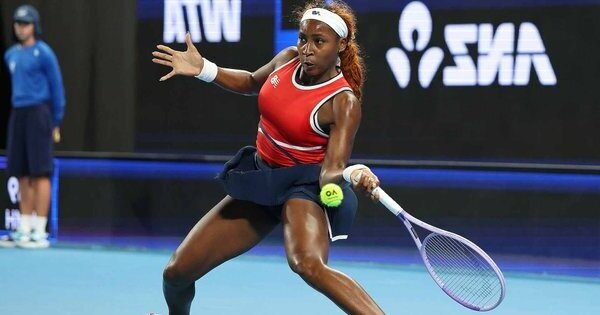
On the first day of July 2019, a 15-year-old qualifier walked onto Wimbledon's Centre Court and beat Venus Williams in straight sets. The girl was Cori "Coco" Gauff, and the score was 6-4, 6-4. She was the youngest player to qualify for Wimbledon's main draw in the Open Era. Five years later, she is a two-time Grand Slam champion, an 11-time WTA title winner, and one of the three best tennis players on the planet. At 21, her career arc is still pointing sharply upward.
Gauff was born on March 13, 2004, in Delray Beach, Florida. Her father Corey played basketball at Georgia State. Her mother Candi ran track at Florida State. The athletic DNA is obvious every time Gauff covers the court, but genes alone do not explain the speed of her rise. The family relocated to be closer to Florida's tennis academies when Coco was seven. She grew up idolizing Serena and Venus Williams, and she made those aspirations concrete earlier than anyone could have reasonably expected. At 13, she became the youngest US Open junior girls finalist in history. At 14, she won the French Open junior title.
That Wimbledon debut against Venus remains the defining image of her teenage years. A child beating her childhood idol on the sport's grandest stage, the tears, the disbelief, the raw joy. She went on to reach the fourth round before losing to eventual champion Simona Halep. But the result was secondary to the announcement: American tennis had found its next star.
The years between that Wimbledon breakthrough and her first Grand Slam title were the education every prodigy must endure. Gauff learned to handle expectations that would have crushed most teenagers. She lost matches she was expected to win. She dealt with media attention that was relentless and not always kind. Through it all, her game evolved. The raw athleticism became more refined. The forehand gained weight. The two-handed backhand developed consistency. And her return of serve, arguably the best in women's tennis, became a weapon that neutralized even the biggest servers on tour.
The breakthrough came in the summer of 2023. Under the coaching of Brad Gilbert, the man who had guided Andre Agassi to six of his eight major titles, Gauff tore through the American hard court season. She won Washington, then Cincinnati, then walked into Flushing Meadows and won the US Open. At 19, she became the youngest American woman to win a Grand Slam singles title since Serena Williams in 1999. The comparison to her idol was no longer aspirational. It was statistical fact.
The 2024 season reinforced her standing. She won the WTA Finals, the year-end championship reserved for the top eight players in the world. Partnering with Katerina Siniakova, she won the French Open doubles title and reached the world No. 1 ranking in doubles. But the year also brought turbulence. Her relationship with Brad Gilbert fractured visibly during a fourth-round loss to Emma Navarro at Wimbledon, where Gauff openly expressed frustration with the lack of tactical direction from her box. After a disappointing US Open title defense that ended in the fourth round, the partnership was dissolved in September 2024. Gauff brought in Matt Daly to oversee her technical and strategic development heading into 2025.
The 2025 season has been Gauff's most complete. The numbers tell part of the story: 48 wins against 16 losses, two titles including a second Grand Slam, four finals, and a year-end ranking inside the world's top three.
She opened the year by leading the United States to the United Cup title in January, beating world No. 2 Iga Swiatek in the team final. Nine consecutive wins in Australia set the tone, though her Australian Open run ended in the quarterfinals against Paula Badosa, 7-5, 6-4.
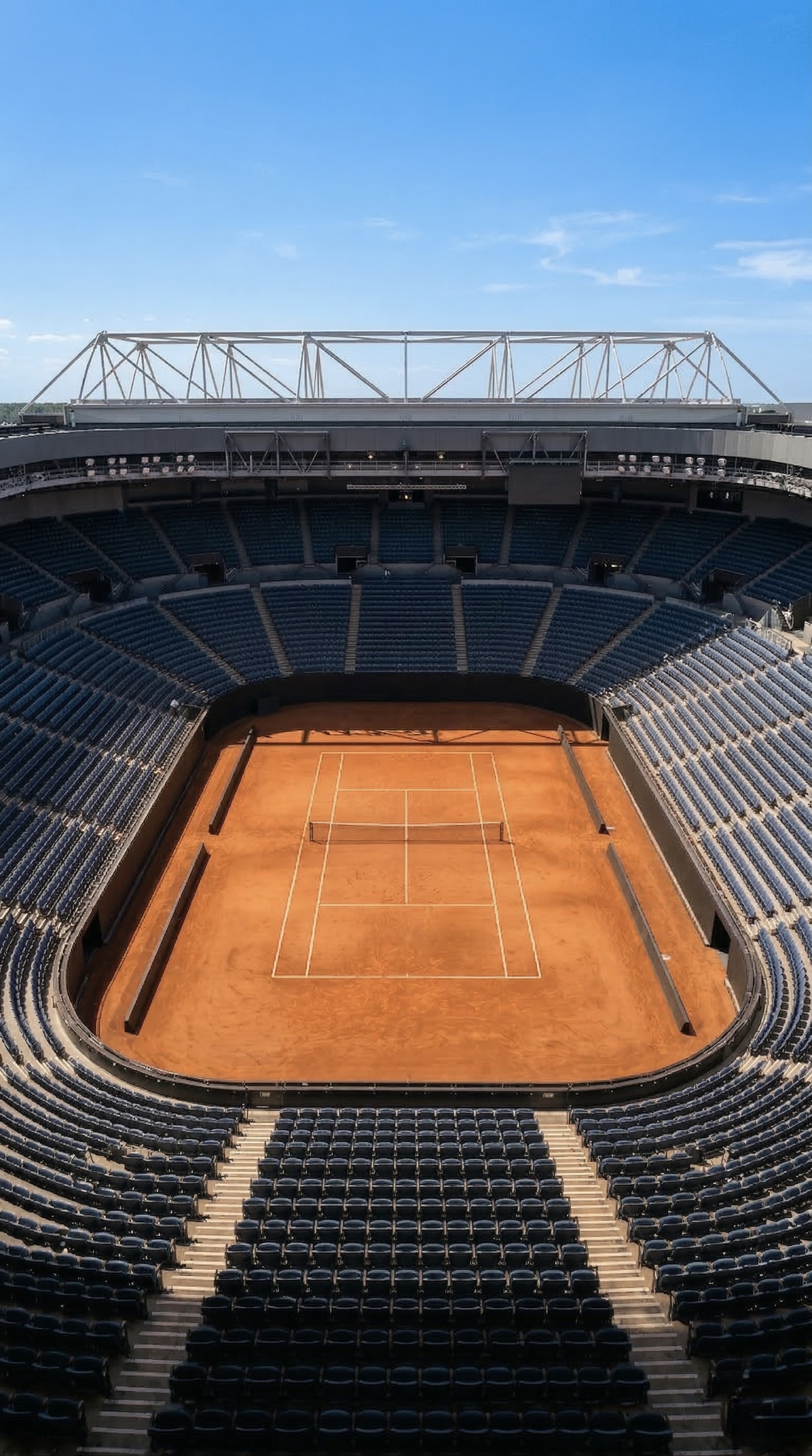
The clay court season is where Gauff truly announced herself as a multi-surface threat. Her 18-3 record on dirt in 2025 was a statement from a player who was never supposed to be a clay court force. She reached the final in Madrid, losing to world No. 1 Aryna Sabalenka. She reached the final in Rome, losing to Jasmine Paolini on home soil. Those results were not failures. They were a runway to Roland Garros.
On June 7, 2025, Gauff faced Sabalenka again in the French Open final. Sabalenka took the first set in a tiebreak after 78 punishing minutes. Gauff lost the set despite having set points. For many players, that kind of heartbreak would have been terminal. Gauff responded by dismantling Sabalenka in the second set, breaking her twice en route to a 6-2 rout. The third set was a war of attrition that Gauff won 6-4, aided by Sabalenka's 70 unforced errors against Gauff's 30. The final score: 6-7(5), 6-2, 6-4 in two hours and 38 minutes. She became the first American woman to win the French Open since Serena Williams in 2015.
The second half of the season provided a reminder that greatness at 21 comes with rough edges. At Wimbledon, Gauff lost in the first round to Dayana Yastremska. Her career record on grass stands at 21-12, a 63.6 percent win rate that is the weakest of her three surfaces and the most obvious area for future improvement. At the US Open, defending her 2023 title, she survived a three-set first-round scare against Ajla Tomljanovic, broke down in tears after her second-round match against Donna Vekic, then fell to Naomi Osaka 6-3, 6-2 in the fourth round. It was a deflating exit, but Gauff's response captured the mental fortitude that separates her from the pack. "I am not going to let this crush me," she said afterward.
She proved it in October by winning the Wuhan Open, beating compatriot Jessica Pegula in the final for her 11th career singles title. The victory extended a remarkable record: Gauff has played nine WTA finals on hard courts and won every single one of them. No other player in tour history can make that claim.
What makes Gauff dangerous is the breadth of her game. She does not dominate through one overwhelming weapon. Her serve, long considered a relative weakness and a project she has been refining with a biomechanics specialist, improves incrementally each season. Her return of serve is elite, consistently putting pressure on opponents from the first point of every game. Her court coverage, the product of her parents' athletic genes and years of physical conditioning, allows her to defend like the best retrievers in the sport while maintaining the ability to hit winners from defensive positions. Her forehand has gained significant pace since her teenage years. Her backhand is one of the most reliable shots in women's tennis.
Beyond the court, Gauff carries a cultural significance that extends past her sport. She served as the American flag bearer at the 2024 Paris Olympics alongside LeBron James. Her victory speech after the 2023 US Open, in which she called for an end to gun violence, resonated far beyond the tennis world. She is part of a generation of athletes who view their platform as a responsibility rather than a luxury.
The rivalry with Aryna Sabalenka is shaping up as the central narrative of women's tennis in the mid-2020s. Sabalenka brings raw, devastating power. Gauff counters with tactical intelligence, defensive excellence, and the mental resilience to absorb punishment and find openings. Their Roland Garros final was the highest-quality women's Grand Slam final of 2025, and the contrast in their styles promises years of compelling matchups at the sport's biggest moments.
At 21, Gauff has two Grand Slam titles on two different surfaces, 11 singles trophies, a WTA Finals crown, a flag-bearing Olympic experience, and a ranking that has not dipped below the top five. She has won on hard courts with a perfect finals record, conquered clay at Roland Garros, and identified grass as the frontier she needs to push next. Her game is still evolving. Her mental toughness strengthens with every setback she absorbs and overcomes.
American women's tennis lived for two decades in the shadow of Serena and Venus Williams. Finding a successor to that legacy was always going to be an impossible standard. Gauff has not tried to replicate them. She has built something of her own, a career defined by precocious achievement, relentless improvement, and a willingness to carry the weight of expectation without letting it slow her down. The little girl from Delray Beach who dreamed of being Serena has become, simply, Coco.