There are moments in sport when a single player arrives and everything that came before suddenly feels like prologue. Carlos Alcaraz is one of those players. Born on May 5, 2003, in El Palmar, a small town nestled in the Murcia region of southeastern Spain, the young man has torn through the record books of professional tennis with such ferocity and grace that even the most seasoned observers of the game have been left scrambling for superlatives. At 21 years old, he holds four Grand Slam titles won on three different surfaces, a feat of versatility and precocity that has no parallel in the modern era.
The story of Alcaraz begins, as so many great sporting stories do, with family. His father, Carlos Alcaraz Sr., ran the tennis school at the Real Sociedad Club de Campo in Murcia, and the boy grew up with a racket in his hand almost before he could walk. The courts were his playground, the bounce of the ball his lullaby. From his earliest years, the coaches at the club noticed something different about young Carlos. It was not merely his hand-eye coordination, which was exceptional, or his footwork, which was remarkably fluid for a child his age. It was something more intangible, a kind of spatial intelligence, an ability to read the geometry of the court and anticipate where the ball would be before it got there. Tennis, for most children, is a game of reaction. For Alcaraz, even as a boy, it was a game of prediction.
The decisive turn came when Alcaraz joined the academy of Juan Carlos Ferrero in Villena, about two hours north of his hometown. Ferrero, a former world number one and the 2003 French Open champion, born in the very year Alcaraz entered the world, recognized immediately that he was dealing with something extraordinary. Under Ferrero's guidance, the teenager's game took on a structure and discipline that complemented his natural flair. Ferrero taught him the arts of Spanish clay-court tennis, the patience, the heavy topspin, the relentless physical conditioning, but he also encouraged something that set Alcaraz apart from the production line of baseline grinders that Spain had reliably produced for decades. He encouraged aggression. He encouraged Alcaraz to take the ball early, to move forward, to attack. It was a calculated gamble that would pay off beyond anyone's wildest projections.
Alcaraz's breakthrough on the professional tour came with startling speed. In 2021, at just 18, he won his first ATP title in Umag and began his ascent through the rankings with a velocity that made the tennis world sit up and take notice. But 2022 was the year the world truly understood what it was witnessing. At the US Open in New York, the teenager embarked on a run of such brilliance and drama that it would have seemed implausible in fiction. In the quarterfinals, he engaged Jannik Sinner in a five-set epic that stretched deep into the early hours of the New York morning, a match of such sustained quality and tension that it immediately entered the conversation as one of the greatest Grand Slam matches ever played. In the semifinals, he dispatched the popular American Frances Tiafoe in front of a stunned Arthur Ashe Stadium crowd. And in the final, facing Casper Ruud, he played with the composed authority of a man who had been winning Grand Slams for a decade, not a teenager claiming his first. At 19 years and four months, became the youngest world number one in ATP history.
What makes Alcaraz so remarkable, and so watchable, is the sheer breadth of his game. He is not a specialist. He is not a power player who overwhelms opponents with brute force, nor a craftsman who outmaneuvers them with guile, nor a defensive wall who wears them down with relentless consistency. He is, impossibly, all of these things at once. His forehand is a weapon of devastating power, capable of generating extraordinary racket-head speed and vicious topspin that kicks the ball up above shoulder height on the bounce. His backhand, once considered the more modest wing, has evolved into a stroke of genuine menace, equally effective driven flat or whipped with heavy rotation. His serve, while not the biggest on tour in terms of raw speed, is intelligently placed and increasingly difficult to read. But it is perhaps his movement that truly sets him apart. Alcaraz covers the court with a speed and fluidity that borders on the supernatural. He arrives at balls that no other player would reach, and he does not merely retrieve them; he transforms defense into attack with a single swing, producing winners from positions that would leave most players simply trying to keep the ball in play.
The 2023 season brought the confirmation that Alcaraz's US Open triumph was no flash in the pan. At Wimbledon, a tournament that demands a fundamentally different skill set from the hard courts of New York, the Spaniard arrived with quiet confidence and a game perfectly tuned for grass. His willingness to move forward, his improving volleys, and his increasingly potent serve made him a natural on the fast, low-bouncing surface. In the final, he faced Novak Djokovic, the most successful player in the tournament's recent history and a man who had made the All England Club his personal fortress. The match that followed was a masterpiece of modern tennis. Over five pulsating sets, Alcaraz and Djokovic produced a contest of spectacular quality, with the young Spaniard saving a match point in the fifth set before prevailing in a dramatic tiebreak. At 20, Alcaraz was the Wimbledon champion, and the tennis world was forced to accept that his brilliance knew no surface boundaries.
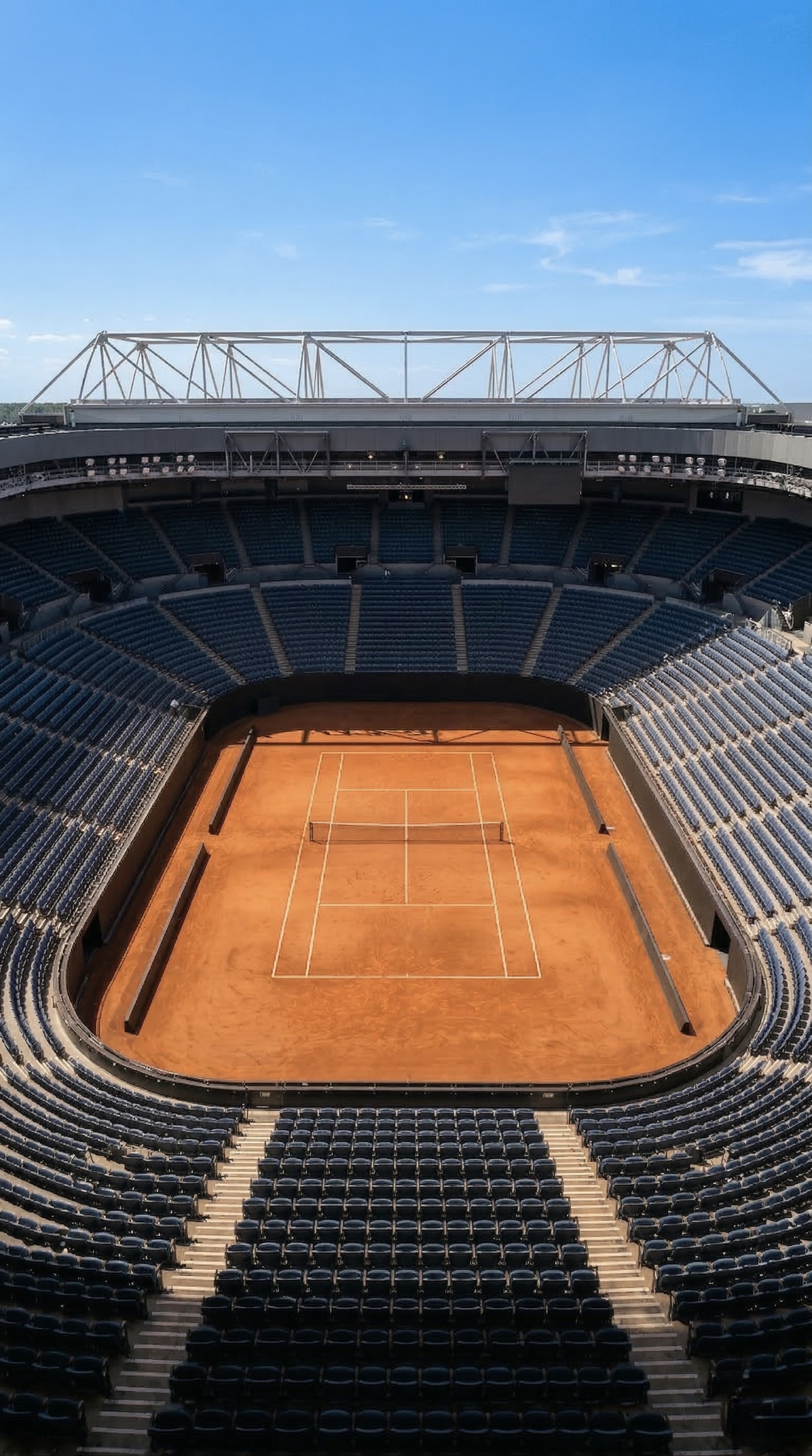
Then came 2024, and with it perhaps the most astonishing chapter yet in the Alcaraz story. At Roland Garros, the cathedral of clay-court tennis where Rafael Nadal had reigned supreme for the better part of two decades, the young Spaniard staked his own claim to the terre battue throne. His path to the final was a demonstration of tactical sophistication that belied his age. He did not simply outmuscle opponents from the baseline in the manner of a traditional clay-court champion. He varied his game constantly, using drop shots with a delicacy of touch that drew gasps from the Parisian crowd, rushing the net with the confidence of a natural volleyer, and constructing points with a strategic intelligence that suggested a player of far greater experience. In the final against Alexander Zverev, he dropped the first set before storming back with the nerveless composure of a veteran, claiming his third Grand Slam title. Three weeks later, he returned to Wimbledon and defended his title with a straight-sets demolition of Djokovic in the final, a statement of dominance that echoed through the sport. The Roland Garros and Wimbledon double, achieved on surfaces that could hardly be more different, in the space of barely a month, is one of the most remarkable accomplishments in tennis history.
Four Grand Slam titles before his twenty-second birthday. The youngest man in the Open Era to win major titles on three different surfaces. These numbers carry a weight that transcends the sport of tennis. To appreciate their significance, consider that Roger Federer, widely regarded as the most naturally gifted player in history, had won just one Grand Slam title by the age of 21. Rafael Nadal, the most successful clay-court player ever, had three. Novak Djokovic, the all-time leader in Grand Slam titles, had just one. Alcaraz, at the same age, already has four, and he has won them with a diversity that none of those legends could match at a comparable stage of their careers.
The early months of 2025 have done nothing to slow the Alcaraz juggernaut. The Spaniard began the season with twelve consecutive victories, a run of dominance that culminated in a third title at Indian Wells, the prestigious Masters 1000 event in the California desert that is often referred to as the unofficial fifth Grand Slam. On the sun-baked hard courts of the BNP Paribas Open, Alcaraz dismantled opponent after opponent with a ruthless efficiency that served notice to the rest of the tour. His game, already extraordinary, appears to be still improving, still finding new dimensions and new weapons. The thought of what Alcaraz might become as he matures physically and tactically is enough to send a shiver down the spine of every other player on the circuit.
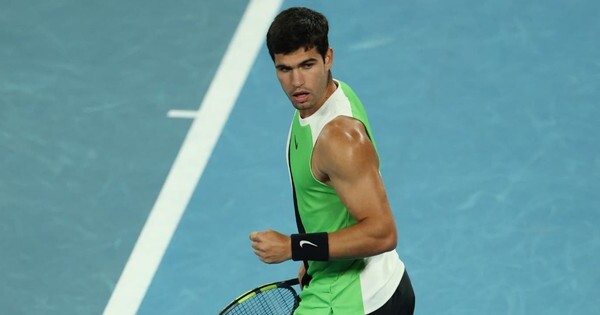
Beyond the court, Alcaraz has captured the affection of tennis fans worldwide with a personality that is as engaging as his game. In an era when professional athletes are often coached into bland corporate personas, the Spaniard's genuine warmth and infectious joy stand out. His celebrations after big victories are marked by an almost childlike delight that reminds observers he is still, despite everything he has achieved, a young man living out a dream. His humility in victory and grace in the rare moments of defeat have earned him respect that extends far beyond the tennis community. He carries the weight of enormous expectation with a lightness that speaks to a remarkable emotional intelligence.
The partnership with Juan Carlos Ferrero remains the bedrock of Alcaraz's success. Ferrero, who understands better than most the pressures and demands of life at the top of professional tennis, has created a training environment that nurtures Alcaraz's creativity while providing the structure and discipline needed to compete at the highest level week after week, month after month. Their relationship transcends the typical coach-player dynamic. Ferrero is mentor, confidant, and strategic architect, and his influence is visible in every aspect of Alcaraz's game and demeanor.
Comparisons with the greats of the game are inevitable and, in Alcaraz's case, not entirely unfair. There is Nadal's competitive fire in his eyes, Federer's artistic flair in his shot-making, and Djokovic's adaptability in his tactical approach. But Alcaraz is not a composite. He is an original, a player who has absorbed the lessons of those who came before him and synthesized them into something entirely new. His tennis is the tennis of the future, a game without boundaries, where the distinction between offense and defense is blurred beyond recognition, where every position on the court is an opportunity to create something spectacular.
The question that now hangs over professional tennis is not whether will be remembered as one of the greatest players in history. That much seems assured. The question is how many Grand Slam titles he will accumulate, how many records he will break, how completely he will reshape the scene of the sport. Tennis is entering a new era. The extraordinary reign of the Big Three, Federer, Nadal, and Djokovic, which defined the sport for more than twenty years, is drawing to its close. Federer has retired. Nadal battles the injuries that have plagued his later years. Djokovic, though still formidable, faces the inevitable toll of time. In this moment of transition, has emerged as the player around whom the next chapter of tennis history is being written.
He is not alone in his generation. Jannik Sinner provides fierce rivalry and pushes him to ever greater heights. But Alcaraz is the one who sets the imagination alight, the one who fills stadiums and keeps fans glued to their screens, the one who produces moments of such spectacular brilliance that they linger in the memory long after the final point has been played. At 21, has already authored some of the most extraordinary chapters in the story of tennis. The most thrilling part is that this story is only just beginning.