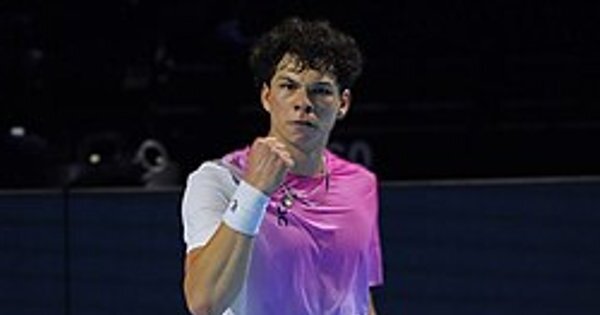
There are weeks in tennis when a player stops being merely promising and becomes genuinely threatening. Toronto, early August 2025, will stand as the week that transformation happened for Ben Shelton. The twenty-two-year-old American, seeded fourth at the National Bank Open, cut through the Canadian Open draw with mounting authority before delivering a final against Karen Khachanov that produced the kind of tension Masters events rarely generate. The scoreline, 6-7(5), 6-4, 7-6(3), tells a story of resilience as much as raw talent.
This was not just another trophy for a developing player. This was a threshold crossed. Shelton became the youngest American to win a Masters 1000 title since Andy Roddick at the Miami Masters in 2004. When you consider that Roddick remains the last American man to hold the world No. 1 ranking, the parallel carries weight.
The 2025 edition marked a first in the tournament's history. The singles draw expanded from 56 to 96 players, a structural change that promised more volatile early rounds and longer, more demanding paths for the seeded players. Alexander Zverev sat atop the men's draw as the top seed. Taylor Fritz, the world No. 4 and the most consistent American on tour, carried his own ambitions. , seeded third, brought Italian flair to the Canadian hard courts. The absence of Sinner and Alcaraz, both resting after an intense grass court campaign, opened a window of opportunity for anyone prepared to seize it.
Shelton began his campaign with the calm of a player who knew exactly where he was heading. His first-round win over Adrian Mannarino, 6-3, 6-4, established the template for a week built on serving excellence and controlled aggression from the baseline. That left-handed serve, a weapon capable of exceeding 145 mph, operated like clockwork throughout the fortnight. Against Aleksandar Vukic in the second round, a 6-4, 6-3 scoreline confirmed the upward trajectory. The Australian never found a way into Shelton's service games, and the handful of break point opportunities that came on the Shelton return were enough to tip each set.
The difficulty level rose sharply in the third round. Flavio Cobolli, the combative Italian with an incisive game, pushed Shelton deep into a deciding set. The 6-4, 4-6, 7-6(1) scoreline reveals the American's capacity to raise his level when it matters most. The third-set tiebreak, won 7-1, demonstrated a mental clarity under pressure that separated Shelton from the field. Where many players his age would have lost focus after being pegged back in the second set, Shelton found the resources to accelerate.
The quarterfinal against Alex de Minaur represented the first genuine top-10 examination. The Australian, seeded ninth and one of the most consistent players on tour, is well-known for his court coverage and his ability to extend rallies. Against that kind of opponent, Shelton needed to shorten points. He did it with a command that surprised even the most optimistic observers, winning 6-3, 6-4 by dictating the tempo from the first ball of every exchange.
The semifinal against Taylor Fritz gave the Toronto crowd an all-American affair of the highest quality. Fritz, ranked fourth in the world and a US Open finalist, represented the most formidable obstacle in Shelton's path. The match delivered on its promise. Shelton took the decision in straight sets, 6-4, 6-3, in a contest where his serving power made the difference in the decisive moments. Fritz, despite being in strong form, never managed to wrest control of the baseline exchanges from an opponent who attacked every ball with visible intention.
Then came the final. Karen Khachanov, seeded eleventh, is a player who is routinely underestimated but whose resume includes performances that demand respect. The Russian took the first set in a tiebreak, 7-5, defending with exemplary solidity and exploiting rare moments of impatience from Shelton. The stadium held its breath. After days of serene dominance, the young American found himself trailing in the biggest match of his career.
What followed defined the character of a future contender for the top of the rankings. Shelton took the second set 6-4, imposing a suffocating rhythm, using his first serve as a decisive weapon and mixing in net approaches at moments Khachanov did not expect. The third set, breathless and drawn out, went to a tiebreak. Shelton won it 7-3, finishing with an ace that brought the Sobeys Stadium crowd to its feet.
This third ATP title, and first Masters 1000, places Shelton in a category to which American tennis had not contributed at such a young age in two decades. His profile is unique on the current tour. A left-hander with one of the fastest serves in the history of the sport, he pairs that raw power with a mobility that contradicts his imposing frame. His running forehand, capable of generating impossible angles, has become one of the most spectacular shots in professional tennis. And his extroverted personality, his trademark phone celebration after victories, gives him a charisma that sponsors and tournament organizers covet.
The Toronto week also highlighted Khachanov's excellent run. The Russian, often consigned to the role of dependable second-tier performer, reminded everyone that he remains capable of rising to the occasion at the sport's biggest events. His path to the final, punctuated by convincing wins, deserves recognition in the story of this Canadian week.
For American tennis, this title sends an extremely encouraging signal. With Fritz firmly established inside the world's top five and Shelton now a Masters 1000 champion at just twenty-two, the United States possesses two players capable of competing with European elite on the biggest stages. The long-heralded American revival, promised for years and frequently contradicted by results, appears to have finally arrived.
Shelton left Toronto knowing his career had shifted to a different dimension. Cincinnati awaited the following week. But for a few hours at least, the young man from Gainesville could savor what he had achieved in the stifling Ontario heat: a first triumph on the biggest stage below the Grand Slams.