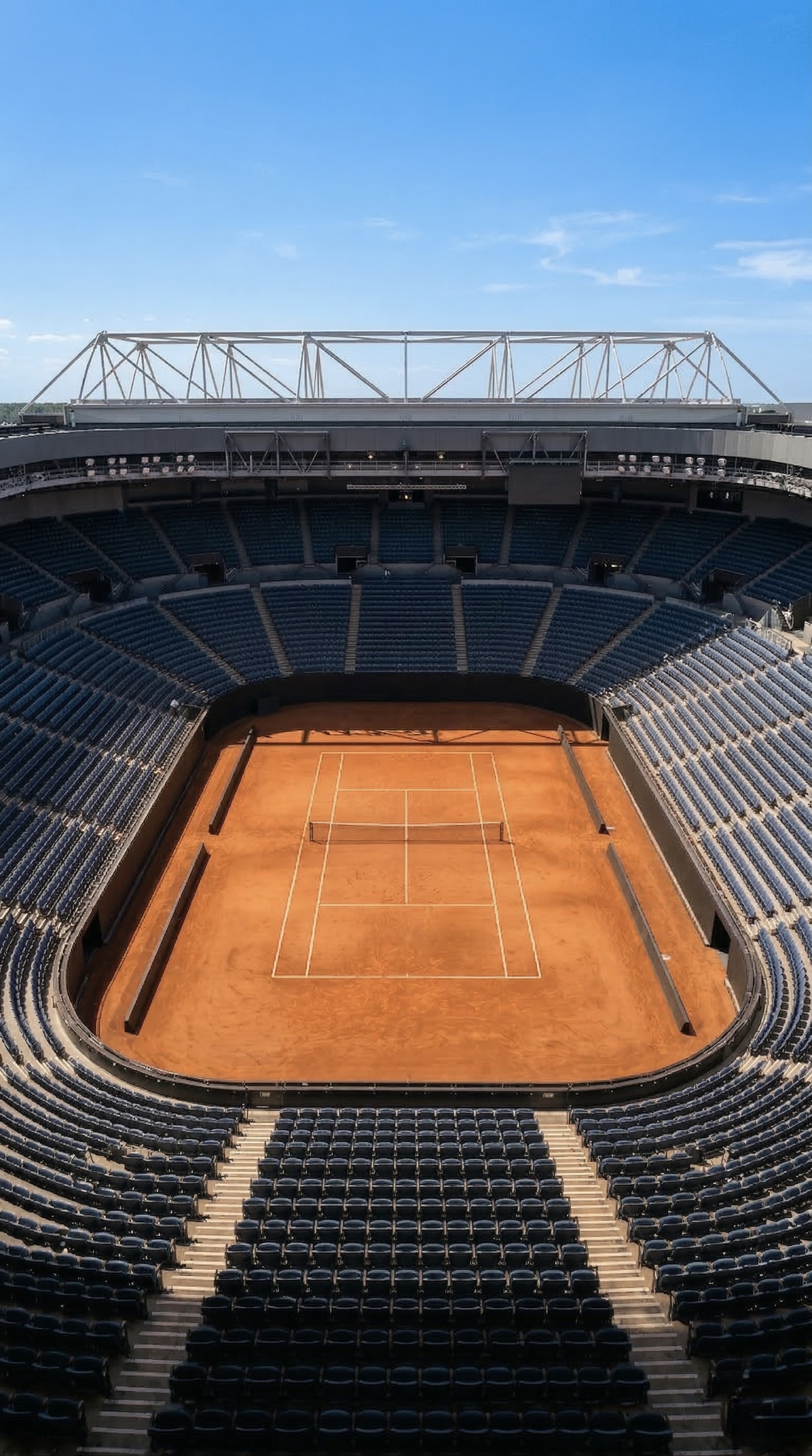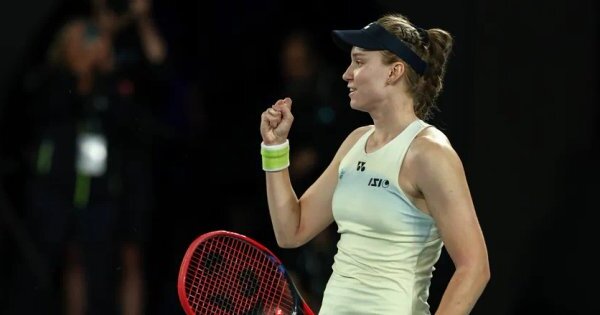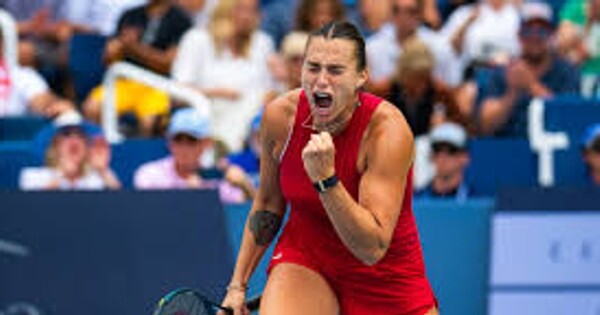
Melbourne is ready to host two weeks of exceptional women's tennis. The Australian Open 2025 opens its gates in just a few days, and the WTA draw concentrates a density of talent and narrative stakes rarely seen at the start of a season. At the center of everything stands Aryna Sabalenka, the two-time defending champion, arriving at Melbourne Park with a clearly stated ambition: to inscribe her name for a third consecutive time on the Australian Major trophy.
The 26-year-old Belarusian is not coming to Melbourne to play a supporting role. Sabalenka won the 2023 edition by dominating Rybakina in the final, then repeated the feat in 2024 by dismantling Zheng Qinwen in a one-sided affair. Two titles, two commanding finals, a confidence on hard courts that borders on the insolent. Finishing 2024 as the world number one gives her absolute legitimacy on this surface and at this tournament. The question is no longer whether she can win, but whether anyone can stop her.
Yet women's tennis is not a sport of certainties. And that is precisely what makes this draw so fascinating to analyze before the tournament begins.
Sabalenka: The Empire of Serve and Power
Aryna Sabalenka's game is built on simple, brutally effective foundations. A serve among the most feared on tour, capable of ending rallies before they begin. A forehand of rare violence, driving through the net with a flat trajectory that leaves few defensive angles. Footwork improved season after season, now allowing her to cover counter-attacks with an ease she did not possess three years ago.
What has changed most in Sabalenka over the years is her mental approach. Long criticized for double-fault cascades under pressure, she has restructured both her serve mechanics and her emotional management in critical moments. The Melbourne finals are the most glaring proof. When points matter most, the Belarusian now finds a kind of calm rather than being overwhelmed by adrenaline.
Her record at Melbourne is stratospheric: since 2021, she has never been eliminated before the semifinals. That consistency commands respect and makes her mechanically the overwhelming favorite for this 2025 edition.
Iga Swiatek: The Tour's Dominant Force Seeking Australian Redemption
On the other side of the conversation, arrives in Melbourne in an unusual position: the hunter. The 23-year-old Pole has dominated the women's tour in overwhelming fashion since 2022, accumulating Grand Slam titles at Roland Garros as if the tournament were her personal property. But the remains an anomaly in her resume. Never a Melbourne champion, she has frequently been stopped in the quarterfinals or semifinals by opponents capable of outperforming her on hard courts when conditions play fast.
That said, it would be reductive to underestimate Swiatek on this surface. Her game, built around a phenomenal topspin forehand and a tactical intelligence that sits above the average on tour, functions across all surfaces. What has eluded her at Melbourne may be less about tennis than timing and circumstance. In 2024, she was eliminated in the quarterfinals by Barbora Krejcikova in a tight match. In 2025, she approaches the tournament with the conviction that her time has come.
Swiatek's preparation before Melbourne will be closely watched. Her tournament choices in the lead-up, her confidence level, and her ability to impose her rhythm from the opening rounds will serve as precious indicators of her true ambitions for the fortnight.
Coco Gauff: The American Rising in Power
Coco Gauff is 20 years old and has no intention of settling for a minor role on the big occasions. Her US Open 2023 victory confirmed what many had sensed since her stunning Wimbledon debut in 2019: Gauff is built for the major moments. Her ability to manage pressure in decisive matches, to find mental resources where others crumble, makes her a serious contender to be taken seriously on any surface.
Her tennis has evolved considerably over recent seasons. Her serve, once a relative weakness, has become a genuine weapon. Her forehand has gained power and direction. Her defense, already solid, has been refined. Gauff is capable of beating the best players in the world on multiple surfaces, and her recent Grand Slam results confirm an ascending trajectory that nothing seems capable of interrupting.
At Melbourne, she has never progressed beyond the quarterfinals, but 2025 could mark a turning point. The confidence accumulated since her New York title, combined with serious hard court preparation, makes her one of the most dangerous players in the draw.
Elena Rybakina: The Silent Threat
It would be unforgivable not to address in this panorama. The 25-year-old Kazakhstani is one of the rare players on tour capable of beating anyone anywhere. Wimbledon champion in 2022, finalist at Melbourne in 2023 against Sabalenka, she possesses a devastating serve and a flat backhand of remarkable efficiency on fast surfaces.
Rybakina sometimes suffers from a misleading image as a cold, difficult-to-read player. In reality, her tennis is deceptively readable: she hits hard, flat, and moves forward when the opportunity presents itself. On Australian hard courts, which tend to favor powerful and direct games, she has every weapon to go deep. Her only apparent limitations relate more to consistency over the course of a full tournament than to any technical shortcoming.
Jessica Pegula: Waiting for Breakthrough
has embodied for several seasons the paradox of the frustrated Grand Slam contender. Ranked in the world's top five, capable of beating the best in a single match, she struggles to translate her weekly performances into deep results at the majors. Consistently reaching quarterfinals without breaking through has become an additional weight, a narrative that the media sometimes seizes upon with unnecessary cruelty.
But tennis is a sport of opportunities, and 2025 could be the year Pegula finally shatters that glass ceiling. Her consistency on hard courts, defensive solidity, and ability to improve match by match through a tournament make her a credible candidate for a semifinal or even a final. At 30, she approaches this Australian fortnight with the experience of major occasions and a desire to prove that her Grand Slam results have never fully reflected her true level.
Jasmine Paolini: 2024's Revelation Seeking Confirmation
Italian electrified the tour in 2024 by reaching the finals of both Roland Garros and Wimbledon, performances that earned her a meteoric rise in the world rankings and well-deserved international recognition. Her tennis, built on impressive movement speed, exceptional court sense, and iron will in extended rallies, allows her to compete with the best on every surface.
At Melbourne, she will arrive carrying serious contender status that she did not carry in previous years. The question will be whether she can manage this new standing and the accompanying expectations, or whether the pressure of confirmation will penalize her in decisive moments. Her Italian supporters, numerous and passionate, hope to see her confirm that 2024 was not a parenthesis but the beginning of a new era.
The Outsiders and Potential Surprises
Beyond the top favorites, the WTA draw as always contains its shadow zones and surprise candidates. Barbora Krejcikova, Wimbledon champion in 2024, Daria Kasatkina, one of the tactically smartest players on tour, and young Russian Mirra Andreeva, rising in power with a maturity that belies her age, could all emerge in the second week and upset established plans.
Melbourne Park's surface has evolved in recent years, with balls and conditions that tend to favor powerful and direct games. That should theoretically suit Sabalenka and Rybakina, but tennis is never as simple as its theoretical equations.
Australia's January climate adds an additional variable. Extreme heat, the management of effort across multiple matches over two weeks, sometimes extended match durations: all of this can redistribute the cards in unpredictable ways.
Two Weeks to Write History
What makes 2025 particularly compelling is the multiplicity of possible narratives available to us before the first ball is struck. Sabalenka can become the first player since Steffi Graf to win three consecutive Melbourne titles. Swiatek can finally claim the Grand Slam missing from her collection. Gauff can confirm she belongs among the elite of the big occasions. Rybakina can avenge her 2023 final defeat.
Every match will count, every net cord could tip a contest, and that is precisely what makes Grand Slam tennis irreducibly beautiful. Fifteen days where certainties dissolve and stories are written point by point, set by set, under the Melbourne sun or beneath the lights of Rod Laver Arena.
The appointment is set. Melbourne 2025 promises to be unforgettable.