The dust has settled on Indian Wells and Miami, and the rankings tell a story that few predicted at the start of the season. Jannik Sinner just did something no one has ever done before, Aryna Sabalenka continues to look unbeatable, and several familiar names are sliding in directions they would rather not think about.
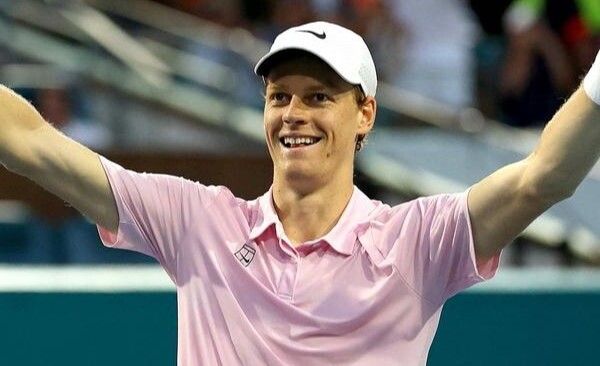
Sinner became only the eighth player in history to complete the Sunshine Double, joining a list that reads like a hall of fame shortlist: Jim Courier, Michael Chang, Pete Sampras, Marcelo Rios, Andre Agassi, Roger Federer, and Novak Djokovic. Good company. But here is what separates Sinner from every single one of them: he did it without dropping a set. Not one. Across two Masters 1000 events, against fields loaded with top-20 opposition, the Italian was never pushed to a third set. His Miami final against Jiri Lehecka, a clean 6-4, 6-4 victory, was almost routine by his standards. In the semifinal, he dispatched Alexander Zverev, the world number three, with the kind of composed aggression that has become his signature.
The streak now stands at 34 consecutive sets won at the Masters 1000 level, a record that stretches back to the Paris Masters at the end of last season. His first serve points won have regularly sat above 90 percent during this run, a number that belongs more to the serve-and-volley era than to the baseline grinders of today. When Sinner is hitting that mark, there is simply no entry point for opponents.
still holds the number one ranking with 13,590 points, but Sinner has closed the gap to 1,540 at 12,050. For context, that margin looked a lot more comfortable a month ago. The Race to Turin is even tighter: Alcaraz leads at 2,950 points to Sinner's 2,900, a difference of just 50 points. The clay season, which is traditionally Alcaraz's best surface, could either restore order or complete the changing of the guard. Neither outcome would be a surprise.
Alcaraz, for his part, had an uneven swing through the American hard courts. He arrived in Indian Wells riding a 16-match winning streak that looked like it could stretch into the summer. ended that conversation in the semifinal with a 6-3, 7-6(3) performance that reminded everyone the Russian remains a dangerous opponent when his timing is on. Medvedev's ability to neutralize Alcaraz's power, redirecting pace and refusing to engage in the Spaniard's preferred tempo, was the tactical blueprint of the tournament.
Below the top two, the rankings have shifted in interesting ways. Zverev sits third at 5,205 points after reaching both semifinals, a solid return but not quite the breakthrough results he needs to challenge for the top spot. Djokovic, dealing with a shoulder injury that forced withdrawals from both Miami and Monte-Carlo, has dropped to fourth at 4,720 points. His loss to Jack Draper at Indian Wells, before the injury fully took hold, was the kind of performance that raises questions about his 2026 trajectory. At his age, every extended absence makes the climb back steeper.
The middle of the top ten has seen real movement. Lorenzo Musetti has climbed to fifth at 4,275 points, continuing his steady progression from talented shotmaker to genuine contender. Alex de Minaur holds sixth at 4,095, Felix Auger-Aliassime has pushed up to seventh on the back of strong early-season form, and Taylor Fritz sits eighth. Ben Shelton and Medvedev round out the top ten.
Two names further down the rankings deserve attention. Lehecka, the Miami finalist, gained eight places to reach a career-high fourteenth. The Czech has been building toward this kind of result for over a year, and his run through Miami, while it ended against Sinner, confirmed he belongs in the conversation for the next tier of contenders. Then there is , back from a stress fracture and already sitting 28th in the rankings, eighth in the Race to Turin with 980 points. The Frenchman is 21 years old and plays with a physical intensity that suggests his ceiling is considerably higher than where he is now.
On the women's side, the story is simpler to tell because one player is making it simple.
is the world number one at 11,025 points, a margin of 2,917 over in second. She completed her own Sunshine Double, becoming only the fifth woman to achieve the feat after Steffi Graf, Kim Clijsters, Victoria Azarenka, and . Her Miami final against Coco Gauff, a 6-2, 4-6, 6-3 victory in which she absorbed a second-set fightback and responded with characteristic power in the third, was the 11th WTA 1000 title of her career. That ties Swiatek for second on the all-time list, behind only Serena Williams at 13. Her 2026 record stands at 23-1. The only loss feels like an anomaly against the weight of everything else.
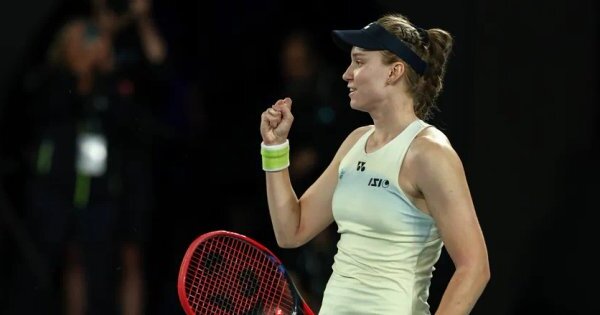
The top four behind Sabalenka has reshuffled significantly. Rybakina climbs to second at 7,783 points after reaching the Indian Wells final and the Miami semifinals. She has found a level of consistency this season that was missing in previous years, and her game, all sharp angles and flat power, translates well across surfaces. Gauff has risen to third at 7,278 points, passing Swiatek in the rankings. At 22, she became the youngest American to reach the Miami final since Serena Williams in 2003, a comparison she would be wise to ignore for now but one that speaks to her talent.
Swiatek's drop to fourth at 7,263 is the most notable decline in the top ten. A quarterfinal loss to Elina Svitolina at Indian Wells was followed by a first-round exit against Magda Linette in Miami, her first opening-match loss since the 2021 WTA Finals. Two bad results do not signal a crisis, but the Pole has looked uncertain in stretches this season, and the gap between her and the top three is now large enough that the clay season becomes a matter of urgency rather than opportunity.
The breakout story in women's tennis belongs to Victoria Mboko. The Canadian-Congolese 18-year-old entered the top ten on February 16, completing the fastest rise from outside the top 200 since Jennifer Capriati in 1990. It took Mboko just 350 days to make that climb, a pace that suggests raw talent of an unusual order. Whether she can sustain it through the grind of a full season is the question, but the early evidence is compelling. Mirra Andreeva, similarly young and similarly fearless, completes the current top ten.
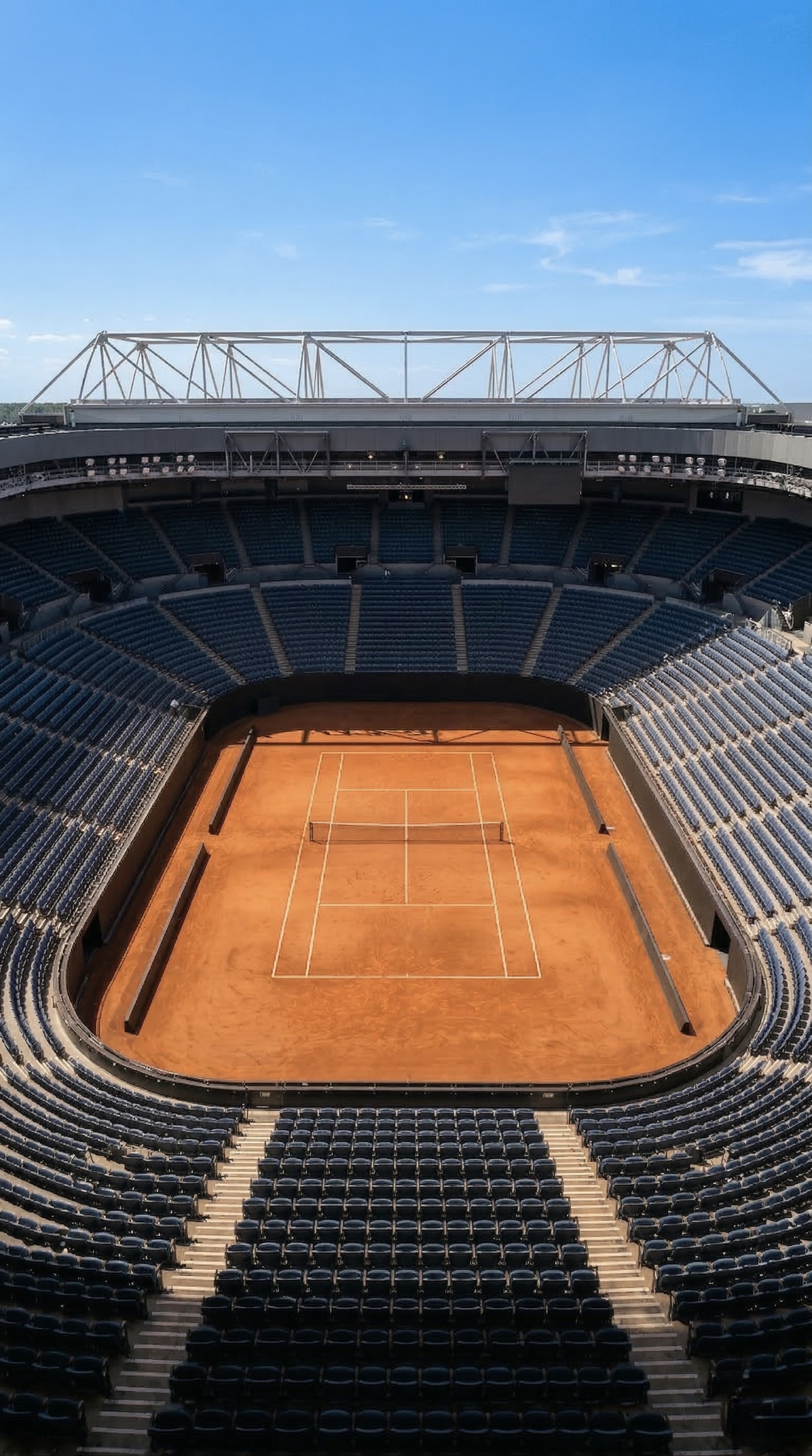
Looking ahead, the clay season will answer the questions that the hard court swing has raised. Can Sinner maintain this level on a surface that has historically been less forgiving of his game style, or will Alcaraz reassert his dominance on the dirt? The gap between them is small enough that a single strong tournament could flip the ranking. On the women's side, Sabalenka looks untouchable in her current form, but Roland-Garros has a habit of producing its own logic. The rankings say one thing. The red clay may say another.