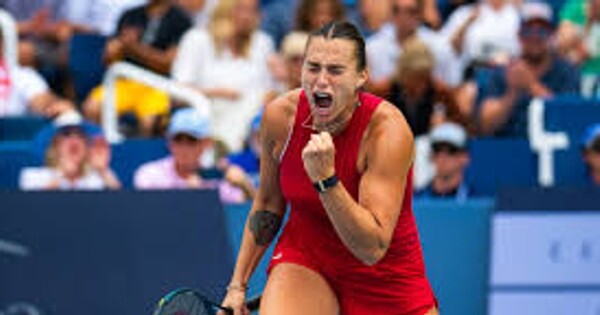
There are players who define eras through grace, others through tactical brilliance, and then there is Aryna Sabalenka. The Belarusian belongs to a category of her own: the natural forces who turn every rally into a demonstration of raw power. Three Grand Slam titles, a sustained reign at world number one, and a game that shakes the rafters as much as it rattles opponents. Sabalenka is not merely a champion. She has become the face of a women's game that embraces its own ferocity.
Born on May 5, 1998, in Minsk, Sabalenka grew up in a country where tennis barely registered as a mainstream sport. Her father, Sergey, a former ice hockey player, pushed her toward competition from an early age. He recognized in her a determination that separated good players from great ones, a competitive fury that could not be taught. The father-daughter bond shaped Sabalenka's fighting spirit long before she hit her first ball on the professional tour. Sergey's sudden death in 2019 devastated her. She carried that grief onto every court for months, turning each victory into an unspoken tribute.
Her rise through the WTA ranks was swift and violent in its intensity. Sabalenka claimed her first title in Tianjin in 2017, and by 2019, victories in Wuhan, Shenzhen, and New Haven had pushed her inside the top 15. The power was already legendary. Her groundstrokes generated ball speeds that left opponents pinned behind the baseline. The problem was that this power came with chronic instability, an inability to control the weapon that made her so dangerous.
The serve was the paradox at the heart of her game. When the first serve landed, it was one of the most devastating shots in women's tennis. But double faults piled up at alarming rates, sometimes fifteen or twenty in a single match. Observers called it the yips. It went beyond technique. This was a mental block that stripped her of her greatest asset at the moments that mattered most. Between 2021 and early 2022, watching Sabalenka serve became an exercise in tension, the audience never sure whether the next delivery would be an ace or a wild miss into the back fence.
The fix required radical surgery. Sabalenka overhauled her service motion, moving from a sweeping, high-risk action to a more compact, controlled delivery. The work with coach Anton Dubrov and subsequent adjustments from her team produced results that were nothing short of transformative. Double faults plummeted. Consistency soared. And critically, confidence returned. What looked like a minor technical tweak from the outside was the trigger for a complete career transformation.
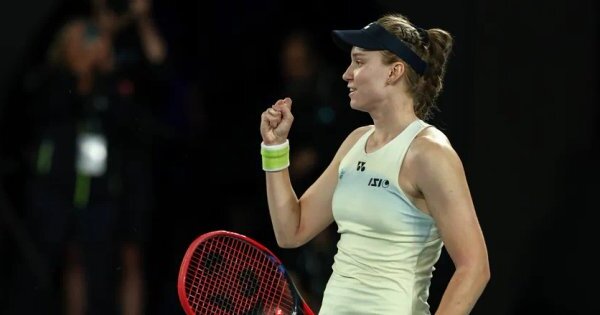
The 2023 Australian Open was where it all came together. Sabalenka stormed through the draw with an authority that left no room for doubt. In the final, she defeated Elena Rybakina 4-6, 6-3, 6-4, overturning a set deficit with a composure that would have been unthinkable two years earlier. This was her first Grand Slam title, validation of years of grinding work and painful self-examination. The girl from Minsk who hit too hard and too fast had finally found the balance between natural power and the control needed to win the biggest tournaments in the sport.
Defending the title in Melbourne in January 2024 proved that the first slam was no fluke. Sabalenka dominated again, beating Zheng Qinwen 6-3, 6-2 in a final that was over almost before it started. Back-to-back Australian Opens. Only the greatest have managed that. Between those two Melbourne triumphs, her 2023 season had its peaks and valleys, including a semifinal at Roland-Garros and disappointing exits at Wimbledon and the US Open. But her dominance on hard courts, her preferred surface, was beyond question.
The 2024 US Open added a new dimension to her resume. By winning at Flushing Meadows, Sabalenka proved she could triumph on different stages, not just in the Melbourne furnace. Her final victory over Jessica Pegula, 7-5, 7-5, combined her trademark power with a tactical patience that earlier versions of herself simply did not possess. Three major titles before turning twenty-seven placed her among the most decorated players of her generation.
The 2025 season opened with another ambitious Australian campaign, though the title slipped away this time. Sabalenka reached the semifinals in Melbourne before falling to Madison Keys in a tight match that underlined just how deep the WTA talent pool runs. The setback did not derail her. Her subsequent hard court results in Doha, Dubai, and Indian Wells showed a player still dominant in the business end of tournaments, stacking wins against top-ten opponents with metronomic regularity.
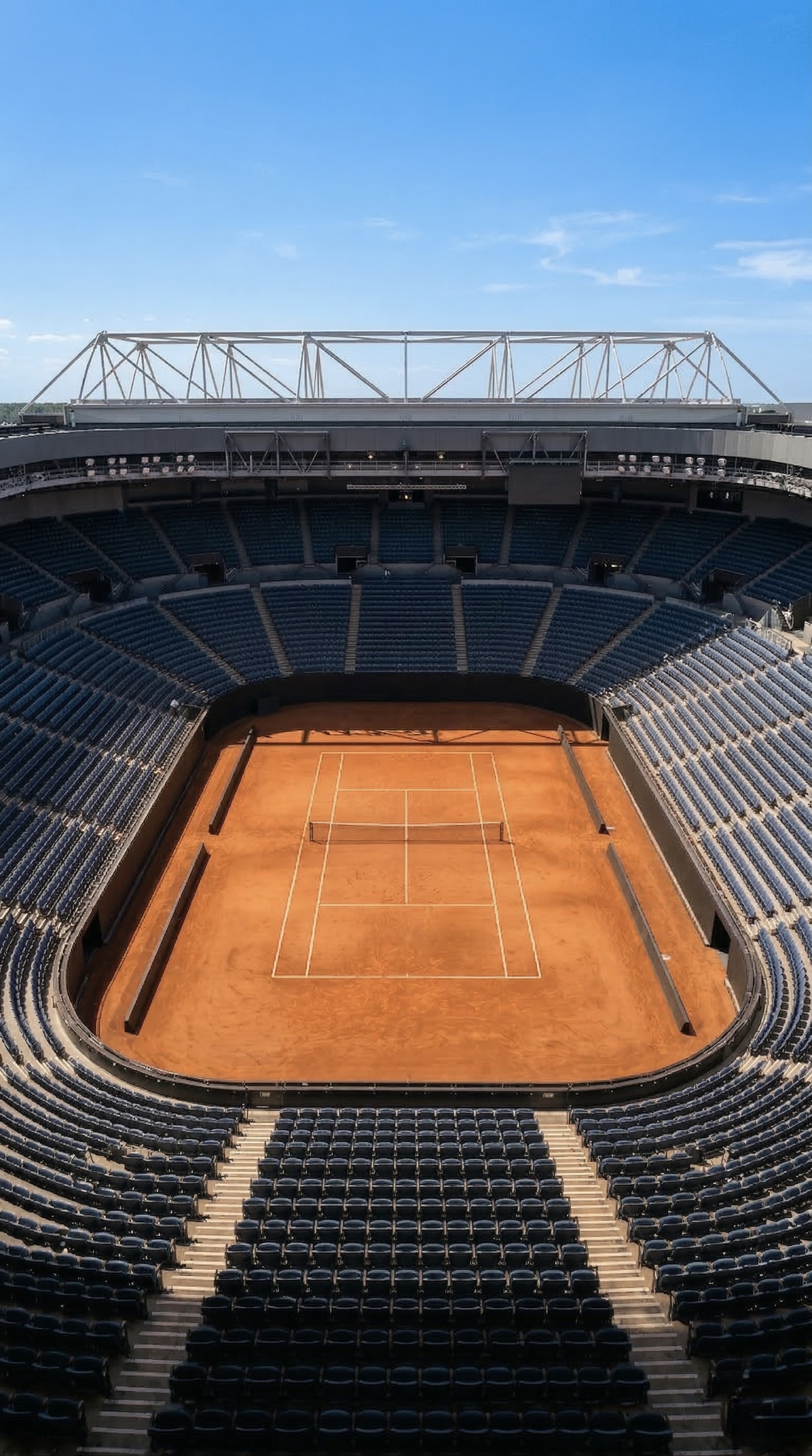
Her spring clay court campaign remained the familiar challenge. Sabalenka has always had a complicated relationship with the red dirt, where her power is partially neutralized by the slower bounce and where extended rallies demand a patience that does not come naturally to her. Respectable runs in Madrid and Rome preceded a Roland-Garros campaign that, while ending before the final, showed genuine progress in her ability to construct points and vary her game on the most demanding surface in tennis.
The North American hard court summer brought a return to peak form. Sabalenka strung together high-level performances, rediscovering the confidence and aggression that make her the most feared player on tour. Her baseline game, built around a devastating forehand and an equally powerful two-handed backhand, gives opponents almost no time to react. When the serve is firing and the groundstrokes are finding lines, there is simply no answer in the current women's game.
The rivalries that structure the top of the WTA rankings give Sabalenka's career a particular dramatic weight. Against Iga Swiatek, the clash pits two fundamentally different tennis philosophies against each other. The Pole, undisputed queen of clay and an increasingly complete player on all surfaces, represents patient construction and variation. Sabalenka imposes an immediate physical confrontation. Their meetings have become the most anticipated fixtures on the WTA calendar, each match writing a new chapter in a rivalry that could define the decade.
Coco Gauff presents a different kind of challenge. The American, six years younger, possesses athletic potential and a return of serve that can destabilize even Sabalenka's biggest strikes. Their rivalry, still young, promises memorable encounters for years to come. Elena Rybakina, with her devastating serve and flat ball-striking, is perhaps the opponent whose style most closely mirrors Sabalenka's own, creating confrontations of rare tennistic violence where every point feels like an arm wrestle.
Beyond results, it is the mental evolution that commands the deepest respect. The player who used to pile up double faults and on-court meltdowns has transformed into a competitor capable of handling the pressure of the biggest occasions. This work on herself, often discussed in press conferences with a disarming honesty, speaks to a maturity that extends beyond sport. Sabalenka talks openly about her doubts, her fears, her moments of fragility, with a candor that cuts through the scripted platitudes most champions deliver.
Her personal situation, complicated by the geopolitical implications of her Belarusian nationality, adds another layer to her story. Forced to compete under a neutral flag, confronted with political questions she did not choose, Sabalenka navigates these difficult waters with a dignity that deserves recognition. Tennis, the most individual of sports, becomes for her a space where only performance matters, a refuge where borders dissolve in the face of talent.
Her game, broken down technically, is a model of aggressive efficiency. The forehand, struck with full weight transfer and a characteristic wrist snap, generates ball speeds among the highest on tour. The two-handed backhand, often considered a weak point in power players, is in Sabalenka's case a weapon in its own right, capable of producing winners from any position on the court. The serve, once the demons were exorcised, has become a major asset again, with first serves regularly touching 120 mph.
What separates the 2025 Sabalenka from the 2021 version is her ability to modulate intensity. She is no longer the player who swung at full power on every ball, risking unforced errors through sheer ambition. She now knows how to slow the tempo, build a point over three or four shots, wait for the opening before pulling the trigger. This tactical intelligence, earned through enormous effort, makes her an infinitely more dangerous player than she was at the start of her time at the top.
At twenty-seven, Sabalenka stands at a fascinating crossroads. Three Grand Slam titles set the bar high, but her ceiling appears not yet reached. The quest for a Roland-Garros title, the one major that still truly eludes her, and the ambition to conquer Wimbledon, where her power game should theoretically thrive on the fast grass, provide the motivation that feeds her hunger.
Women's tennis is living through a golden age, driven by a generation of exceptional players contesting the sport's greatest prizes. In this scene, occupies a singular position. She is not the most elegant, nor the most strategic, nor the most athletic. But she may be the most spectacular, the player whose strikes electrify stadiums and whose personal journey, marked by hardship and reinvention, inspires a respect that reaches far beyond statistics. The power queen is not done ruling.