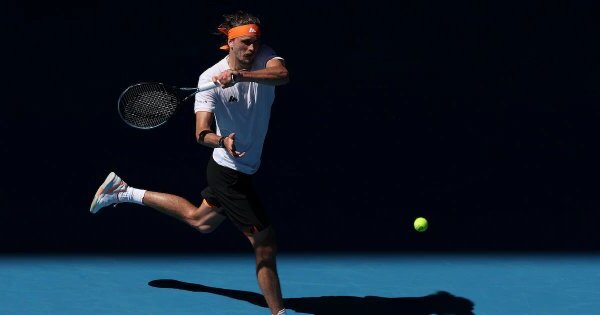
There is a particular kind of torment reserved for the nearly great. It is not the anguish of mediocrity, nor the quiet resignation of those who never came close. It is something far more exquisite in its cruelty: the torment of having stood on the threshold of ultimate glory, felt its warmth on your face, and watched the door close. Three times. Alexander Zverev knows this torment intimately.
As the 2025 season unfolds, Zverev finds himself in a position that is simultaneously enviable and agonizing. Ranked firmly inside the world's top three, the owner of an Olympic gold medal, a multiple Masters 1000 champion, and widely regarded as one of the most talented players of his generation, the twenty-seven-year-old German has accomplished more than the vast majority of professional tennis players could dream of. And yet, the conversation about Alexander Zverev always circles back to the same nagging, inescapable question: why has he not won a Grand Slam?
Born on April 20, 1997, in Hamburg, Germany, Zverev was raised in a household where tennis was not merely a pastime but a vocation. His father, Alexander Zverev Sr., was a professional player who competed for the Soviet Union before emigrating to Germany. His older brother, Mischa, carved out a respectable career on the ATP Tour, reaching the top 25 in the world. Young Sascha, as he is affectionately known, absorbed the rhythms of professional tennis from the cradle.
The talent was obvious from an impossibly early age. Zverev moved through the junior ranks with the kind of effortless dominance that sets scouts' hearts racing. By seventeen, he was competing on the main tour. By twenty, in 2017, he had won his first Masters 1000 title in Rome, defeating Novak Djokovic in the final. The tennis world collectively nodded in recognition: here was the real thing, the genuine article, the player who would carry the sport into its next chapter.
What followed was a steady accumulation of titles and rankings that confirmed the initial promise. Zverev won the ATP Finals in 2018, dismantling Djokovic in the championship match with a performance of spectacular authority. He collected Masters 1000 titles with a regularity that spoke of genuine world-class quality. His game, built around a devastating serve that regularly clocks above 135 miles per hour and a baseline game of punishing depth and weight, was clearly equipped for the very highest level.
But the Grand Slams told a different story. Or rather, they told the same story with an increasingly painful ending.
The first chapter was written at the 2020 US Open. Zverev reached the final and found himself two sets to love up against Dominic Thiem. In that moment, standing on the precipice of history, something shifted. Thiem, to his immense credit, began to play with the desperate freedom of a man with nothing to lose. Zverev, conversely, began to play with the careful tentativeness of a man with everything to lose. The Austrian completed one of the great comebacks in Grand Slam final history, winning the fifth-set tiebreak to claim the title. Zverev was left to contemplate what might have been, and the contemplation was brutal.
The following year offered a measure of redemption, though not in the arena Zverev most coveted. At the Tokyo Olympics in 2021, he produced arguably the finest sustained run of tennis in his career. In the semifinal, he defeated Djokovic, who was then pursuing the Golden Slam, a feat never accomplished in men's tennis. Zverev's performance that day was a masterclass of aggressive, purposeful tennis. He went on to claim the gold medal against Karen Khachanov, weeping openly on court as the German national anthem played. It was a triumph of genuine emotional power, proof positive that Zverev could perform under the most intense pressure imaginable.
And yet, for all its glory, an Olympic gold medal occupies a peculiar space in tennis's hierarchy of achievement. It is cherished, respected, celebrated. But it is not a Grand Slam. The absence of that particular trophy in Zverev's collection continued to define the narrative around his career.
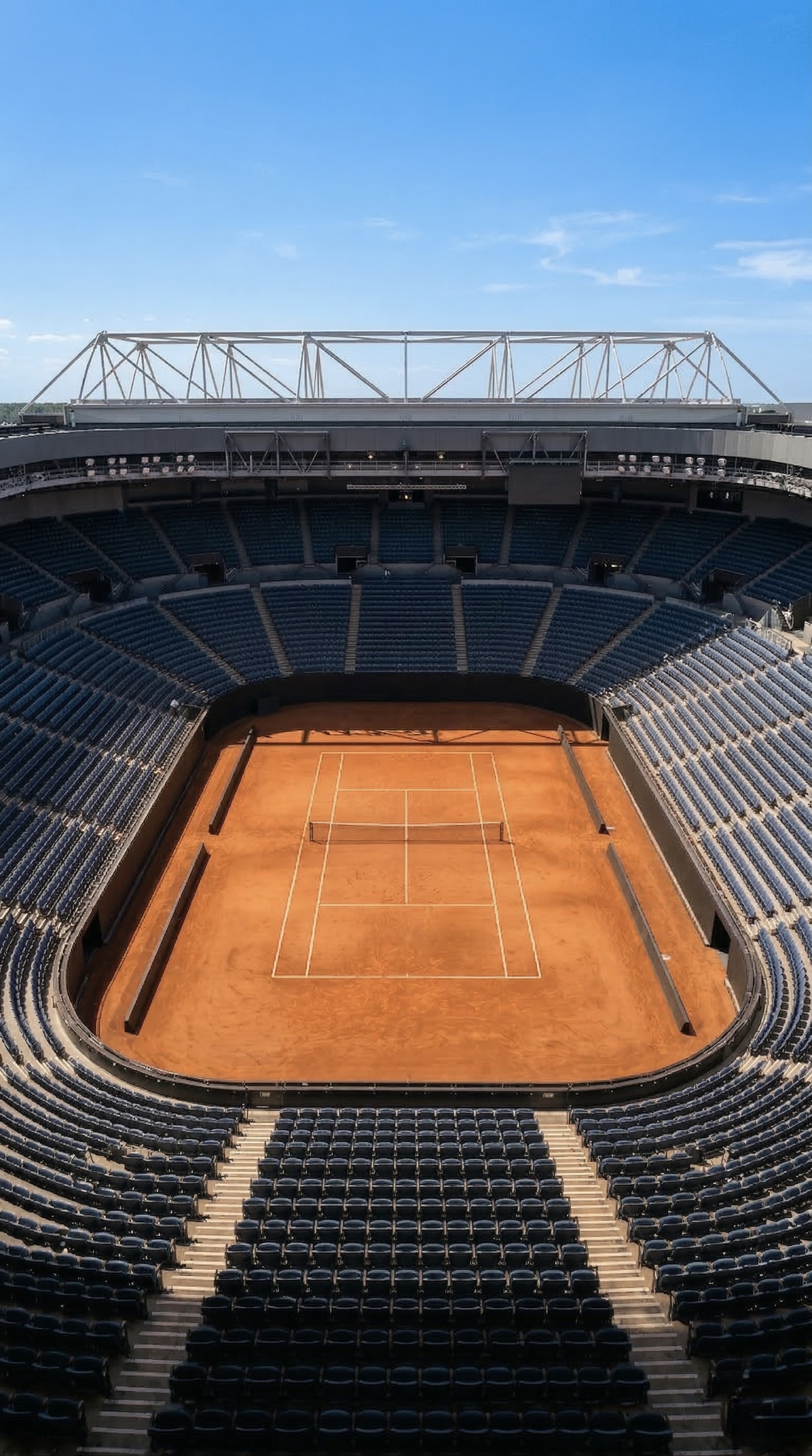
Roland-Garros 2022 seemed poised to rewrite that narrative. Zverev arrived in Paris playing some of the best clay-court tennis of his life. In the semifinal against Rafael Nadal, the fourteen-time French Open champion, he was competing on equal terms, matching the Spaniard shot for shot in front of a spellbound Court Philippe-Chatrier. Then, late in the second set, disaster struck. Zverev's right ankle buckled grotesquely as he chased a ball near the baseline. He collapsed to the clay, his screams of pain audible throughout the stadium. He was taken off court in a wheelchair, his tournament and his season effectively over. Torn ligaments in the ankle would require months of rehabilitation.
The injury was devastating not merely in physical terms but in what it represented: another Grand Slam opportunity snatched away, this time not by an opponent or a mental lapse but by the simple, random cruelty of the body betraying itself at the worst possible moment.
Zverev's comeback from that injury was slow and, at times, uncertain. The 2023 season was a process of rebuilding, of rediscovering trust in a body that had failed him so spectacularly. He returned to the top ten, won titles, and showed flashes of his best form, but the Grand Slams remained stubbornly resistant to his advances.
Then came Roland-Garros 2024. Zverev, his ankle fully healed and his game sharpened to a fine edge, battled his way to the final. There he met Carlos Alcaraz, the twenty-one-year-old Spanish sensation who had already won two Grand Slams and was playing with the kind of joyful, explosive brilliance that made him the most exciting player in the sport. The final was an epic: five sets of extraordinary tennis, momentum swinging wildly, both men producing shots of remarkable quality. In the end, it was Alcaraz who prevailed, and Zverev who was left once again with the runner-up trophy and the familiar, hollowing sense of what might have been.
Two Grand Slam finals lost. Then three. Because the Australian Open in January 2025 added yet another chapter to this saga of unfulfillment. Zverev arrived in Melbourne in superb form, his pre-season preparation having been, by all accounts, meticulous and focused. He moved through the draw with ominous authority, dropping sets sparingly and hitting the ball with a crispness that suggested a man ready to finally break through.
The final pitted him against Jannik Sinner, the world number one, who had announced himself as the sport's dominant force with his breakthrough 2024 season. The Italian, all lean efficiency and quiet intensity, was the man Zverev needed to overcome to claim his first major title. Instead, Sinner delivered a performance of clinical precision. The scoreline read 6-3, 7-6, 6-3, numbers that do insufficient justice to the quality of the match but which accurately reflect Sinner's superiority on the day. Zverev fought, as he always does, but he was outplayed by a man who, on that particular afternoon, was simply better.
Three Grand Slam finals. Three defeats. The statistical reality is stark and unforgiving. In the open era, only a handful of men have lost their first three Grand Slam finals. The precedents offer a mixture of hope and caution. Some eventually broke through; others never did.
It would be easy, and lazy, to reduce Zverev's Grand Slam failures to a single explanatory factor. The popular narrative holds that he lacks the mental fortitude for the biggest moments, that his nerve deserts him when the stakes are highest. There is a kernel of truth here. The double faults that tend to appear at critical junctures, the occasional retreat into passive, safety-first tennis when aggression is required, these are patterns that even Zverev's most ardent supporters would struggle to deny entirely.
But the full picture is considerably more nuanced. Zverev has competed in an era of historically elevated competition. He has had to contend first with the twilight of the Big Three era, in which Djokovic, Nadal, and Federer continued to dominate the Grand Slams well into their thirties, and then with the emergence of a frighteningly talented new generation led by Sinner and Alcaraz. The windows of opportunity have been narrow, and the margins between victory and defeat at this level are measured in millimeters and milliseconds.
Moreover, the 2022 ankle injury robbed Zverev of what might have been his optimal physical window. He lost the better part of a year to rehabilitation, returning to a tour that had moved on without him and that now featured younger, fresher rivals who had used his absence to establish themselves.
As the 2025 clay-court season approaches, followed by Wimbledon and the US Open, Zverev stands at a crossroads that feels genuinely consequential. He will turn twenty-eight in April. He remains in the prime of his career, but the prime does not last forever. The next generation is not waiting politely for him to fulfill his potential; it is actively, aggressively trying to render him irrelevant.
The tools are there. Zverev's serve remains one of the most formidable weapons in the sport. His forehand, struck with violent topspin from the back of the court, can overwhelm even the best defenders. His backhand, once a relative liability, has matured into a reliable, occasionally brilliant stroke. His movement, remarkable for a man of his height, allows him to compete in extended rallies that his frame might suggest he should avoid.
What remains to be seen is whether the final, intangible ingredient — call it belief, call it composure, call it whatever you like — can be summoned when it matters most. Grand Slam finals are not won on talent alone. They are won by the player who can harness his ability most completely in the moments of greatest stress, who can think clearly when everything inside him is screaming, who can execute under a weight of pressure and expectation that would crush most human beings.
has three more chances in 2025 to prove he is that player. Roland-Garros, Wimbledon, the US Open. Three more opportunities to transform one of tennis's most compelling nearly-stories into a story of triumph. The sporting world will be watching with the particular fascination it reserves for those whose greatness hangs in the balance.
Whether 2025 will be the year of deliverance or another chapter of agonizing proximity remains to be written. But this much is certain: few stories in contemporary tennis are as gripping, as human, and as unresolved as that of and his quest for Grand Slam glory.