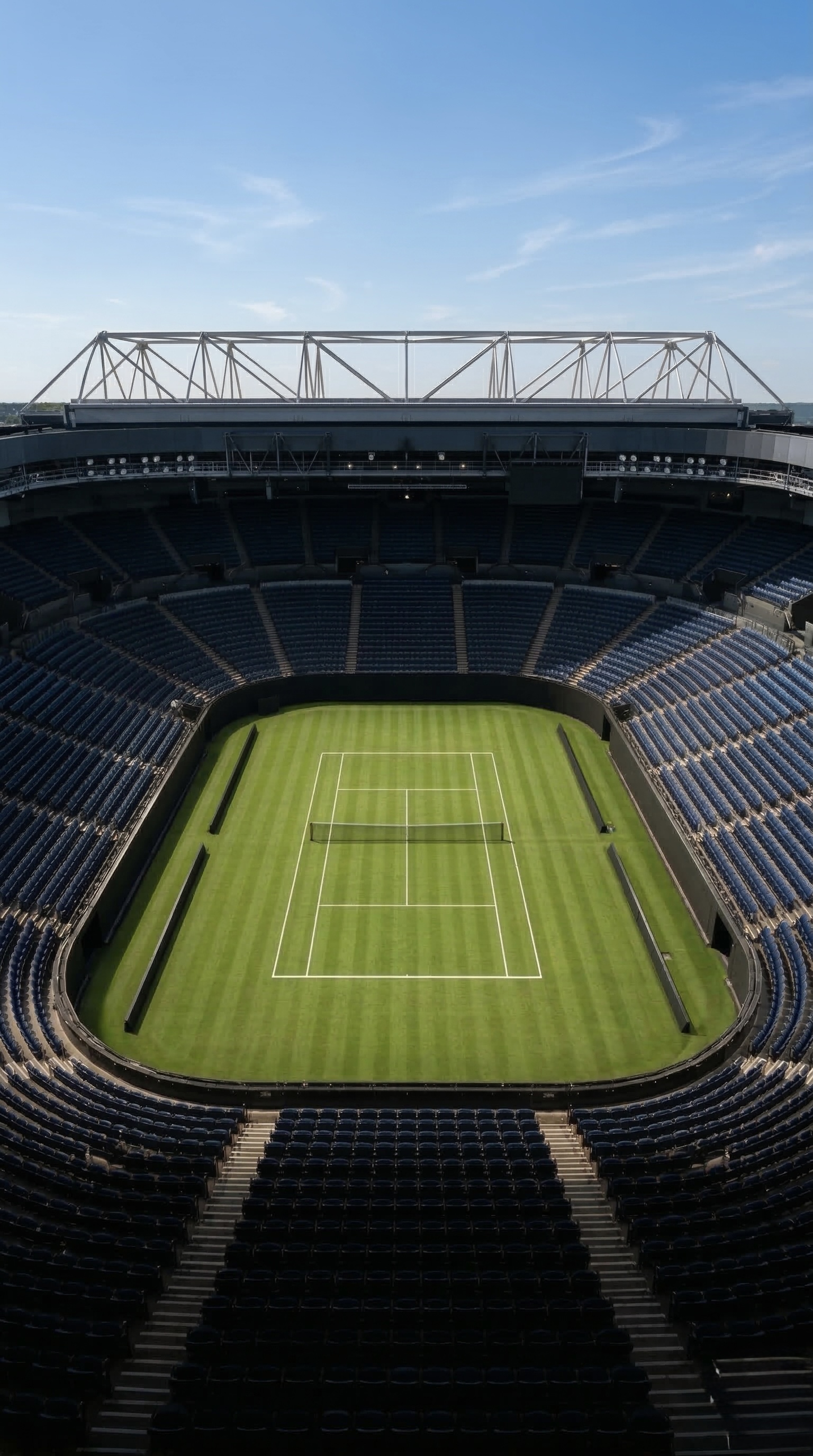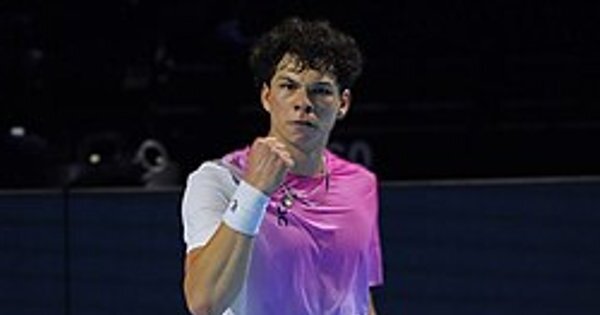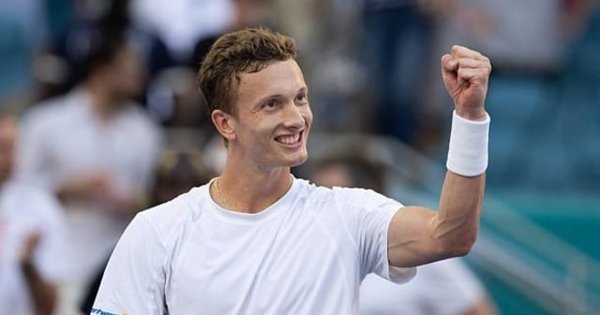
Seeded second at Queen's Club following Carlos Alcaraz's withdrawal, Jiří Lehečka has emerged as one of the most dangerous players on the grass-court circuit. The 24-year-old Czech dispatched Kamil Majchrzak 7-5, 7-6(4) in his opening round, confirming a surge in form that owes nothing to chance.
Lehečka possesses an ideal grass-court profile. A serve regularly exceeding 220 km/h, a flat forehand that cuts through the court like a laser, and an increasingly reliable volley: all the ingredients are there. It is no coincidence he reached the Queen's Club final in 2025, losing to Alcaraz in a tight contest. This year, without the Spaniard in the draw, the path to the title looks considerably more open.
His 2026 season tells the story of a player reaching full maturity. After mixed results on clay, where his power sometimes meets patient opponents, Lehečka returns to grass as a surface that amplifies his natural weapons. Every serve becomes a weapon of mass destruction, every forehand a verdict. The grass reduces his opponent's reaction time, exactly the kind of pressure the Czech loves to apply.
His junior career already hinted at this potential. A Czech national champion in the junior ranks, he climbed the professional circuit methodically, breaking into the top 30 in 2024 before establishing himself in the top 20. His progress rests on systematic work with coach Daniel Vacek, a former professional who instilled the Czech tennis culture that produced Lendl, Berdych and Kvitová.
At Queen's Club this week, Lehečka looks like a legitimate title contender. His next opponent will be the winner of Ugo Humbert versus Brandon Nakashima, two quality players but opponents he should handle at this level. If he maintains his serving standard and continues dictating play from the baseline, the London title is a realistic objective.
The bigger question extends beyond Queen's Club. Can Lehečka translate this grass-court form into a meaningful Wimbledon run? At 24, he enters the window where the best players begin converting raw talent into major titles. London's grass could be the stage for that transformation.